LEYRE KYMA: Finding Permanence in Impermanence
JULY 23, 2026 → WORDS ADRIÁN GOMIS EXPÓSITO

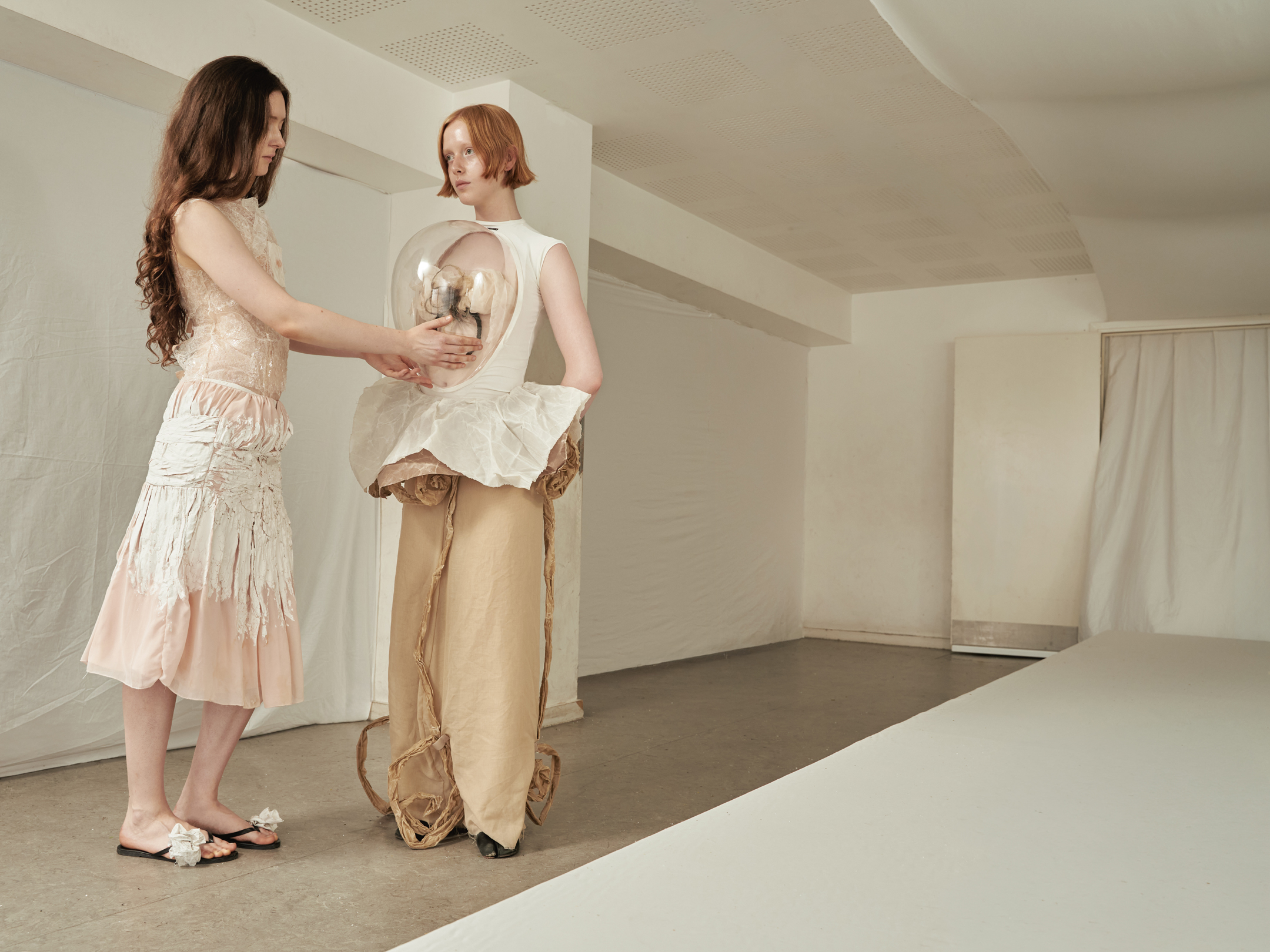
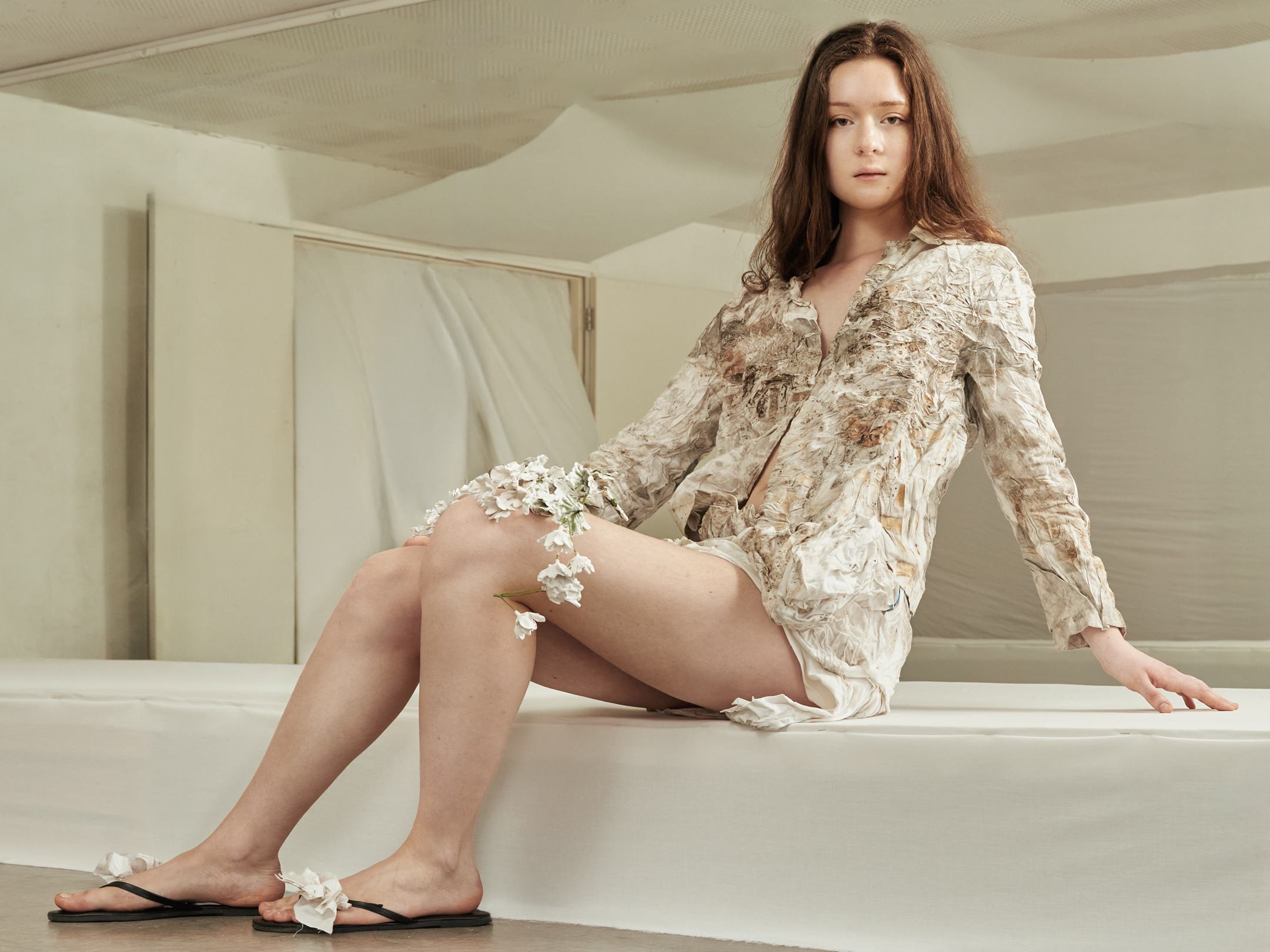
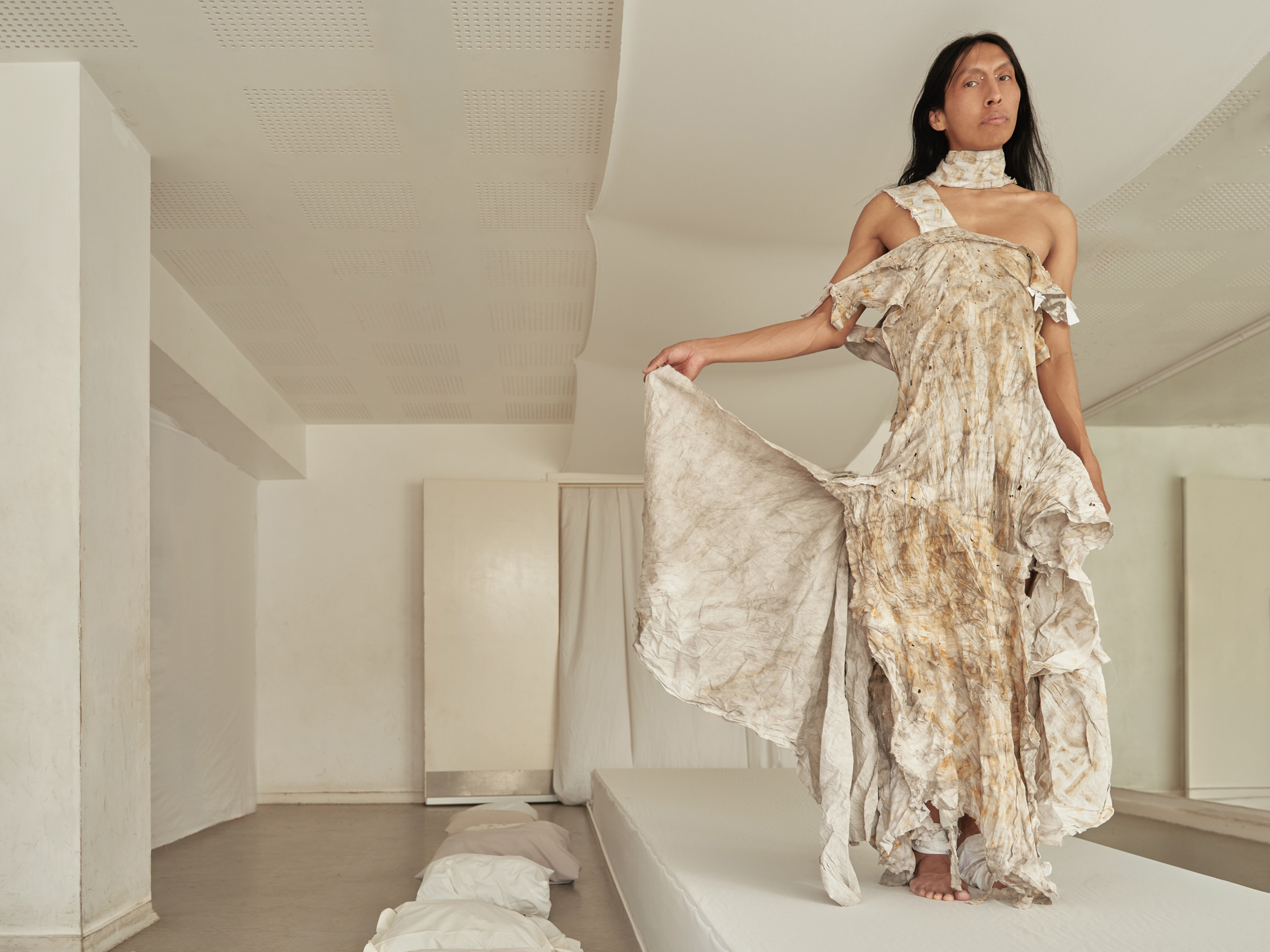
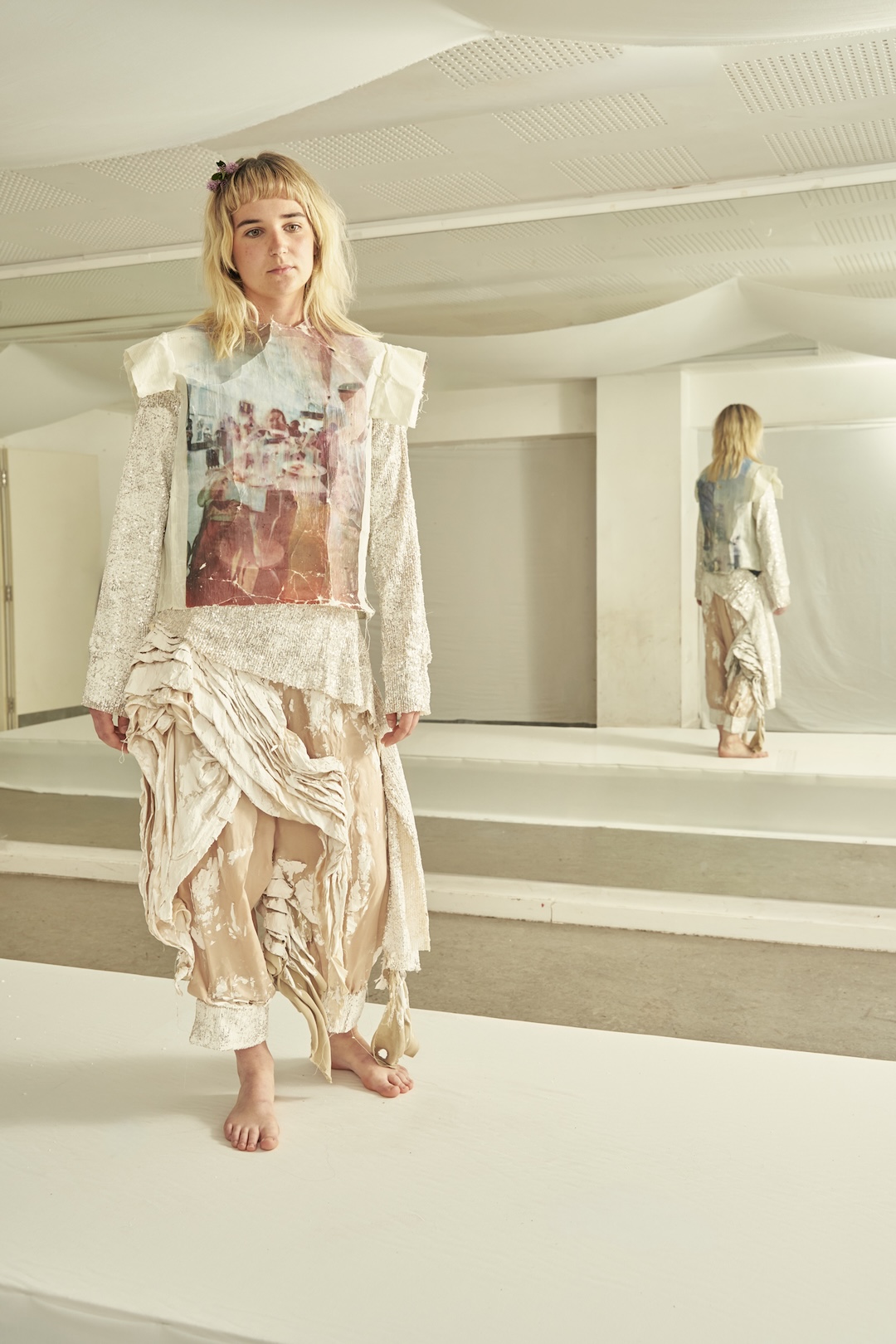
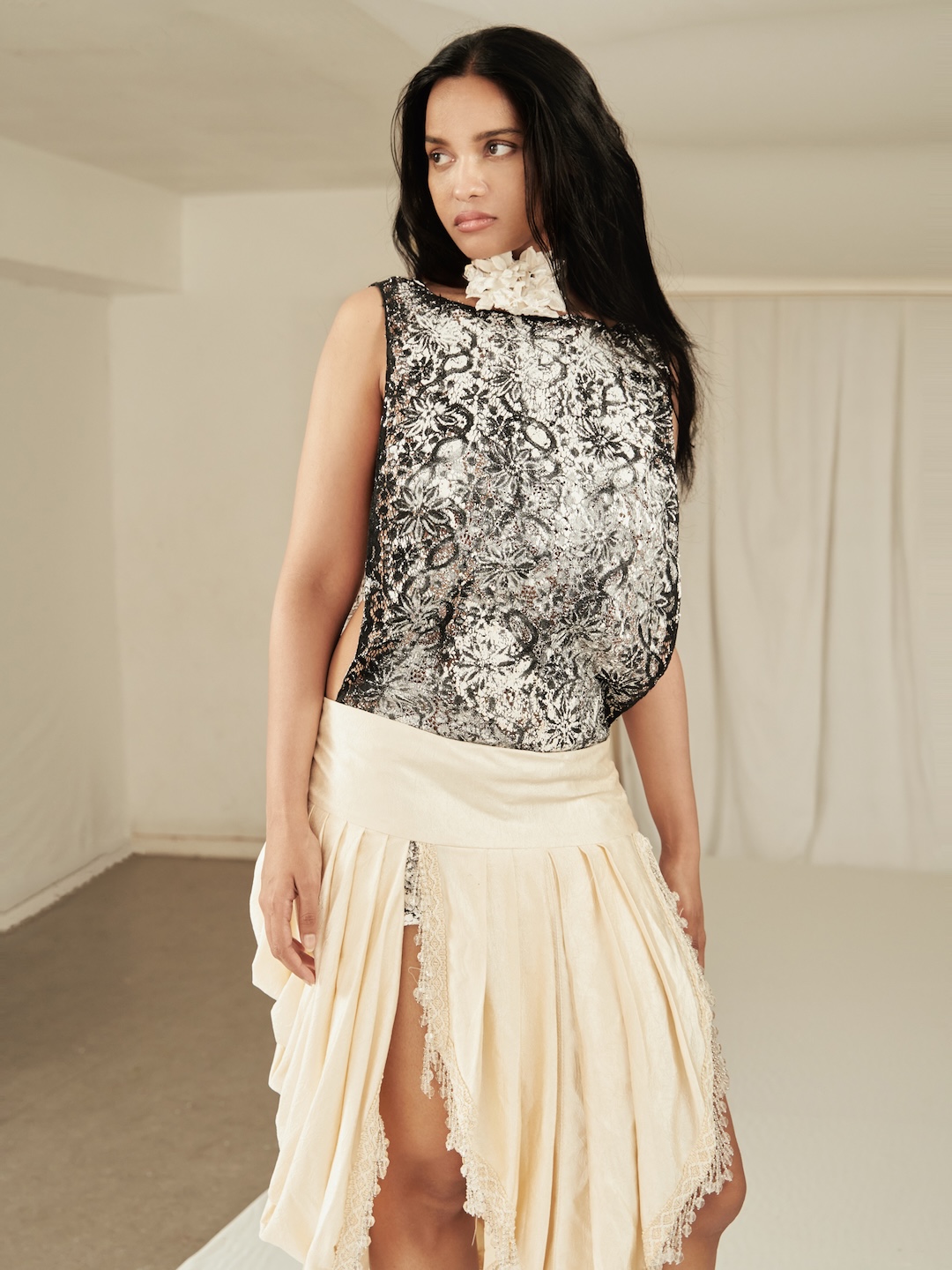
For her graduate collection Forever Together, Ecuadorian-Spanish designer Leyre Kyma, trained at Central Saint Martins, transforms the fear of change into a deeply personal exploration of memory, grief, and human connection. Through garments exposed to the streets, fragile materials destined to decay, and collaborative acts of storytelling, she questions what we choose to preserve and what we must eventually let go. We spoke with Leyre about the emotional process behind the collection, relinquishing control, and why fashion can become a space for collective reflection.

You say Forever Together was born out of fear: of things changing, of people leaving. Was there a specific moment or loss that pushed you to start translating that fear into garments rather than, say, writing or film?
Over the last three years, I moved and lived in six different countries. Constantly moving, constantly building safety nets, and then watching many of them disappear or change when I left again. It made me very aware of how fast relationships, people, and surroundings can shift. I realised that the more places I leave, the more people I miss. You end up in a constant state of mourning because you’ll never be able to be in all of them at once. When it was time to start the collection, that was the feeling that stood out above everything else, the one I needed to dig into. In a way, I did it for myself. I wanted to find a way out of it.
Trace, Preserve, Surrender reads almost like the stages of grief compressed into three acts. Did you know this three-part structure from the start, or did it emerge as you worked through the material experiments?
Yes, it is grief, and making it was grief too. I didn’t plan the three-act structure. It came as I worked. The theme was too complex and too layered to compress into a single title, and at some point I understood that my feelings weren’t static either; there was a step-by-step process happening. So I simply traced how I was moving through it. That structure allowed me to sit properly with each stage and understand where the fear, the need for control, and the reflection were coming from, not only as a designer, but as a person going through it.


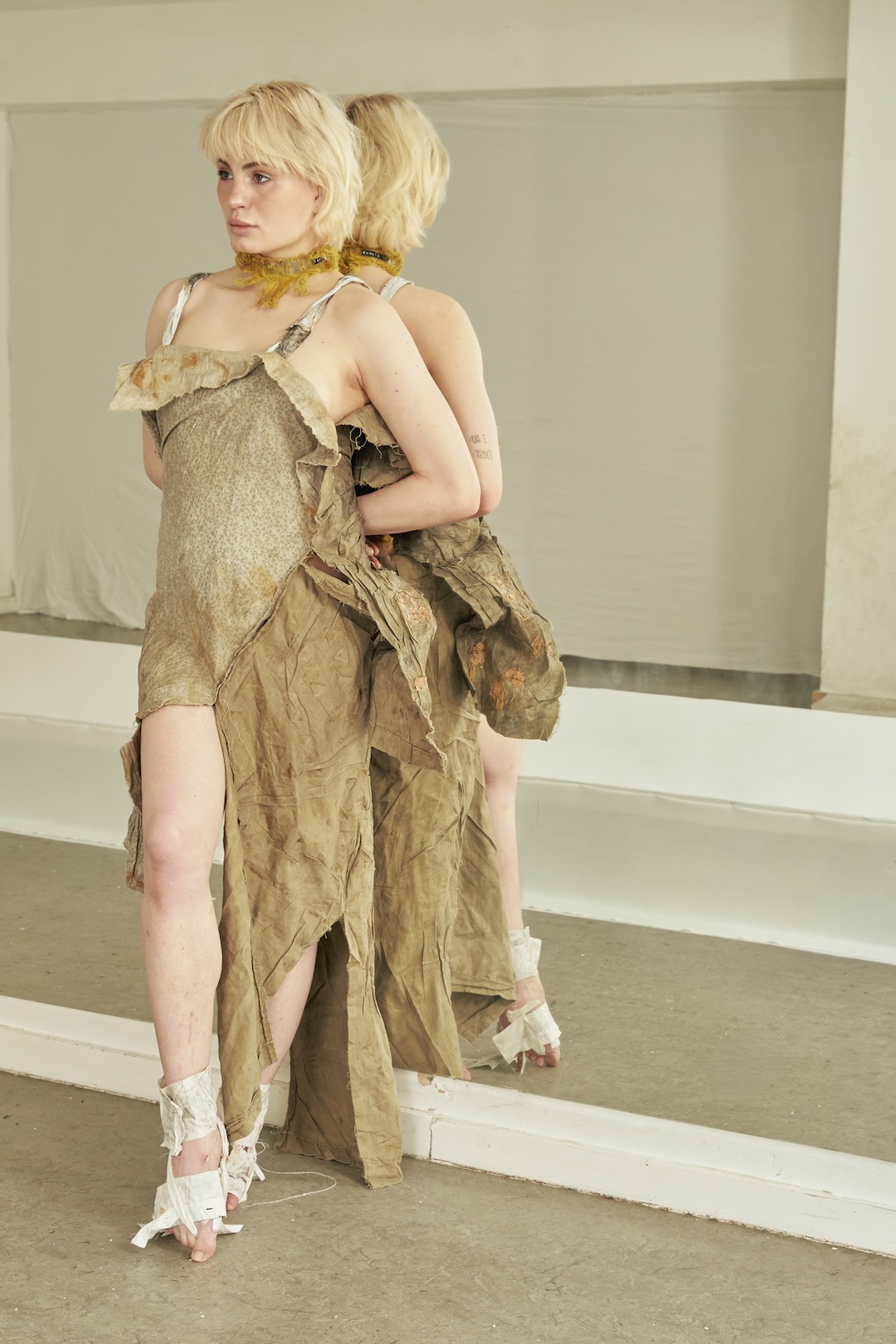
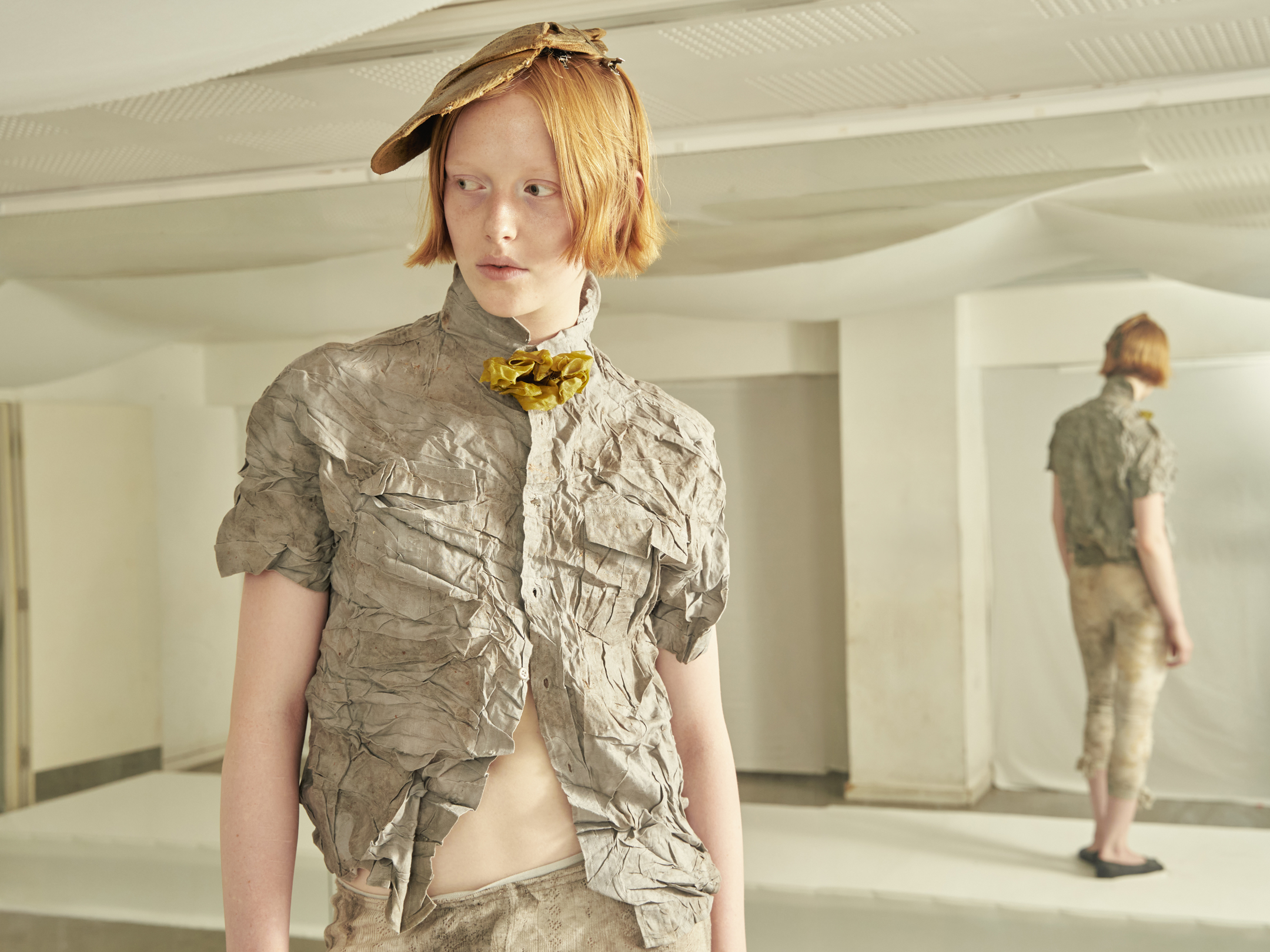
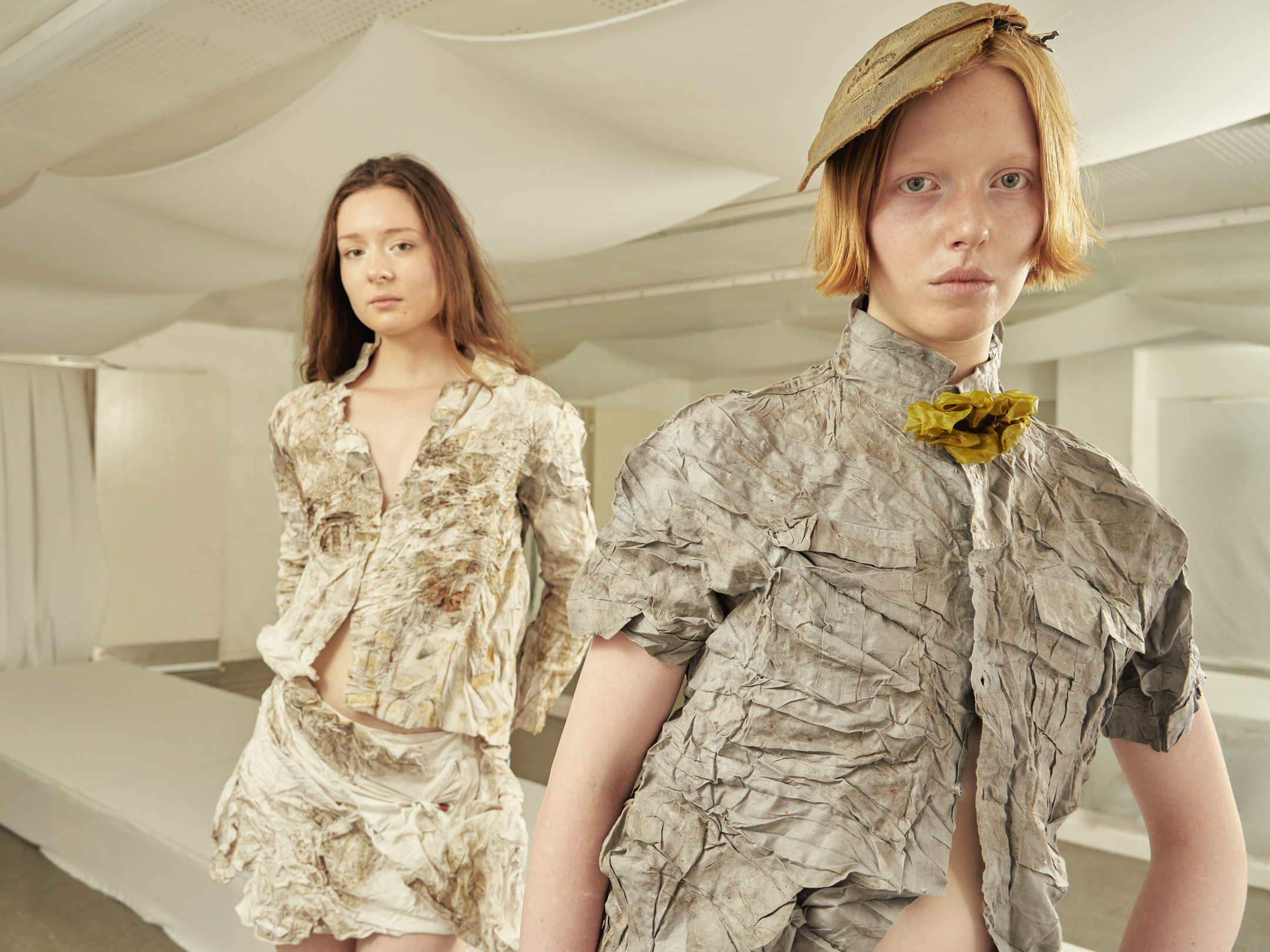
Leaving garments on the streets of London for up to 200 hours is a huge act of relinquishing control for a designer. What was it like checking on a piece and not recognising what the city had done to it?
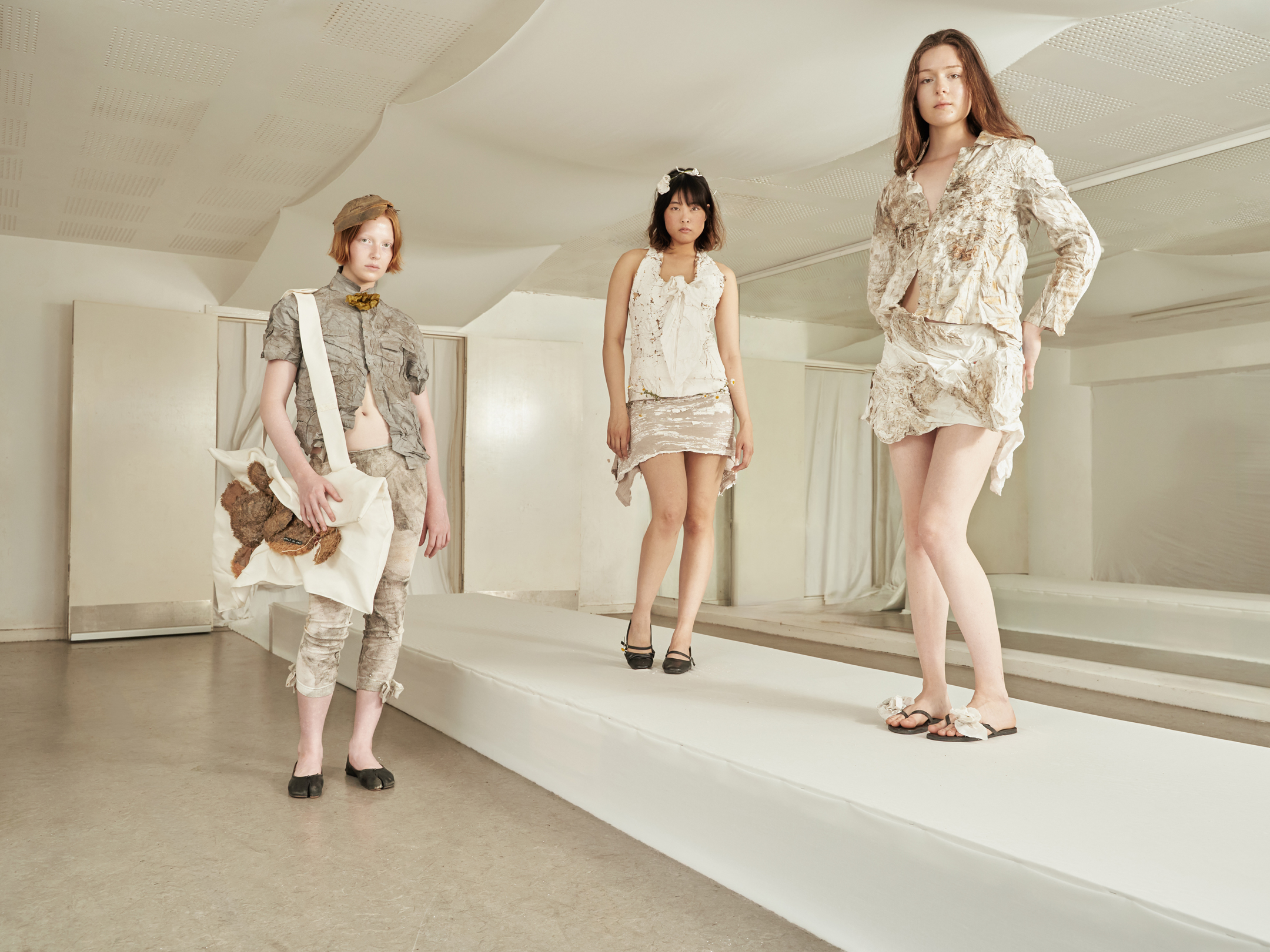
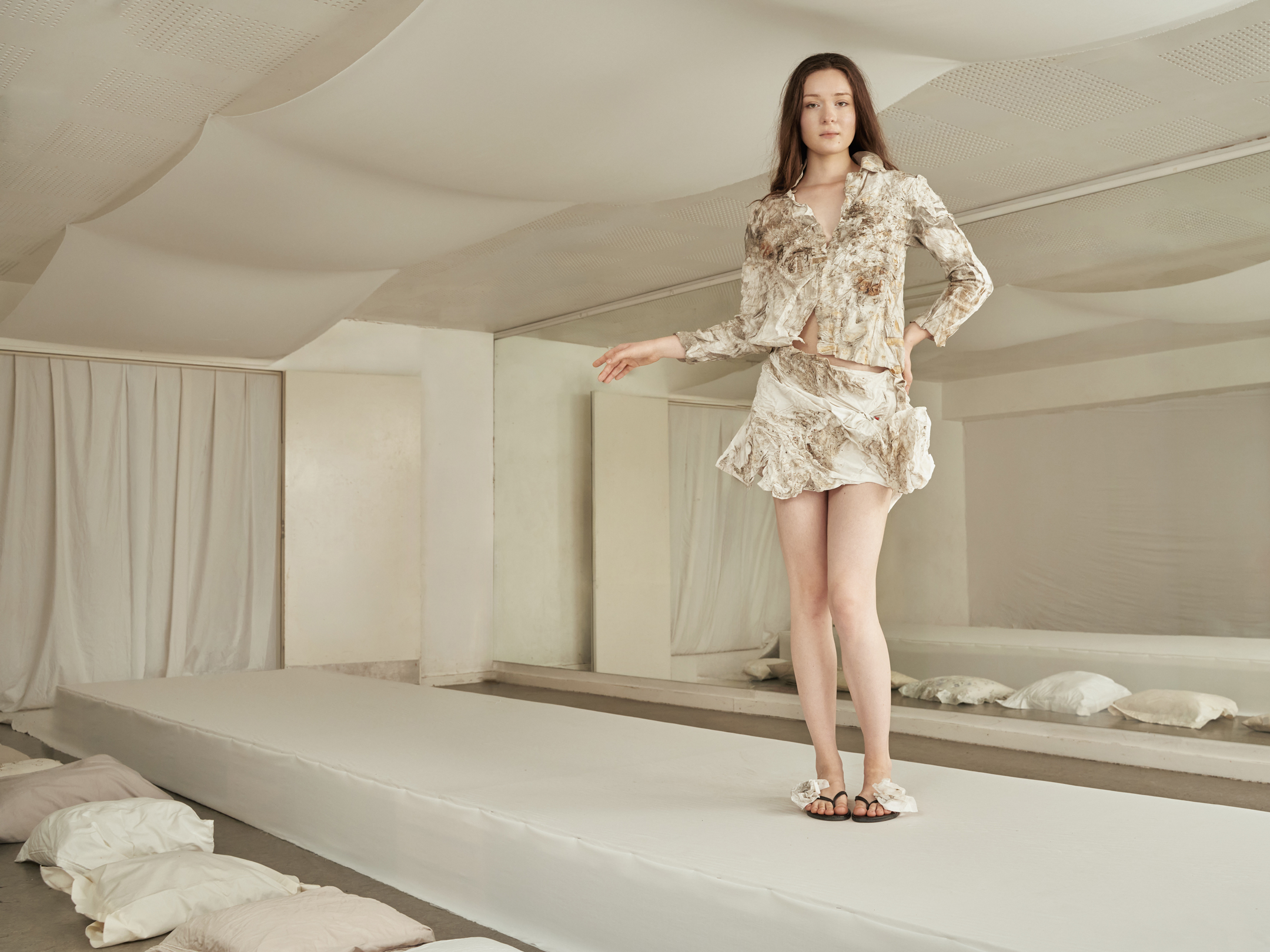
That was a challenging one. I kept an Excel sheet where every piece was recorded, and almost 40% of them disappeared. I assume the police or street cleaners took them. There was always tension when going to check on a piece; you never knew if it would still be there. And the longer they stayed, the more attached I became, so it hurt even more when they were gone. But in a way, it gave me peace. Neither the outcome nor the piece was in my control anymore. I placed it there, and the city took care of the rest. It was exciting to see the change, the new forms, and all the traces each garment picked up along the way.
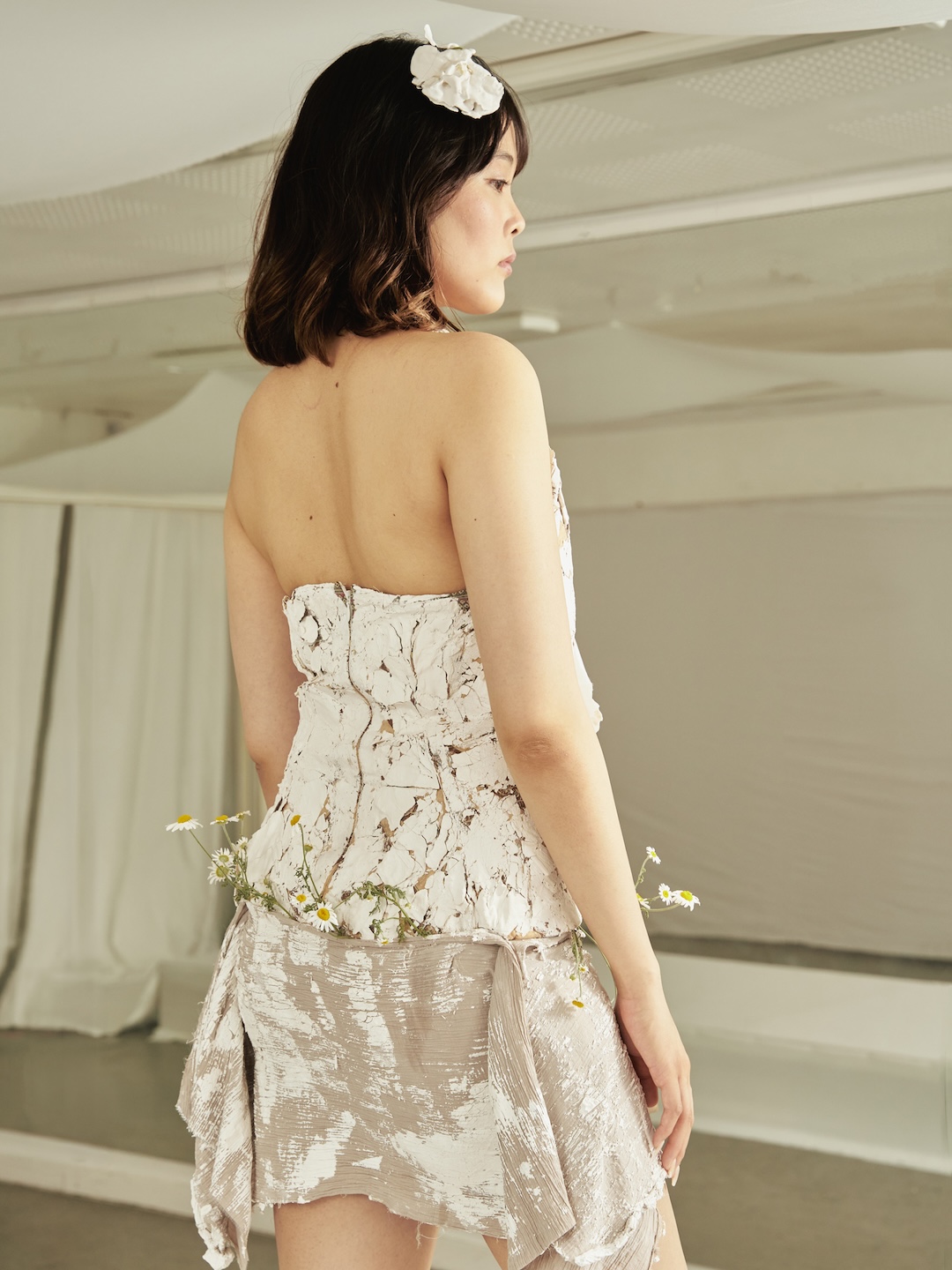
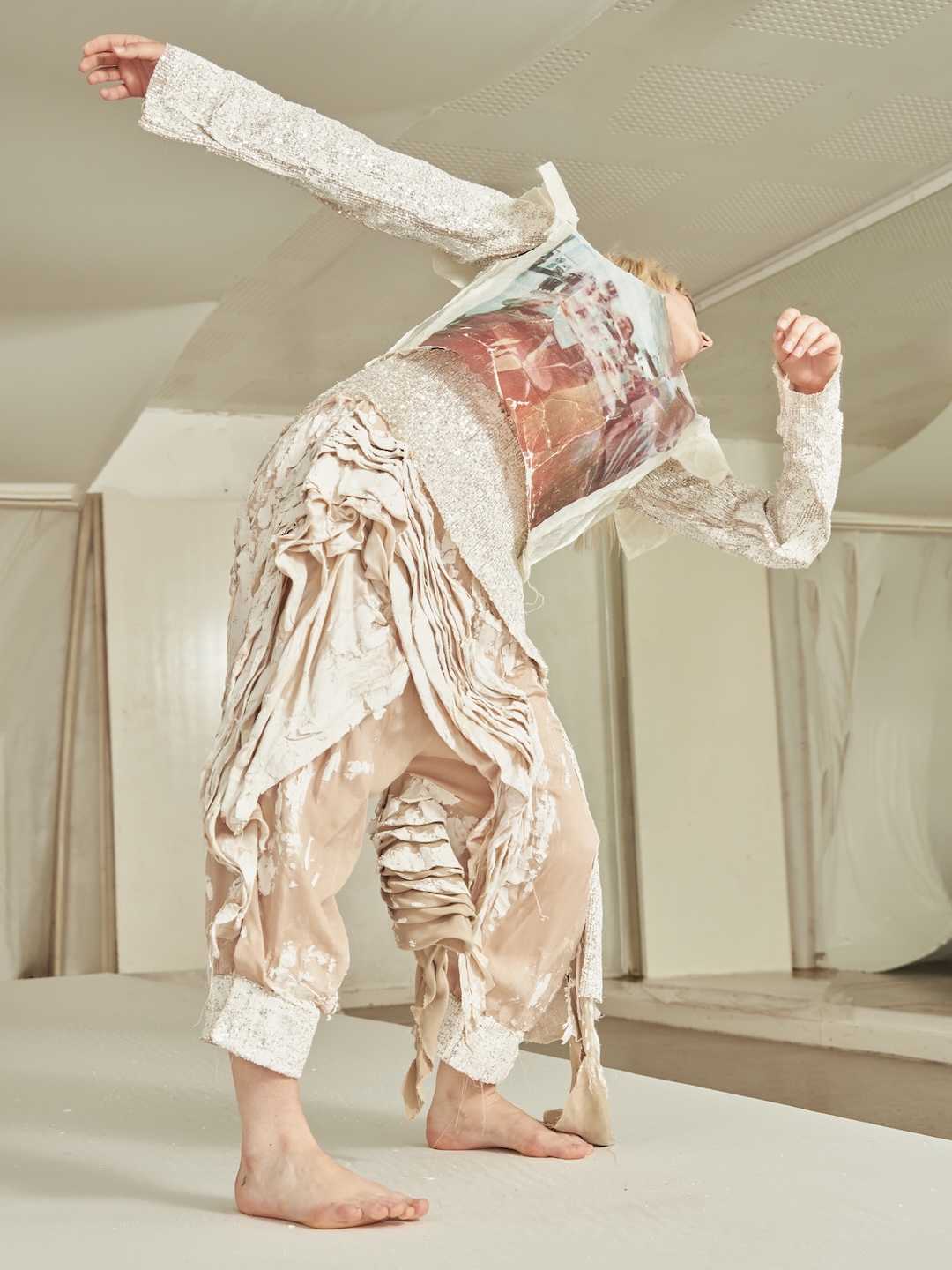
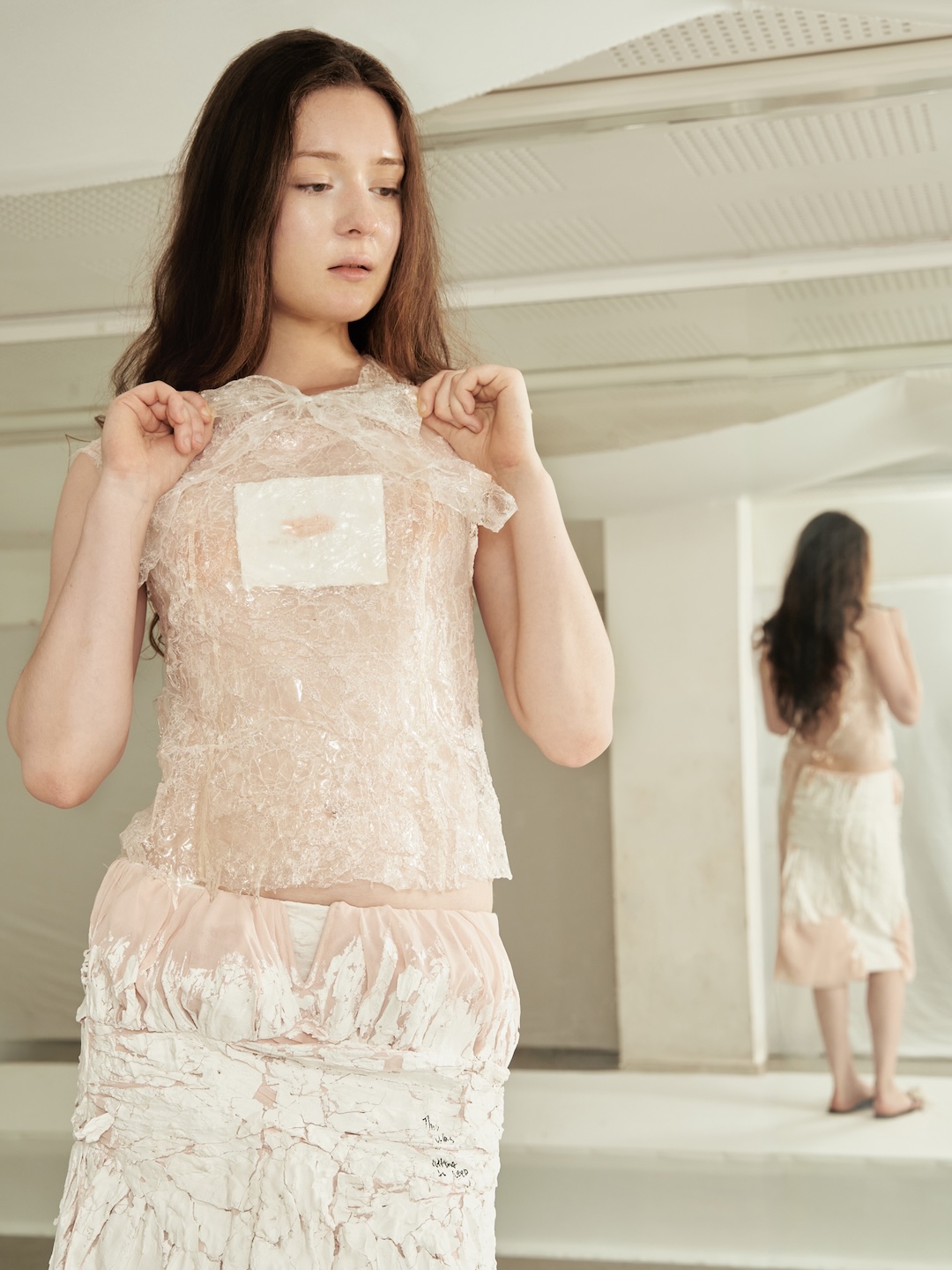
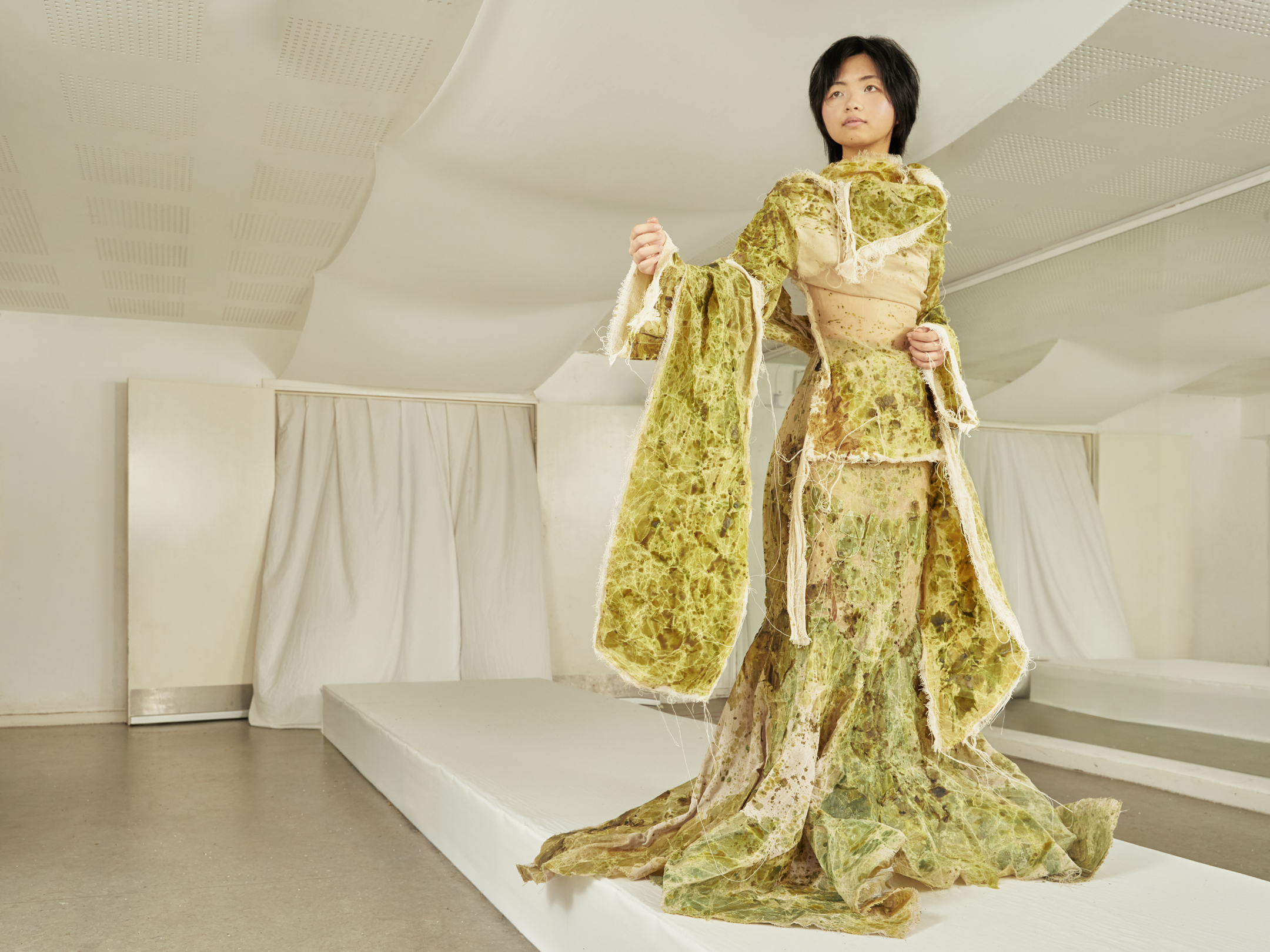
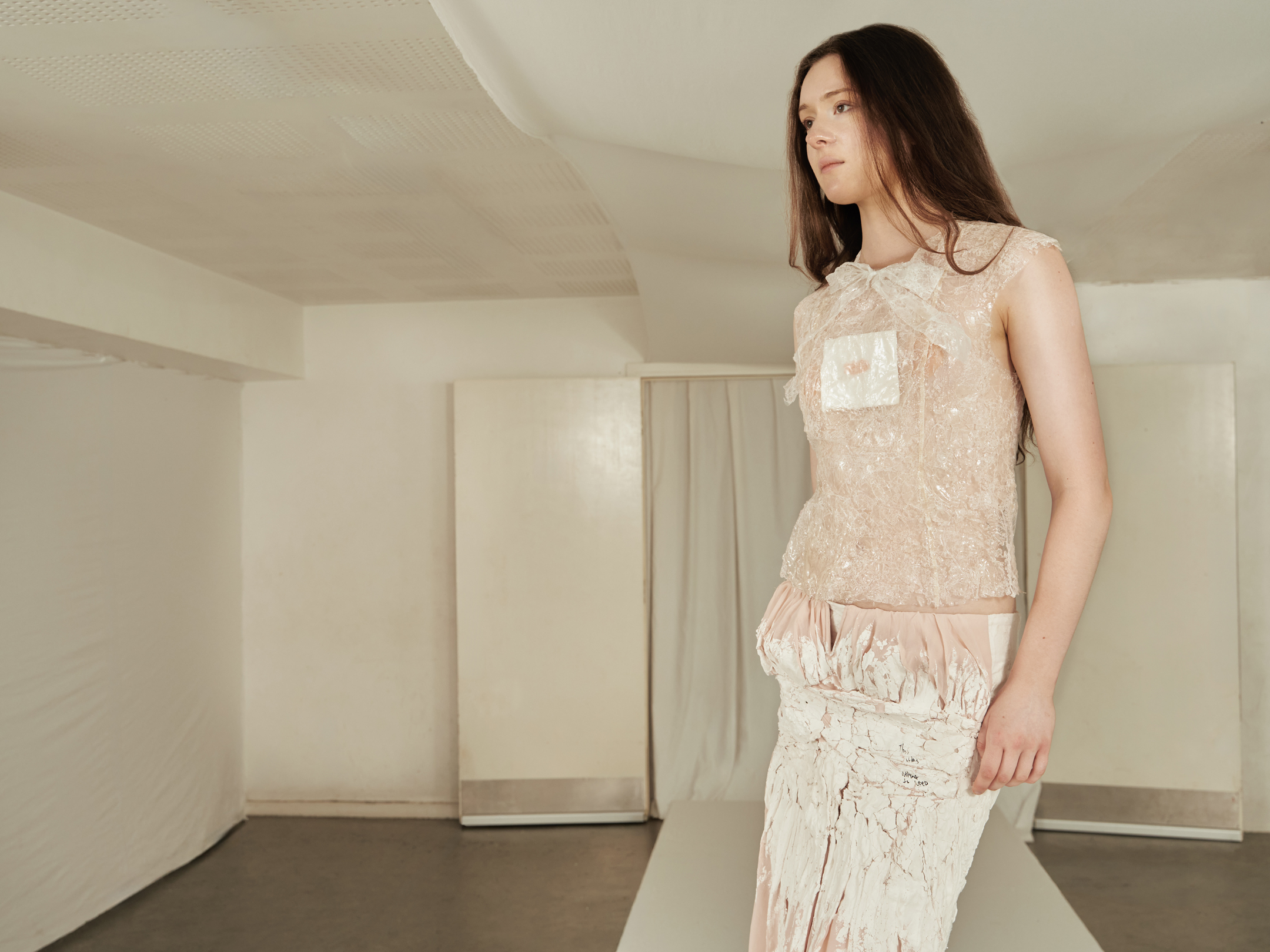
Sugar glass, wax, and plaster are all materials that are, by nature, built to fail. What drew you to working with things you knew wouldn’t last, rather than fighting for permanence with more durable textiles?
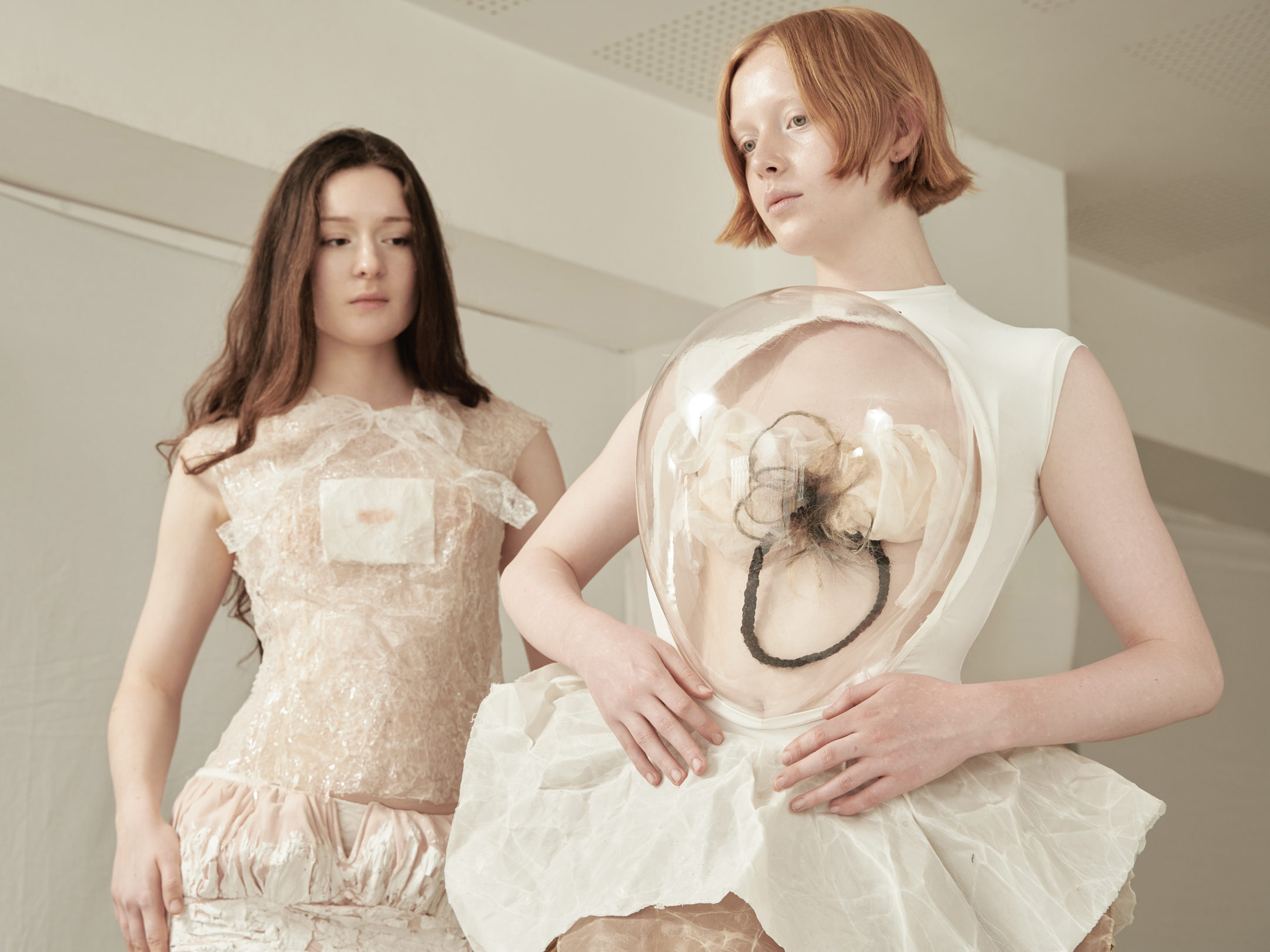
I couldn’t justify using new, long-lasting fabric while talking about my fear of change. I was talking about how everything is alive and in constant motion, so the garments needed to represent that too. That’s what the project taught me: nothing that’s alive will ever stay still. I wanted my pieces to feel alive, so I had to release control and let them unfold and transform naturally, even if that meant accepting they wouldn’t last.


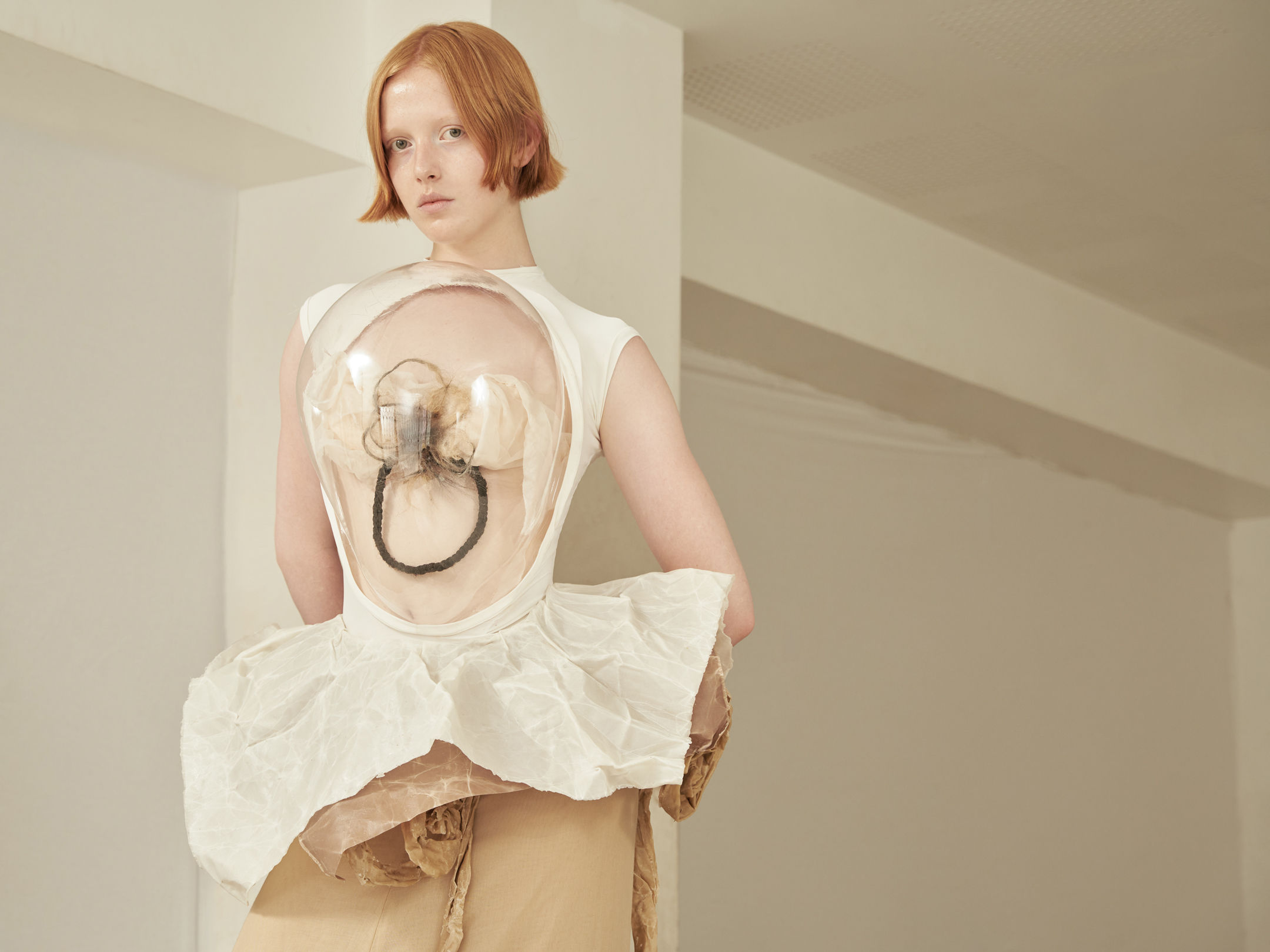
The locket piece with your dogs’ hair and the line about asking them "not to age while I am gone" is incredibly personal. How do you decide which private, emotional material becomes wearable, public work?
It can be scary to overexpose yourself like that. But when I manage to turn a feeling into physical form, and other people connect with my fears through it, it stops feeling like oversharing. It feels like a bridge. The process starts with pages and pages of personal material, and then, naturally, one thing stands out, something you can see yourself building into a piece that other people will be able to connect with. That’s the one I choose.
The final "travelling garment", worn and marked by everyone involved in the project, turns the whole team into co-authors of the piece. What did it feel like to hand over control of a garment in that way?
It felt a bit scary at first. I knew it was going to be the final piece, so I wanted it to look "nice". I didn’t want it to look too crafty. But that fear goes away, and you’re left feeling extremely grateful for the people you have. Seeing their faces, seeing people who had never drawn before trying to make something that represented our relationship on that shirt. My grandmother trying to draw a heart. My brother drawing a tree with the two of us connected through the roots. At some point, it stopped being something for the project and became what I knew it would be: a piece that will matter to me for life.


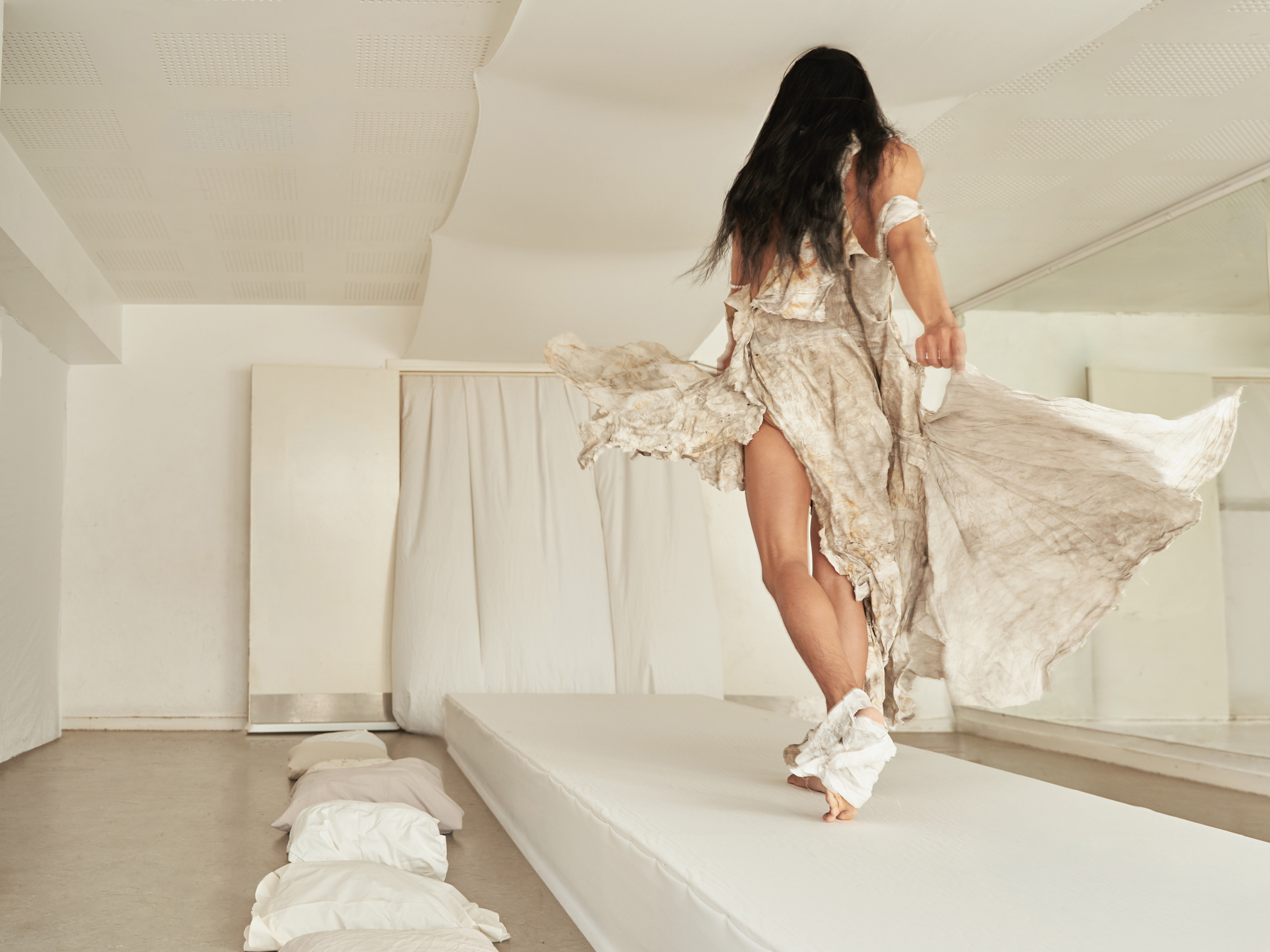
Forever Together was presented as a hybrid performance, exhibition, and gathering at Stoke Newington Youth Hub rather than a traditional runway show. Why was it important to you that audiences experienced this as something collective rather than something to watch from a distance?
I did this show in collaboration with Emma Poos, who was completing her Master’s thesis in Narrative Environments at CSM. Talking about what we expected from fashion shows, we came to the conclusion that we wanted more. We wanted people to feel connected to the work—to not only be viewers, but to somehow participate. Emma brought the format of the show.
That mattered because the main reason my pieces exist is to create a shared space for emotion and reflection. My theme is extremely personal, but I think it’s also universal, and I want the work to become a space for conversation. When I say the way it looks is secondary, I don’t mean it doesn’t matter; I mean it’s an outcome, not a starting point. The form comes from trying to communicate something; it isn’t the reason the work exists. If you begin from how it should look, it stays on the surface, and people only see the surface too.
You’re heading into the MA Fashion at Central Saint Martins between London and Berlin. Does Forever Together feel like a closed chapter now, or is this an idea—time, memory, impermanence—that you expect to keep returning to in different forms?
Even when I’m not fully aware of it, this is a theme that keeps coming back. After a year of working on it, I feel much more at peace with it, and maybe I won’t need to develop it further. But chances are it will return. Mourning, change, the end of chapters; these things take up a lot of space in my mind.
I’d say Forever Together is closed. I can’t offer more to it, at least that’s what I believe now. But I don’t close myself off to new variations of the same feeling in different forms. I can’t foresee my next theme, and I don’t want to force it. When the break is over and the time for reflection returns, I’ll dig into whatever I’m worrying about, and that will become the next thing.
CREATIVE DIRECTION & FASHION DESIGN LEYRE KYMA PRODUCTION LEYRE KYMA, EMMA POOS SET DESIGN EMMA POOS PHOTOGRAPHY CARLOS CASTROSIN PHOTOGRAPHY ASSISTANT JAVIER LEAÑOS VIDAL MAKE-UP PARKER CAMMEL, RED RAVEN MODELS SAYURI SUZUKI, MADDIE FIEDLER, ANAIKA NAIR, VICTORIA PUDOVKINA, KI XIE, TY FIERCE, PARKER CAMMEL, CAITLIN MACLEOD
LEYRE KYMA: Finding Permanence in Impermanence
JULY 23, 2026
WORDS ADRIÁN GOMIS EXPÓSITO

For her graduate collection Forever Together, Ecuadorian-Spanish designer Leyre Kyma, trained at Central Saint Martins, transforms the fear of change into a deeply personal exploration of memory, grief, and human connection. Through garments exposed to the streets, fragile materials destined to decay, and collaborative acts of storytelling, she questions what we choose to preserve and what we must eventually let go. We spoke with Leyre about the emotional process behind the collection, relinquishing control, and why fashion can become a space for collective reflection.

You say Forever Together was born out of fear: of things changing, of people leaving. Was there a specific moment or loss that pushed you to start translating that fear into garments rather than, say, writing or film?
Over the last three years, I moved and lived in six different countries. Constantly moving, constantly building safety nets, and then watching many of them disappear or change when I left again. It made me very aware of how fast relationships, people, and surroundings can shift. I realised that the more places I leave, the more people I miss. You end up in a constant state of mourning because you’ll never be able to be in all of them at once. When it was time to start the collection, that was the feeling that stood out above everything else, the one I needed to dig into. In a way, I did it for myself. I wanted to find a way out of it.
Trace, Preserve, Surrender reads almost like the stages of grief compressed into three acts. Did you know this three-part structure from the start, or did it emerge as you worked through the material experiments?
Yes, it is grief, and making it was grief too. I didn’t plan the three-act structure. It came as I worked. The theme was too complex and too layered to compress into a single title, and at some point I understood that my feelings weren’t static either; there was a step-by-step process happening. So I simply traced how I was moving through it. That structure allowed me to sit properly with each stage and understand where the fear, the need for control, and the reflection were coming from, not only as a designer, but as a person going through it.


Leaving garments on the streets of London for up to 200 hours is a huge act of relinquishing control for a designer. What was it like checking on a piece and not recognising what the city had done to it?
That was a challenging one. I kept an Excel sheet where every piece was recorded, and almost 40% of them disappeared. I assume the police or street cleaners took them. There was always tension when going to check on a piece; you never knew if it would still be there. And the longer they stayed, the more attached I became, so it hurt even more when they were gone. But in a way, it gave me peace. Neither the outcome nor the piece was in my control anymore. I placed it there, and the city took care of the rest. It was exciting to see the change, the new forms, and all the traces each garment picked up along the way.
Sugar glass, wax, and plaster are all materials that are, by nature, built to fail. What drew you to working with things you knew wouldn’t last, rather than fighting for permanence with more durable textiles?
I couldn’t justify using new, long-lasting fabric while talking about my fear of change. I was talking about how everything is alive and in constant motion, so the garments needed to represent that too. That’s what the project taught me: nothing that’s alive will ever stay still. I wanted my pieces to feel alive, so I had to release control and let them unfold and transform naturally, even if that meant accepting they wouldn’t last.


The locket piece with your dogs’ hair and the line about asking them "not to age while I am gone" is incredibly personal. How do you decide which private, emotional material becomes wearable, public work?
It can be scary to overexpose yourself like that. But when I manage to turn a feeling into physical form, and other people connect with my fears through it, it stops feeling like oversharing. It feels like a bridge. The process starts with pages and pages of personal material, and then, naturally, one thing stands out, something you can see yourself building into a piece that other people will be able to connect with. That’s the one I choose.
The final "travelling garment", worn and marked by everyone involved in the project, turns the whole team into co-authors of the piece. What did it feel like to hand over control of a garment in that way?
It felt a bit scary at first. I knew it was going to be the final piece, so I wanted it to look "nice". I didn’t want it to look too crafty. But that fear goes away, and you’re left feeling extremely grateful for the people you have. Seeing their faces, seeing people who had never drawn before trying to make something that represented our relationship on that shirt. My grandmother trying to draw a heart. My brother drawing a tree with the two of us connected through the roots. At some point, it stopped being something for the project and became what I knew it would be: a piece that will matter to me for life.


Forever Together was presented as a hybrid performance, exhibition, and gathering at Stoke Newington Youth Hub rather than a traditional runway show. Why was it important to you that audiences experienced this as something collective rather than something to watch from a distance?
I did this show in collaboration with Emma Poos, who was completing her Master’s thesis in Narrative Environments at CSM. Talking about what we expected from fashion shows, we came to the conclusion that we wanted more. We wanted people to feel connected to the work—to not only be viewers, but to somehow participate. Emma brought the format of the show.
That mattered because the main reason my pieces exist is to create a shared space for emotion and reflection. My theme is extremely personal, but I think it’s also universal, and I want the work to become a space for conversation. When I say the way it looks is secondary, I don’t mean it doesn’t matter; I mean it’s an outcome, not a starting point. The form comes from trying to communicate something; it isn’t the reason the work exists. If you begin from how it should look, it stays on the surface, and people only see the surface too.
You’re heading into the MA Fashion at Central Saint Martins between London and Berlin. Does Forever Together feel like a closed chapter now, or is this an idea—time, memory, impermanence—that you expect to keep returning to in different forms?
Even when I’m not fully aware of it, this is a theme that keeps coming back. After a year of working on it, I feel much more at peace with it, and maybe I won’t need to develop it further. But chances are it will return. Mourning, change, the end of chapters; these things take up a lot of space in my mind.
I’d say Forever Together is closed. I can’t offer more to it, at least that’s what I believe now. But I don’t close myself off to new variations of the same feeling in different forms. I can’t foresee my next theme, and I don’t want to force it. When the break is over and the time for reflection returns, I’ll dig into whatever I’m worrying about, and that will become the next thing.
CREATIVE DIRECTION & FASHION DESIGN LEYRE KYMA
PRODUCTION LEYRE KYMA, EMMA POOS
SET DESIGN EMMA POOS
PHOTOGRAPHY CARLOS CASTROSIN
PHOTOGRAPHY ASSISTANT JAVIER LEAÑOS VIDAL
MAKE-UP PARKER CAMMEL, RED RAVEN
MODELS SAYURI SUZUKI, MADDIE FIEDLER, ANAIKA NAIR, VICTORIA PUDOVKINA, KI XIE, TY FIERCE, PARKER CAMMEL, CAITLIN MACLEOD