In conversation w/ Spydergum
OCTOBER 27, 2026
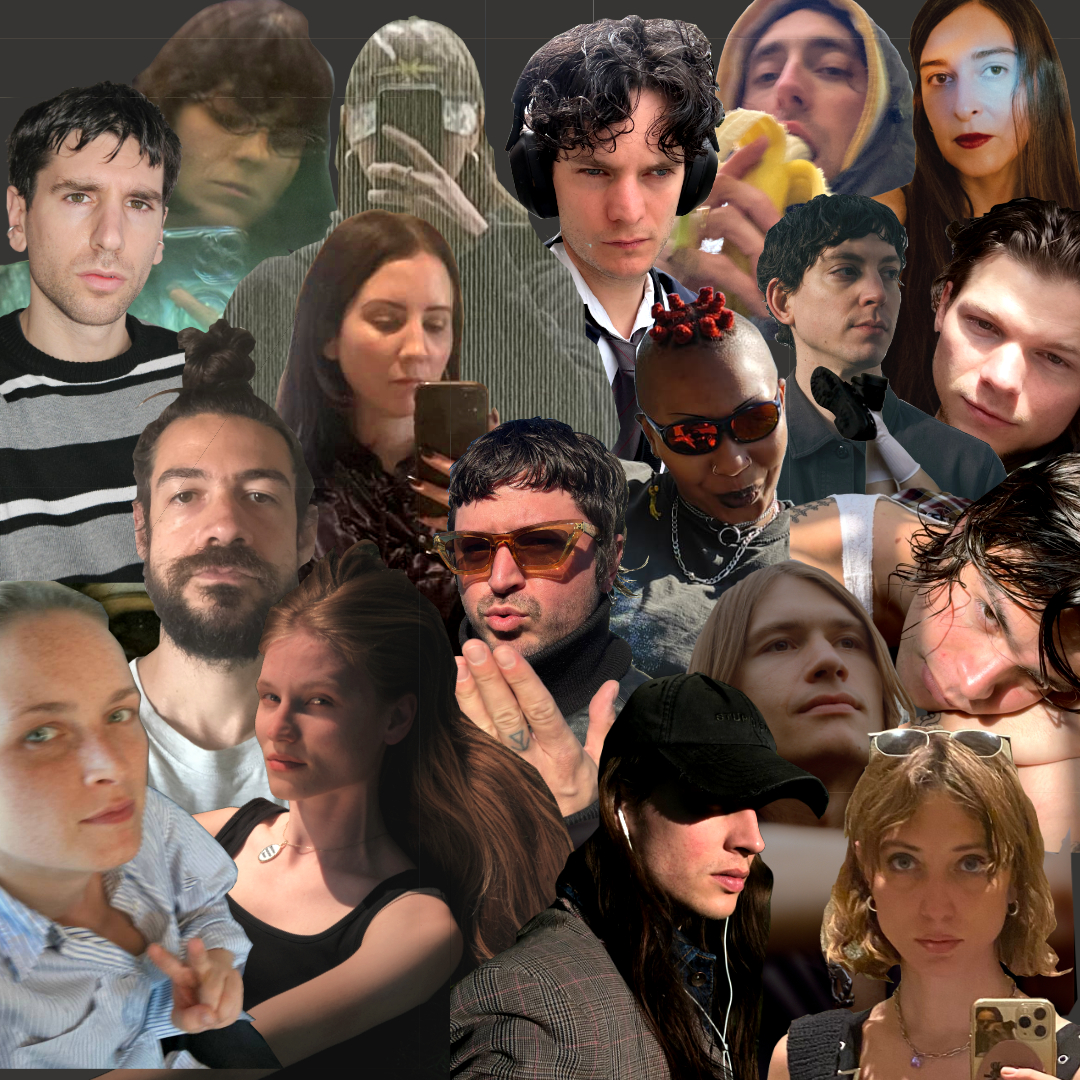
Somewhere on “Day 2, Take 13” there’s a sound nobody can quite explain. Maybe it was a phone notification, maybe a beer bottle hitting the floor. Whoever’s responsible is now part of Spydergum, and on the record for good. It’s a pretty fair summary of how the ensemble works: the door stays open, and anyone who comes through it might end up in the music.
It all started not in Kreuzberg but in Edesheim, a wine village in the Südpfalz right on the French border. In late 2023, Agnese Menguzzato, Diane Esnault and Philipp Hülsenbeck were there prepping a concert and exhibition. They spent the evenings eating, drinking and playing guitar, and kept coming back to the same feeling: too many solo careers, too much time in front of screens, not enough time in a room making something together. The answer was simple enough. Get a lot of friends in one place. Andrea Bambini came on as co-curator, Rabih Beaini offered up his Morphine Raum studio in Berlin, and in November 2024 it filled up with improvisers, producers and songwriters from across the city, Italy and Mexico City. A few had shared bands since they were ten. Clothing showed up without knowing a single person.
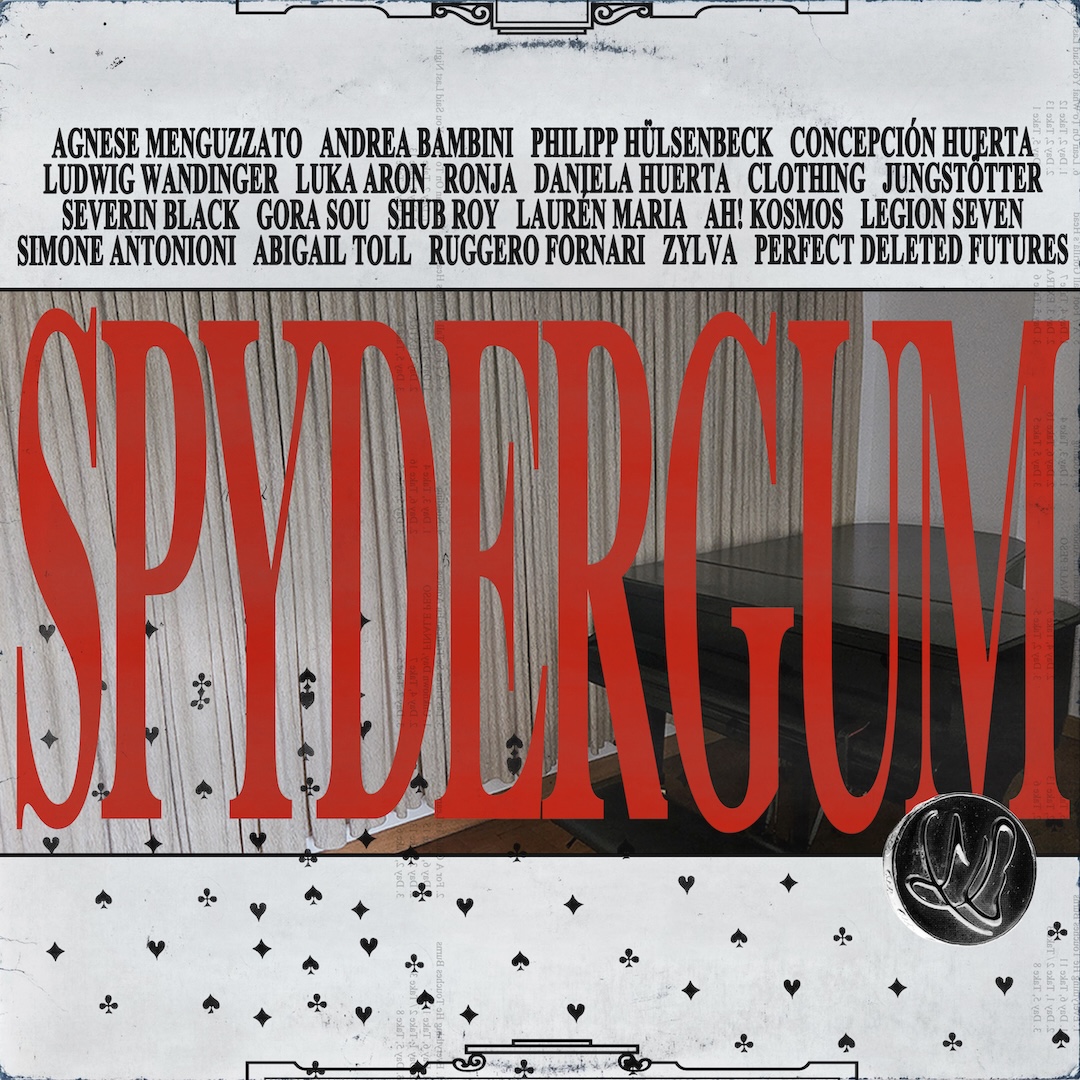
Their self-titled debut, out on Unguarded on November 6, is the result. Nineteen fragments were pulled from 30 hours of tape captured over six days, each titled after its day of recording, bar one. Four days before release, they take over the Volksbühne Main Stage next November 2. After that, by their own admission, it’s anyone’s guess.
We caught up with them just before that show to talk about wine country, village life with twenty people, textiles, playing to strangers and the sessions behind the album. Along the way, we find out what might have happened on day seven, why one track goes undated, who has the final say on a sound they helped make, and whether Spydergum can still be Spydergum once everyone in it now has moved on.
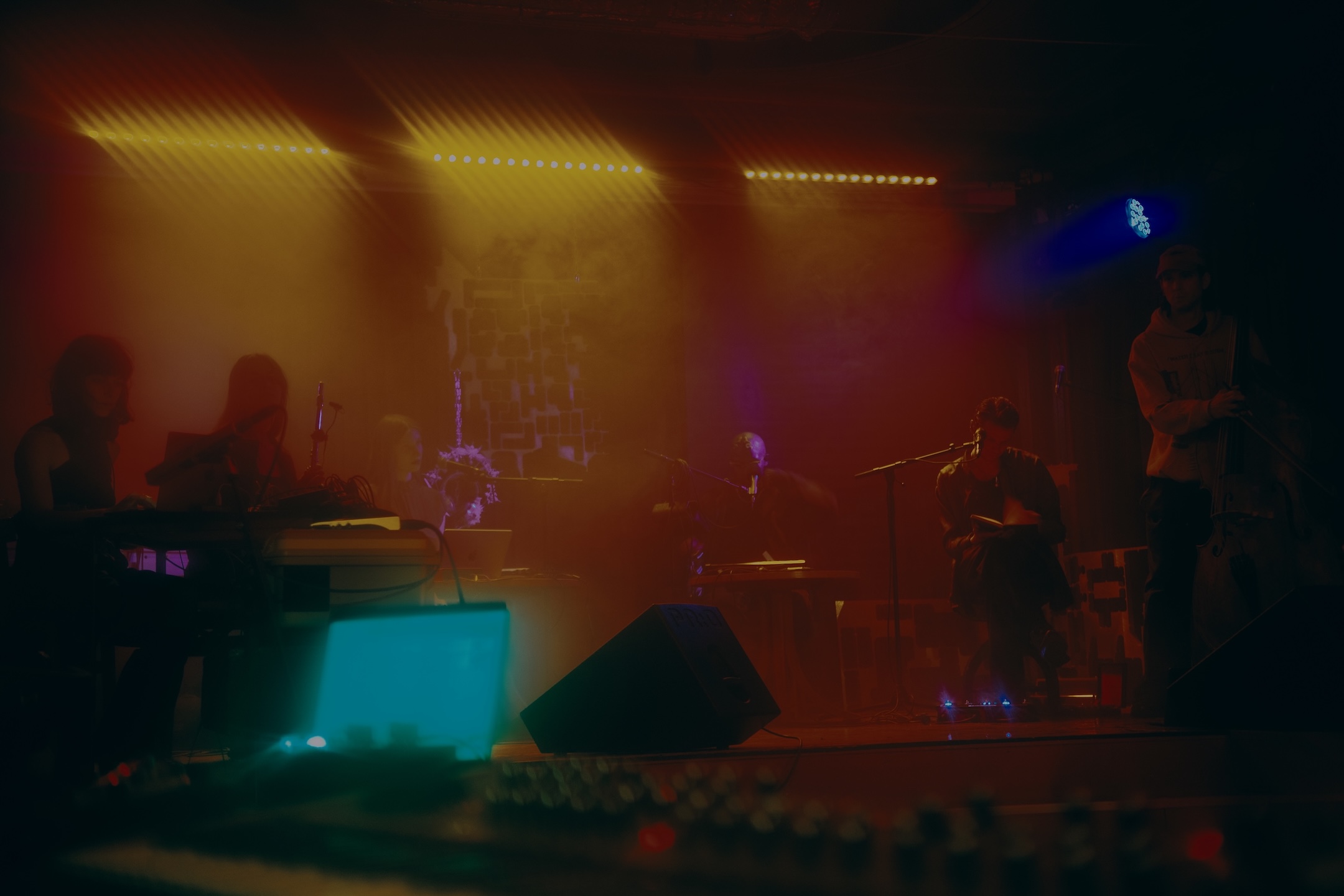
PHOTOGRAPHY HANNAH BRANDES
There’s an Australian eucalyptus called the spider gum, whose buds grow fused together in clusters of up to twenty or more, and when the cluster gets too big, some of them never open. With twenty people in the room, how do you make peace with the ideas that never get to bloom?
You know Magueyes the Agave plants that grow in the Americas, before dying they bloom once, then spread their seeds so a lot of new ones can grow after it dies. Something similar is already happening from within Spydergum. People link up, so do their ideas. A six day recording session creates a lot of thoughts and ideas. People take them home and whatever comes out of it, might never be labeled Spydergum, but this is whats so great about ecosystems. It’s all connected, ideas float and can spark things to come to life but there’s no need to claim ownership. It’s just nice to watch things grow.
It all started in a wine village on the French border, not in Kreuzberg. What did the Südpfalz give you that Berlin never could have?
The wine region and the proximity to France definitely put a different priority o drinking, eating and letting life have a different pace. This Genusskultur combined with our urge to create and be in exchange with people from our community in Berlin and beyond, turned out to be a pretty great breeding ground to dream up a collective constellation like Spydergum.
Diane works with textiles. Is there something about how a weave holds together that explains how twenty people can play at once without everything unravelling?
There’s probably a similar logic behind it. In textile similar to the ensemble there is parts that might be sewn together, knotted or just sit tighter than others. There might even be loose ends. I guess you can apply this to the ensemble members as well as to our approach too. Some members like Ronja, Luka and Ludwig are really tight since they are constantly playing together in their band Roomer. Marc (Gora Sou), Fabian (Jungstötter) and me, we started making music together more than 20 years ago when we were like 10 years old, played in our band Sizarr until 10 years ago and now met again in Spydergum. Then there is the founding connection between Diane Esnault, Agnese Menguzzato, Andrea Bambini and me, that started when some of us met during the pandemic.
We have been working together in all sorts of constellations, supporting each other’s works just as much as other friends’ works, by putting up events, and repeatedly ended up in Edesheim in Südpalz. Even though we come from different disciplines, Diane’s textile work and her enthusiasm in production work for music or performance related stuff, was as vital to the ensemble’s birth as every musical contribution has been. The parts that might feel like loose ends for some, maybe someone like Clothing showing up in the studio, before we have ever met in person, might at the same time already sit in a tight knot with artists such as Daniela Huerta or Concepción Huerta, who all come from a similar scene in Mexico City. So yes, the ensemble from Day 1 was like a nice old rug. Very peculiar, interesting but also somehow familiar. In regard to the playing, you actually can’t avoid everything from unravelling. It just happens, you realize it and start all over.
With this many people, you’re less a band and more a small village. What are the unwritten rules of village life, and what happens when someone breaks one?
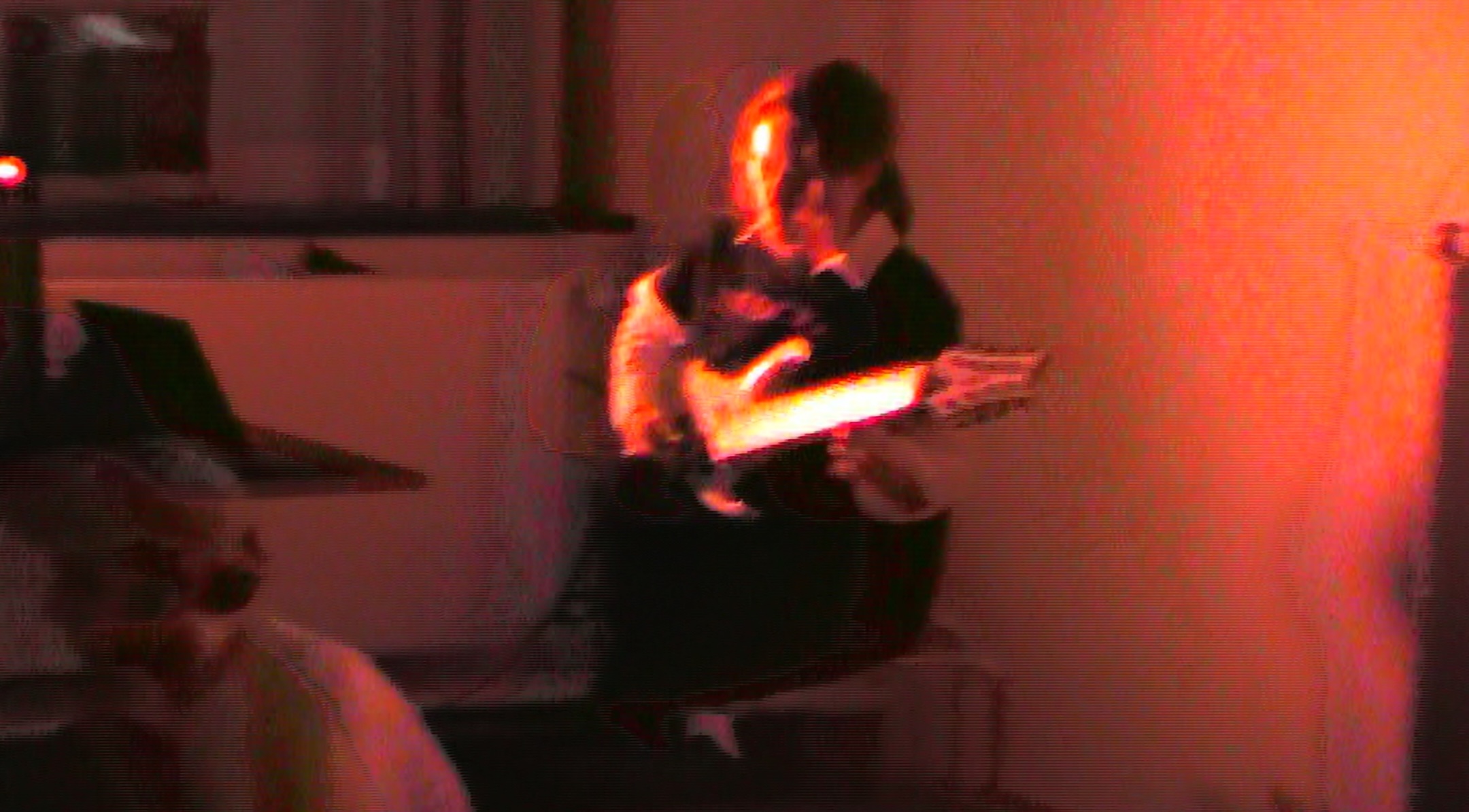
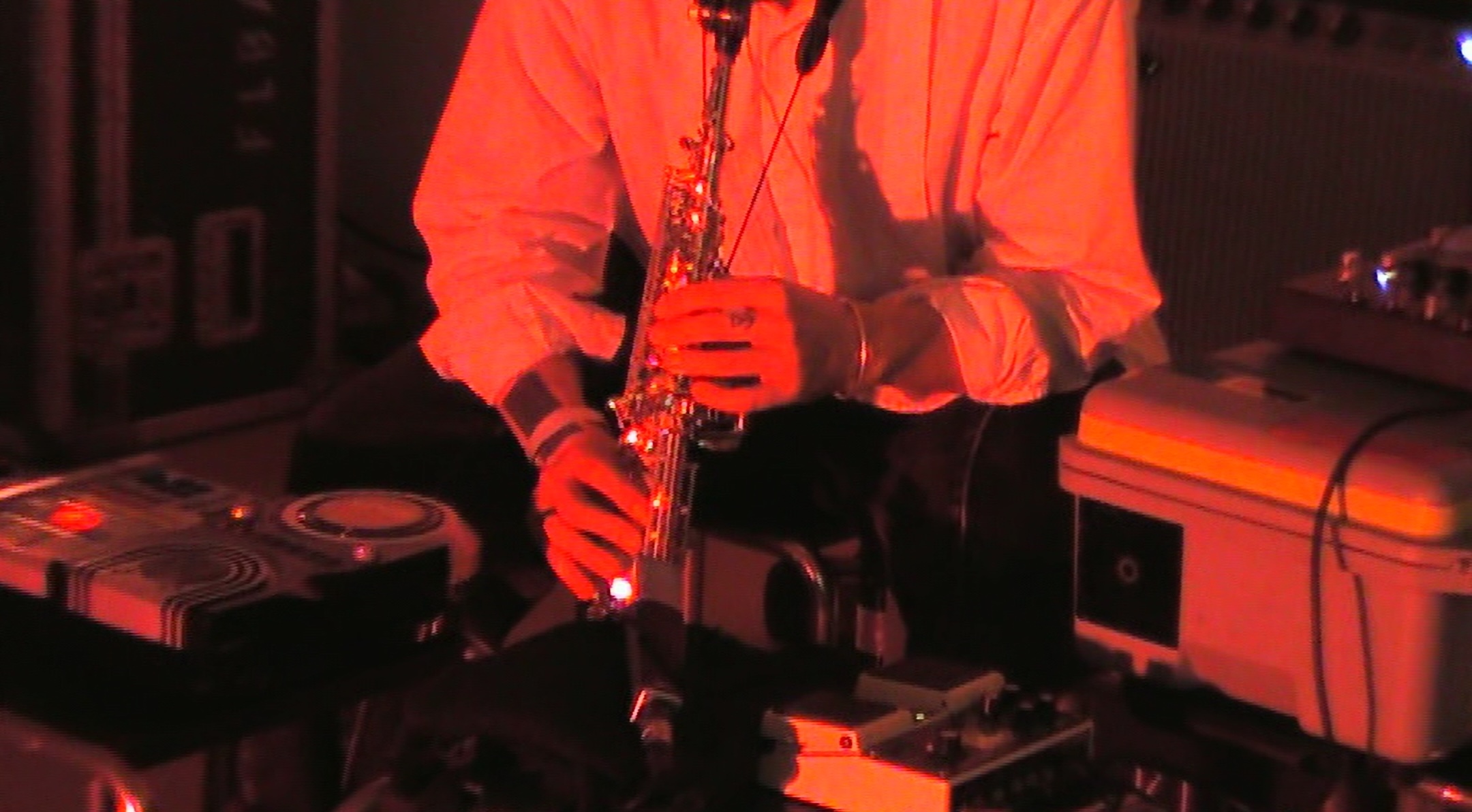
The only rule I understood so far is that everyone has to listen to the room. People do break this rule and zone out, we get confused, maybe you don’t love what you are hearing or get nervous because you want to contribute but don’t know what. But you have to accept that and be „brave“ enough to step back. That can feel intense, and listening can be more demanding than just playing without making a pause. Maybe similar to a conversation where it’s sometimes harder to listen instead of just voicing your opinion. Obviously everyone brings their own personality to the room, and leaves with their personal experience, but generally it’s an attempt to having a very democratic musical space.
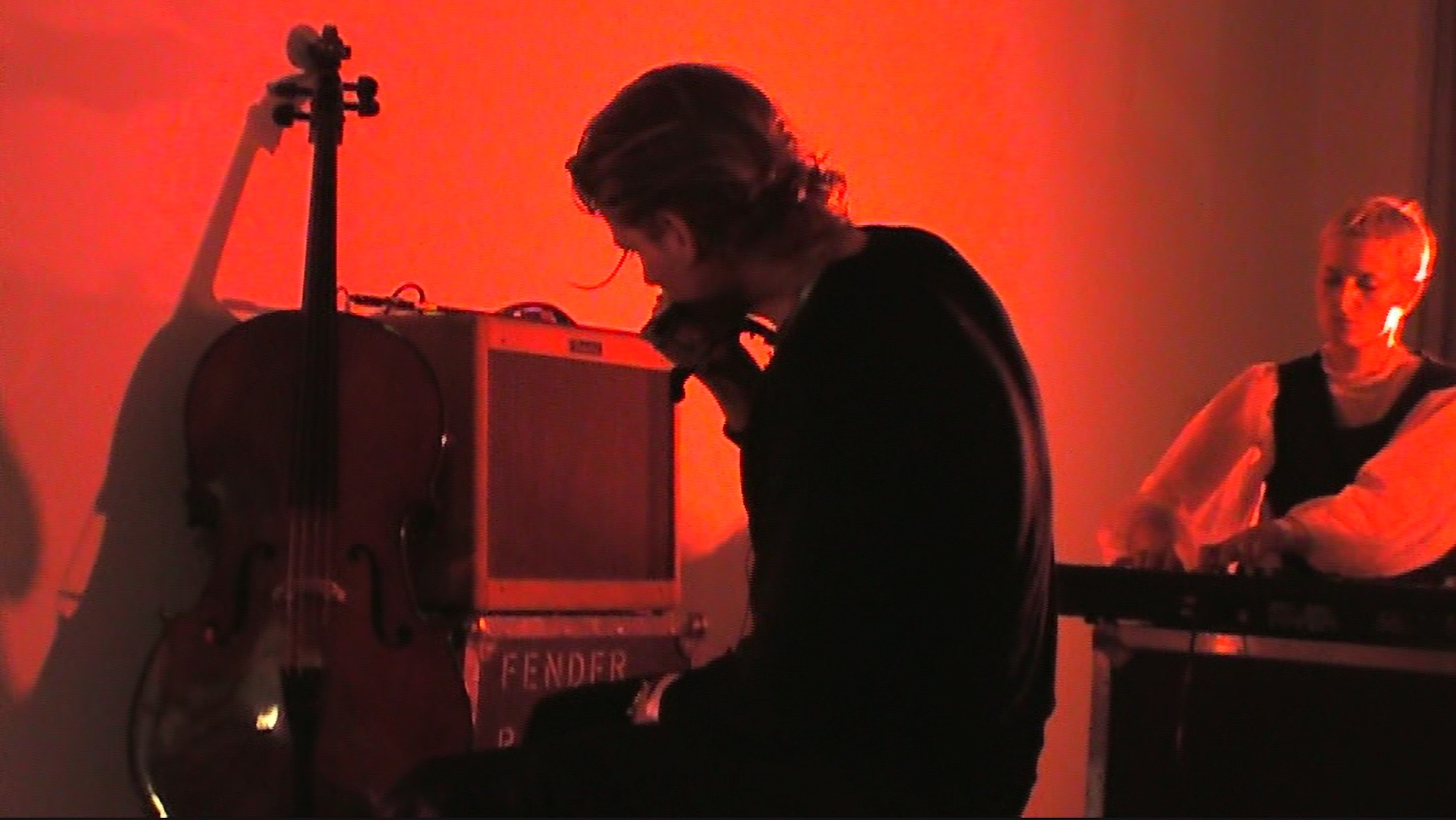
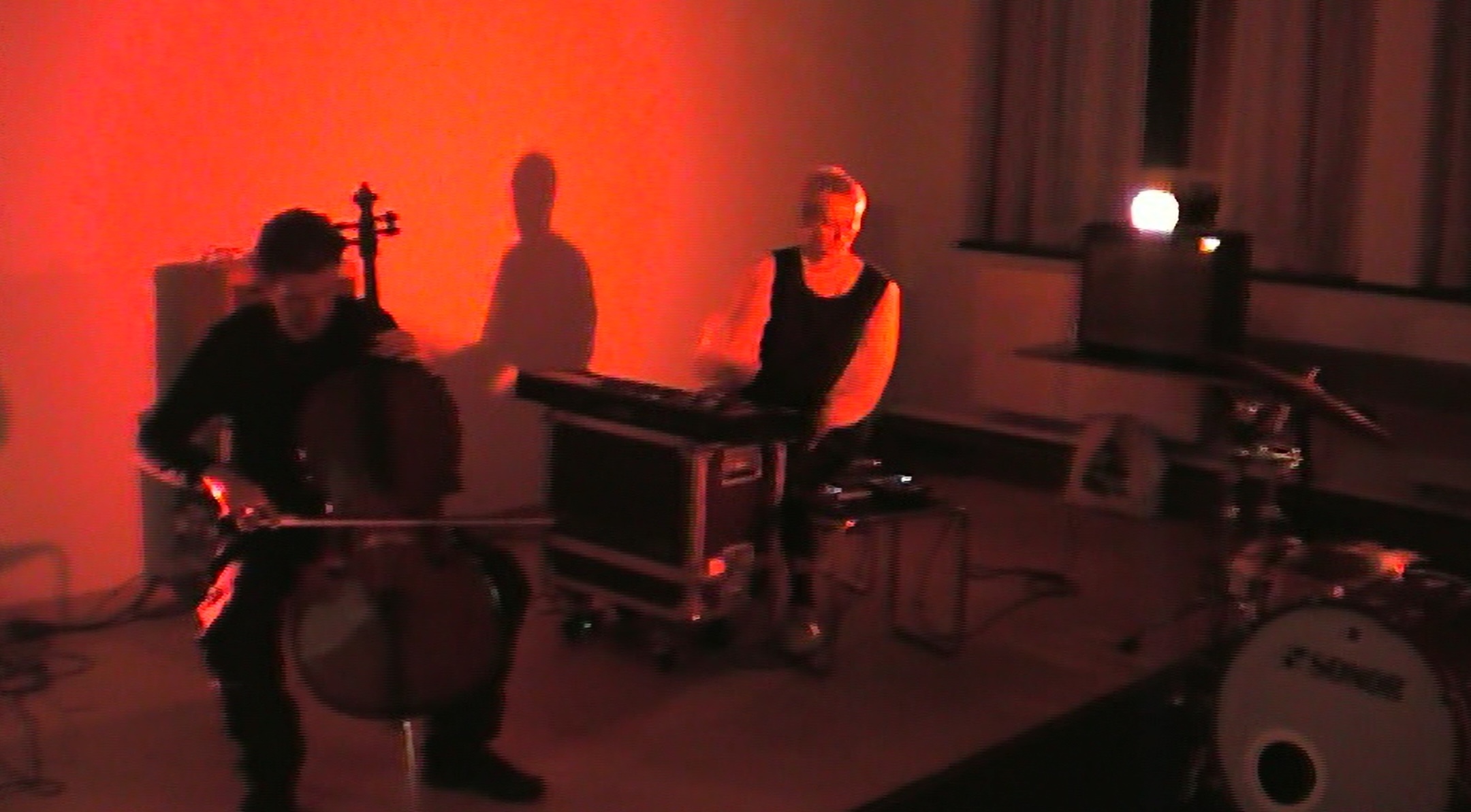
PHOTOGRAPHY ANNIE PAXTON
Six days in the studio. Traditionally the seventh is for rest. What would have happened if you’d kept going?
¯\_(ツ)_/¯
That is if you live life according to the Bible. The ensemble is too diverse for this to be the case, then again, you are right, we did stop after 6 days. I guess if we would have kept going, on Day 7 all hell would have broken loose, the improv would have gone fully diabolic and we’d have deleted everything and decided to end this. Didn’t happen though. We are going to play a concert and release bits of Day 1 to Day 6.
When every element is welcome, how does anyone know when they’re not? Has someone ever had to be asked, very gently, to put their instrument down?
No one has been asked to put their instruments down so far. It’s rather a conversation, on how to really listen to each other. I wouldn’t claim that this always works. We are humans, we all have different ideas and concepts on how to approach things. These ideas sometimes clash but in a group of that size it is possible to lean back and just watch what happens. And it turned out the good surprises outnumber the moments where you feel lost.
The sessions were open to strangers two hours a day. What’s the strangest thing someone in the audience did or said?
In Day 2, Take 13 there’s this notification sound or a beer bottle drop, I don’t know. Whoever made that sound, you are now part of an ensemble and made it on the record.
Every track has a date, except “Unknown Day”. Is that a mistake, a secret, or a day nobody wants to remember?
I guess certain things are just not meant to be revealed.
Motifs come back with different companions the second or third time. Was there one idea that kept travelling from player to player across the week like a rumour? And whose was it to begin with?
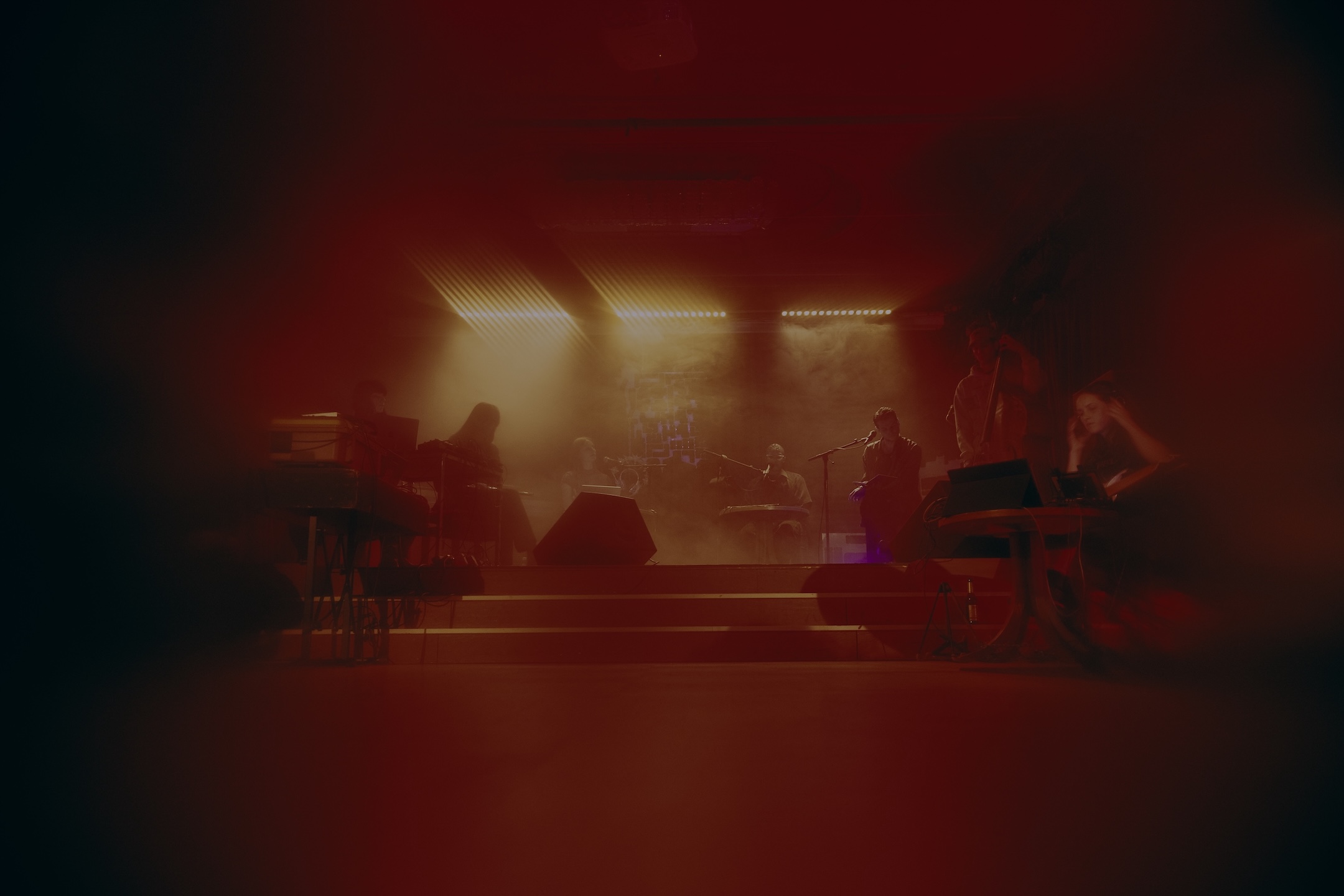
It’s interesting that you pointed this out. It’s something we didn’t realize until after going through the 30hrs of recorded material and after having made a selection. I guess it’s happening naturally. Everyone has their specific vocabulary in the way they play, or sing, or the words they choose and the moves they fall back to, especially in a setting where there’s no strictly proposed framework. So these motifs develop without being intended. That’s probably the most pop thing about the whole ensemble.
PHOTOGRAPHY HANNAH BRANDES
Luka Aron plays in the ensemble and also mastered the record. What happens when the person with the last word on the sound was also inside it?
There has been so much material, that a lot of times it wasn’t even clear anymore who added what. Not sure if Luka even knows which sounds he contributed to while working on the master or if it actually is more like mastering someone else’s material. Luka is such a sweet person, with the right sensitivity to have given the recordings their final touch. Same goes for Tim who mixed it and runs Unguarded who will release the album. They were both obvious choices. Shoutout to them.
You’ve been described as making notes that die the moment they’re born. So why make a record at all? Isn’t an album a small betrayal of that?
You are right! If the album would become some sort of map for what Spydergum will be in the future then yes. But the idea to have something come up, and let it vanish right after, is still the foundation of the process the ensemble committed itself to. The idea is trying to accept that, whatever happens in a moment leads the way, no second guessing. There were no previously agreed directions, references or whatsoever.
It’s a carefully selected group of friends, each with a particular voice and role in our community, that seemed willing to take a step back, listen to the room and take the lead if its the right moment. The album is a documentation of that process. Whatever comes next will not have the same group of people, not the same sound, so in one way or another the notes will be rewritten over and over again.
The Volksbühne has a long history of people breaking the rules of what a stage can be. On November 2, which rule of the Main Stage would you most like to break?
Oh wow, what are the rules of the Main Stage? Okay maybe our ambition is to take away the focus from the individual artist and give the audience as well as ourselves the chance to become real time observers of what happens when we walk up on stage and spontaneously react to each other. When you think about it, it’s a very delicate situation to put yourself into, on a stage where probably most other performances have been rehearsed over and over again. It’s going to be fun.
If Spydergum really never stops, one day nobody from today will be in it. Will it still be Spydergum?
That’s the dream.
In conversation w/ Spydergum
OCTOBER 27, 2026
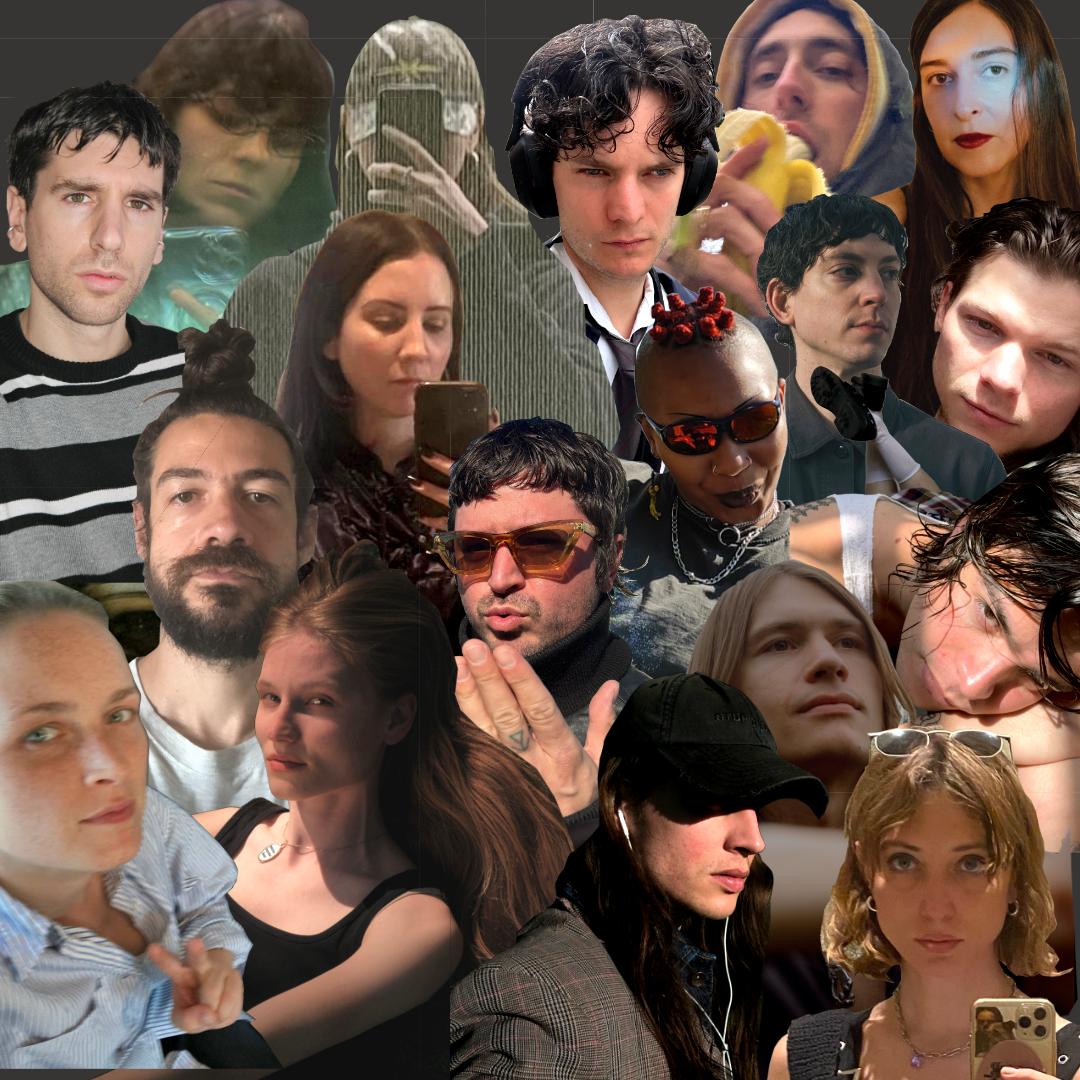
Somewhere on “Day 2, Take 13” there’s a sound nobody can quite explain. Maybe it was a phone notification, maybe a beer bottle hitting the floor. Whoever’s responsible is now part of Spydergum, and on the record for good. It’s a pretty fair summary of how the ensemble works: the door stays open, and anyone who comes through it might end up in the music.
It all started not in Kreuzberg but in Edesheim, a wine village in the Südpfalz right on the French border. In late 2023, Agnese Menguzzato, Diane Esnault and Philipp Hülsenbeck were there prepping a concert and exhibition. They spent the evenings eating, drinking and playing guitar, and kept coming back to the same feeling: too many solo careers, too much time in front of screens, not enough time in a room making something together. The answer was simple enough. Get a lot of friends in one place. Andrea Bambini came on as co-curator, Rabih Beaini offered up his Morphine Raum studio in Berlin, and in November 2024 it filled up with improvisers, producers and songwriters from across the city, Italy and Mexico City. A few had shared bands since they were ten. Clothing showed up without knowing a single person.
Their self-titled debut, out on Unguarded on November 6, is the result. Nineteen fragments were pulled from 30 hours of tape captured over six days, each titled after its day of recording, bar one. Four days before release, they take over the Volksbühne Main Stage next November 2. After that, by their own admission, it’s anyone’s guess.
We caught up with them just before that show to talk about wine country, village life with twenty people, textiles, playing to strangers and the sessions behind the album. Along the way, we find out what might have happened on day seven, why one track goes undated, who has the final say on a sound they helped make, and whether Spydergum can still be Spydergum once everyone in it now has moved on.
PHOTOGRAPHY HANNAH BRANDES
There’s an Australian eucalyptus called the spider gum, whose buds grow fused together in clusters of up to twenty or more, and when the cluster gets too big, some of them never open. With twenty people in the room, how do you make peace with the ideas that never get to bloom?
You know Magueyes the Agave plants that grow in the Americas, before dying they bloom once, then spread their seeds so a lot of new ones can grow after it dies. Something similar is already happening from within Spydergum. People link up, so do their ideas. A six day recording session creates a lot of thoughts and ideas. People take them home and whatever comes out of it, might never be labeled Spydergum, but this is whats so great about ecosystems. It’s all connected, ideas float and can spark things to come to life but there’s no need to claim ownership. It’s just nice to watch things grow.
It all started in a wine village on the French border, not in Kreuzberg. What did the Südpfalz give you that Berlin never could have?
The wine region and the proximity to France definitely put a different priority o drinking, eating and letting life have a different pace. This Genusskultur combined with our urge to create and be in exchange with people from our community in Berlin and beyond, turned out to be a pretty great breeding ground to dream up a collective constellation like Spydergum.
Diane works with textiles. Is there something about how a weave holds together that explains how twenty people can play at once without everything unravelling?
There’s probably a similar logic behind it. In textile similar to the ensemble there is parts that might be sewn together, knotted or just sit tighter than others. There might even be loose ends. I guess you can apply this to the ensemble members as well as to our approach too. Some members like Ronja, Luka and Ludwig are really tight since they are constantly playing together in their band Roomer. Marc (Gora Sou), Fabian (Jungstötter) and me, we started making music together more than 20 years ago when we were like 10 years old, played in our band Sizarr until 10 years ago and now met again in Spydergum. Then there is the founding connection between Diane Esnault, Agnese Menguzzato, Andrea Bambini and me, that started when some of us met during the pandemic.
We have been working together in all sorts of constellations, supporting each other’s works just as much as other friends’ works, by putting up events, and repeatedly ended up in Edesheim in Südpalz. Even though we come from different disciplines, Diane’s textile work and her enthusiasm in production work for music or performance related stuff, was as vital to the ensemble’s birth as every musical contribution has been. The parts that might feel like loose ends for some, maybe someone like Clothing showing up in the studio, before we have ever met in person, might at the same time already sit in a tight knot with artists such as Daniela Huerta or Concepción Huerta, who all come from a similar scene in Mexico City. So yes, the ensemble from Day 1 was like a nice old rug. Very peculiar, interesting but also somehow familiar. In regard to the playing, you actually can’t avoid everything from unravelling. It just happens, you realize it and start all over.
With this many people, you’re less a band and more a small village. What are the unwritten rules of village life, and what happens when someone breaks one?
The only rule I understood so far is that everyone has to listen to the room. People do break this rule and zone out, we get confused, maybe you don’t love what you are hearing or get nervous because you want to contribute but don’t know what. But you have to accept that and be „brave“ enough to step back. That can feel intense, and listening can be more demanding than just playing without making a pause. Maybe similar to a conversation where it’s sometimes harder to listen instead of just voicing your opinion. Obviously everyone brings their own personality to the room, and leaves with their personal experience, but generally it’s an attempt to having a very democratic musical space.
PHOTOGRAPHY ANNIE PAXTON
Six days in the studio. Traditionally the seventh is for rest. What would have happened if you’d kept going?
¯\_(ツ)_/¯
That is if you live life according to the Bible. The ensemble is too diverse for this to be the case, then again, you are right, we did stop after 6 days. I guess if we would have kept going, on Day 7 all hell would have broken loose, the improv would have gone fully diabolic and we’d have deleted everything and decided to end this. Didn’t happen though. We are going to play a concert and release bits of Day 1 to Day 6.
When every element is welcome, how does anyone know when they’re not? Has someone ever had to be asked, very gently, to put their instrument down?
No one has been asked to put their instruments down so far. It’s rather a conversation, on how to really listen to each other. I wouldn’t claim that this always works. We are humans, we all have different ideas and concepts on how to approach things. These ideas sometimes clash but in a group of that size it is possible to lean back and just watch what happens. And it turned out the good surprises outnumber the moments where you feel lost.
The sessions were open to strangers two hours a day. What’s the strangest thing someone in the audience did or said?
In Day 2, Take 13 there’s this notification sound or a beer bottle drop, I don’t know. Whoever made that sound, you are now part of an ensemble and made it on the record.
Every track has a date, except “Unknown Day”. Is that a mistake, a secret, or a day nobody wants to remember?
I guess certain things are just not meant to be revealed.
Motifs come back with different companions the second or third time. Was there one idea that kept travelling from player to player across the week like a rumour? And whose was it to begin with?
It’s interesting that you pointed this out. It’s something we didn’t realize until after going through the 30hrs of recorded material and after having made a selection. I guess it’s happening naturally. Everyone has their specific vocabulary in the way they play, or sing, or the words they choose and the moves they fall back to, especially in a setting where there’s no strictly proposed framework. So these motifs develop without being intended. That’s probably the most pop thing about the whole ensemble.
PHOTOGRAPHY HANNAH BRANDES
Luka Aron plays in the ensemble and also mastered the record. What happens when the person with the last word on the sound was also inside it?
There has been so much material, that a lot of times it wasn’t even clear anymore who added what. Not sure if Luka even knows which sounds he contributed to while working on the master or if it actually is more like mastering someone else’s material. Luka is such a sweet person, with the right sensitivity to have given the recordings their final touch. Same goes for Tim who mixed it and runs Unguarded who will release the album. They were both obvious choices. Shoutout to them.
You’ve been described as making notes that die the moment they’re born. So why make a record at all? Isn’t an album a small betrayal of that?
You are right! If the album would become some sort of map for what Spydergum will be in the future then yes. But the idea to have something come up, and let it vanish right after, is still the foundation of the process the ensemble committed itself to. The idea is trying to accept that, whatever happens in a moment leads the way, no second guessing. There were no previously agreed directions, references or whatsoever.
It’s a carefully selected group of friends, each with a particular voice and role in our community, that seemed willing to take a step back, listen to the room and take the lead if its the right moment. The album is a documentation of that process. Whatever comes next will not have the same group of people, not the same sound, so in one way or another the notes will be rewritten over and over again.
The Volksbühne has a long history of people breaking the rules of what a stage can be. On November 2, which rule of the Main Stage would you most like to break?
Oh wow, what are the rules of the Main Stage? Okay maybe our ambition is to take away the focus from the individual artist and give the audience as well as ourselves the chance to become real time observers of what happens when we walk up on stage and spontaneously react to each other. When you think about it, it’s a very delicate situation to put yourself into, on a stage where probably most other performances have been rehearsed over and over again. It’s going to be fun.
If Spydergum really never stops, one day nobody from today will be in it. Will it still be Spydergum?
That’s the dream.