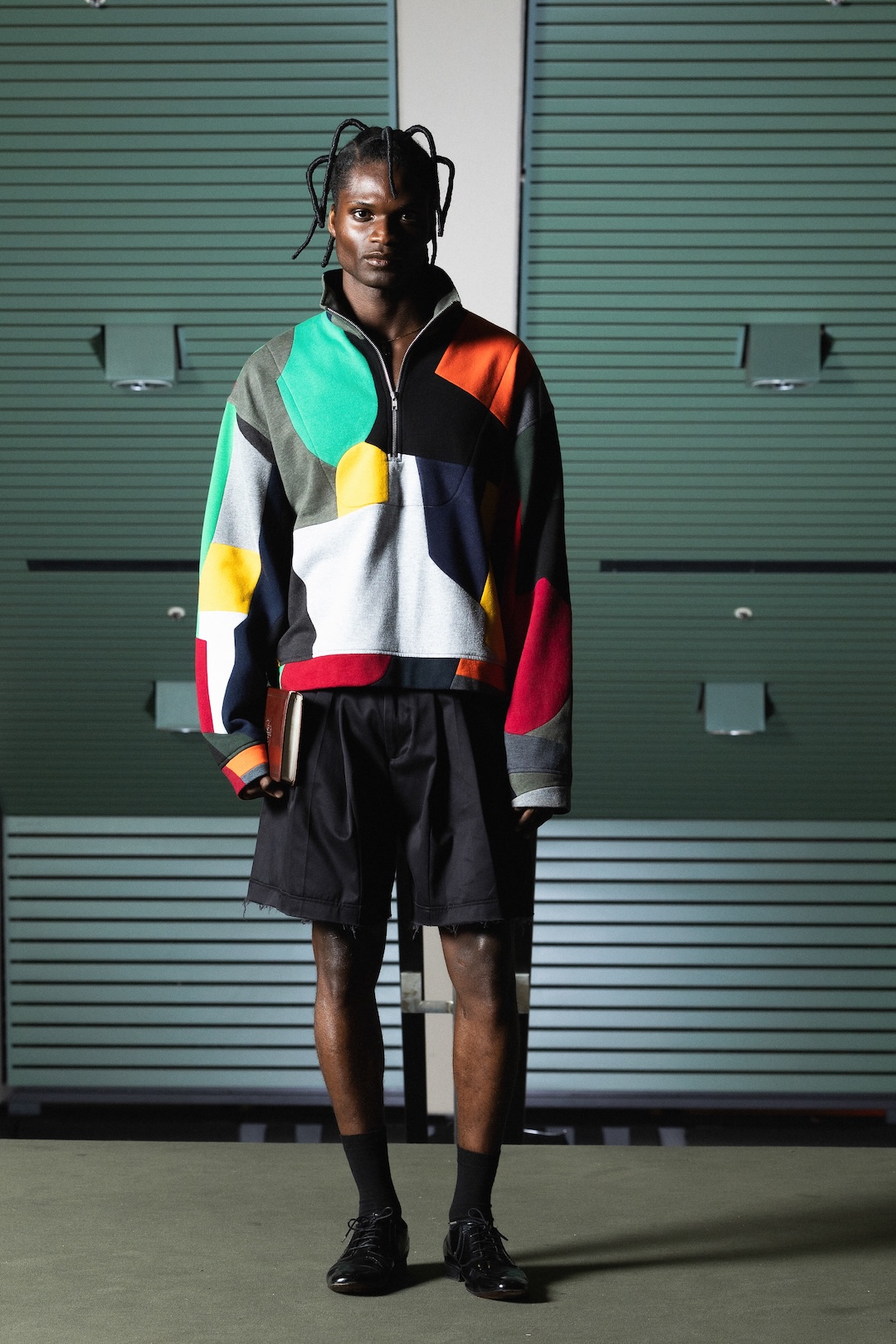
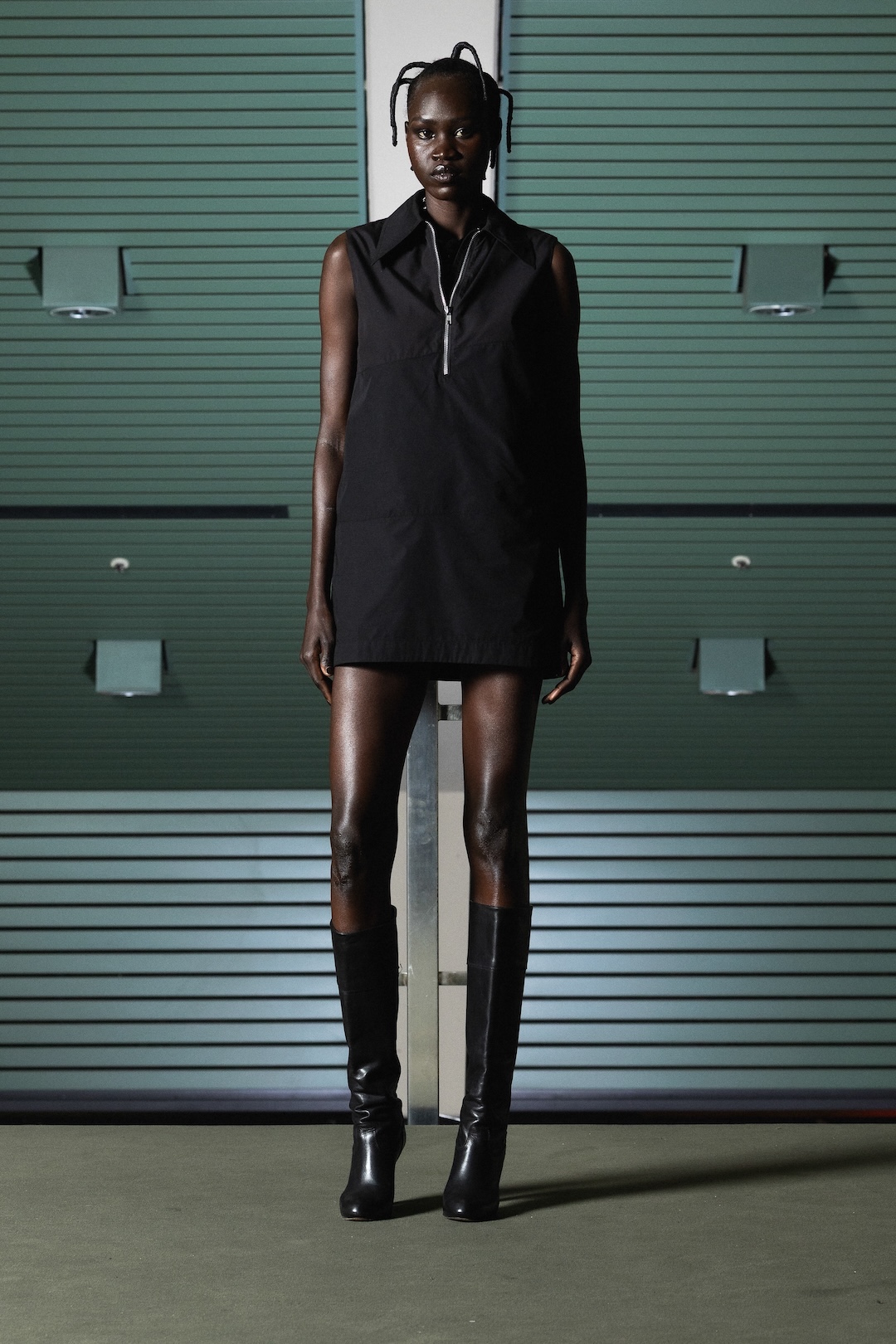
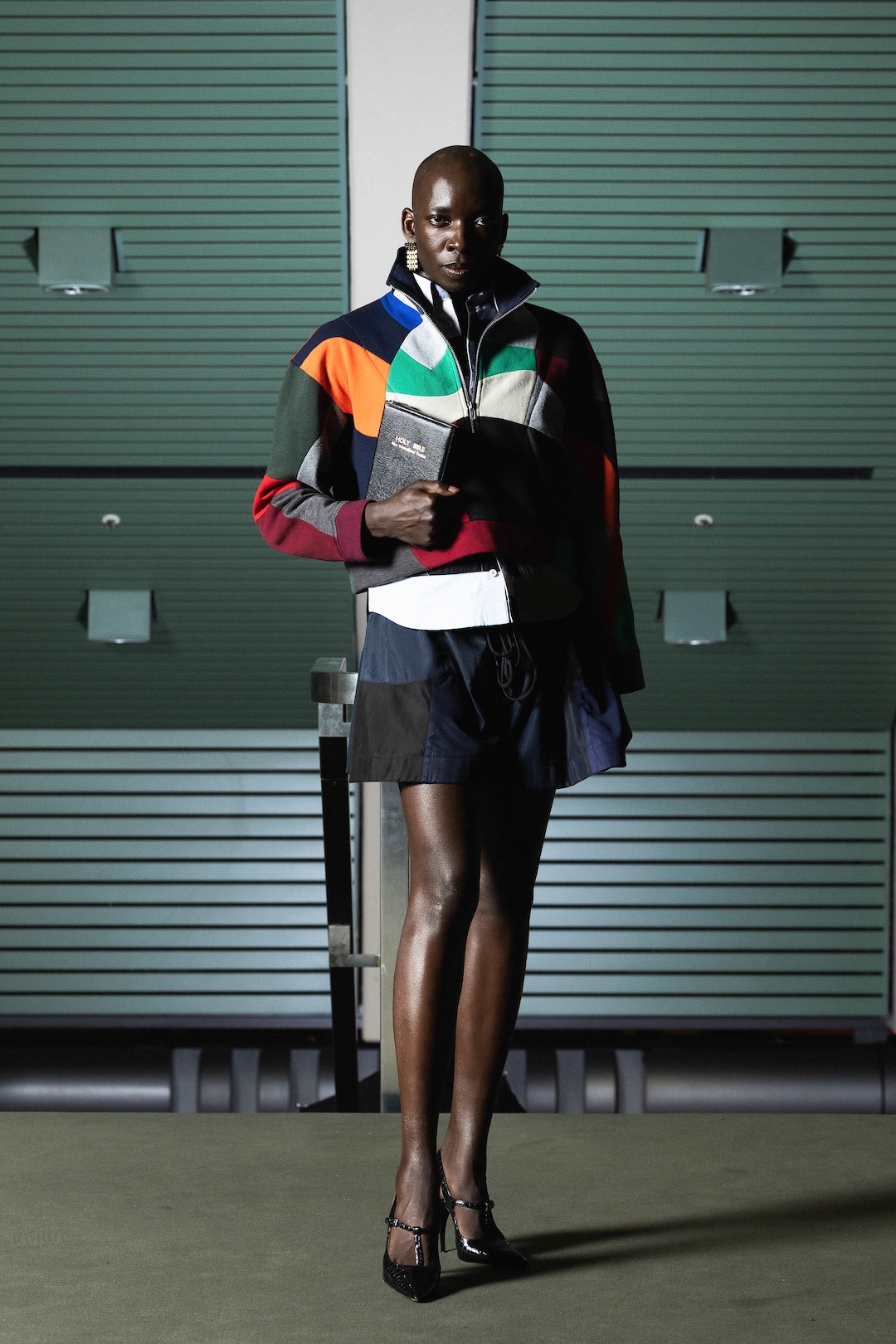
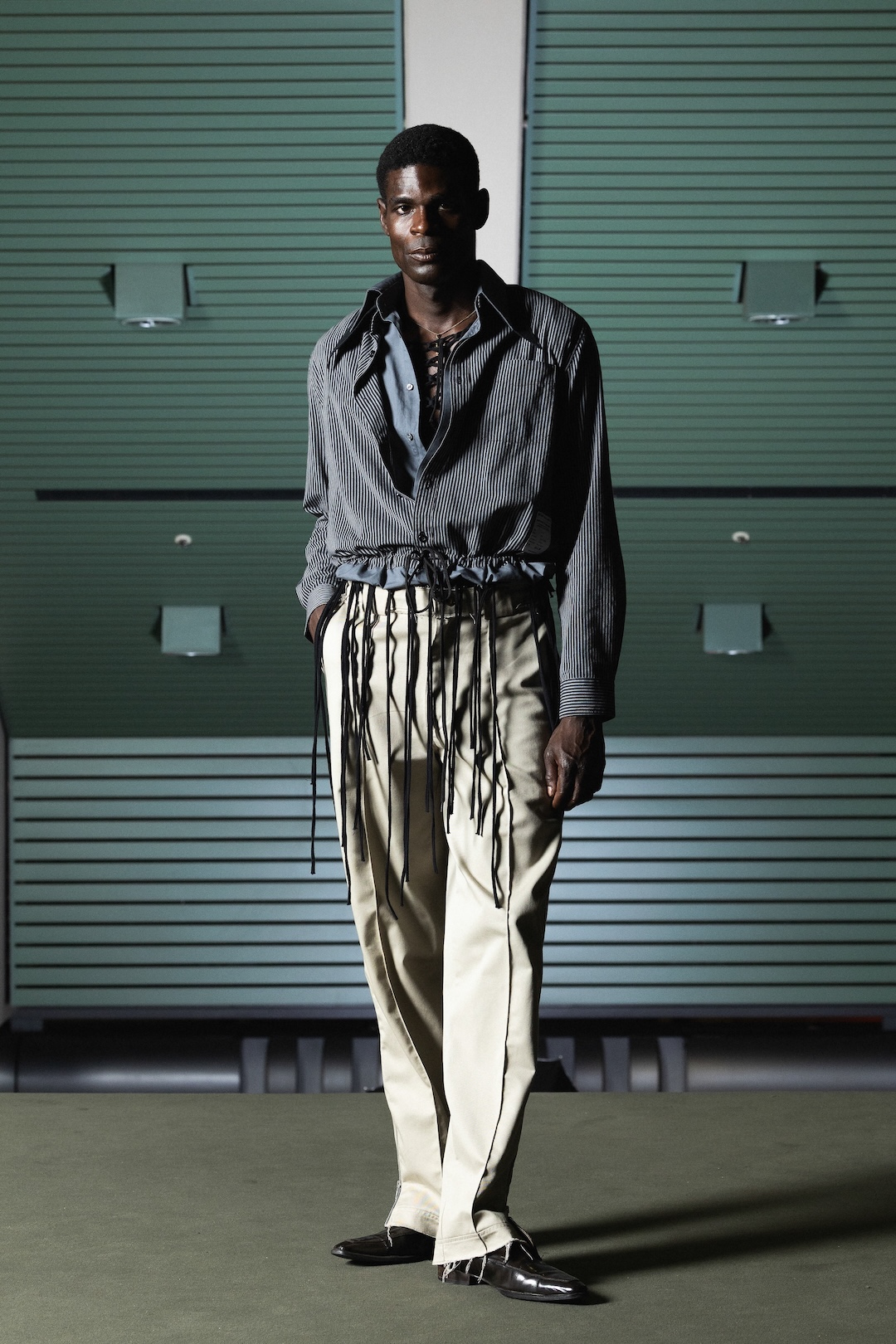
Berlin Fashion Week SS27: The City's Most Confident Season Yet
JULY 8, 2026 → WORDS ADRIÁN GOMIS EXPÓSITO
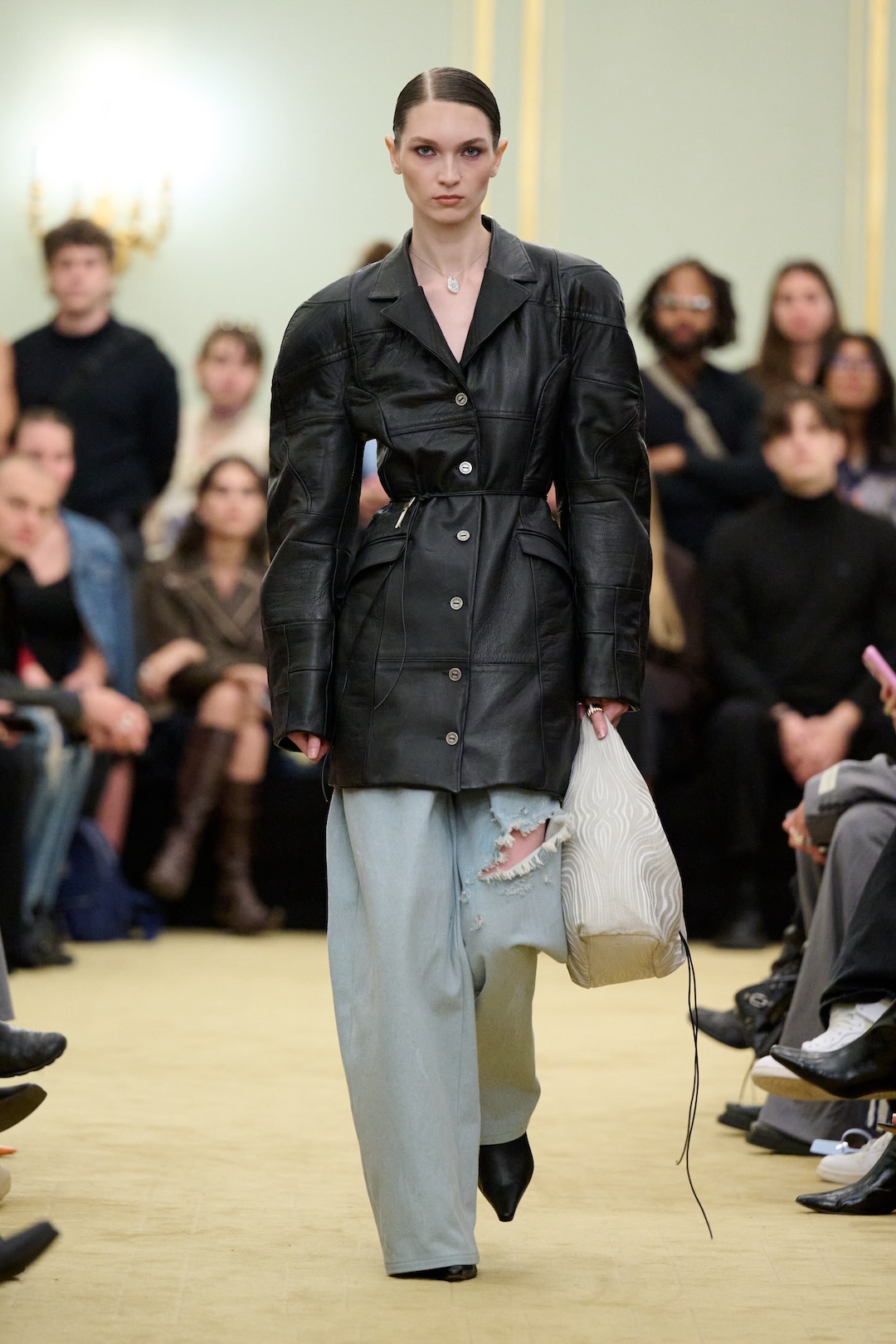
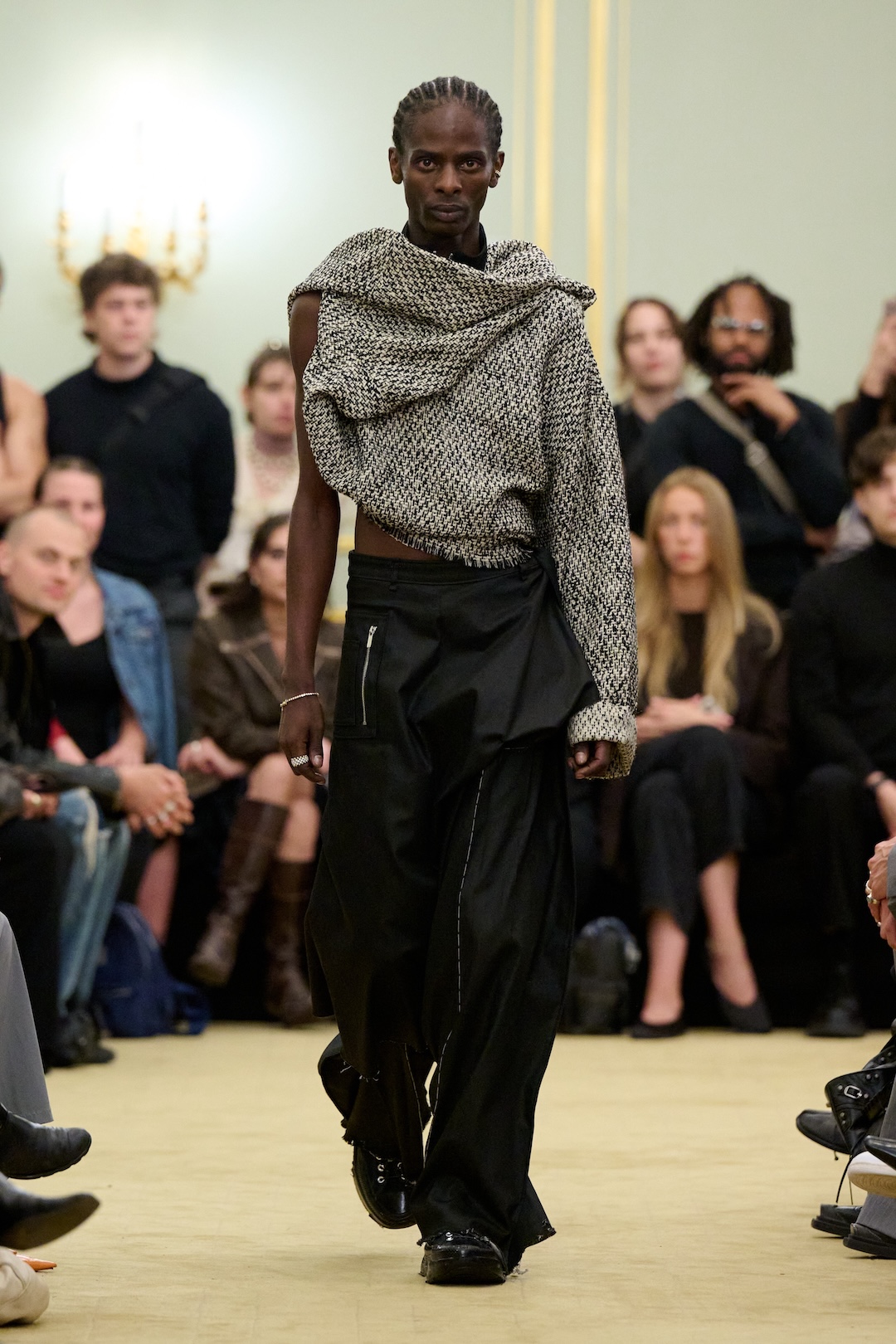
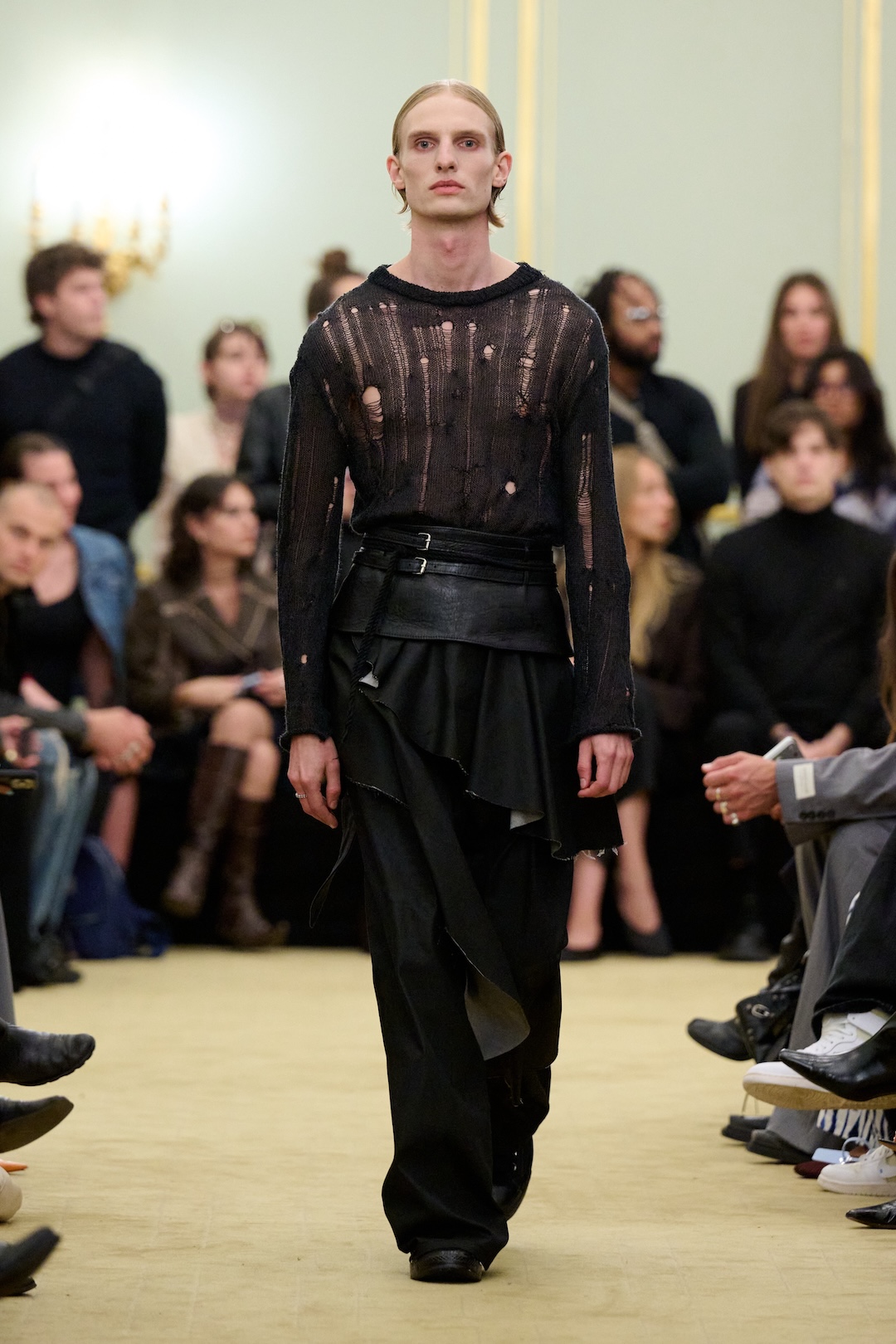
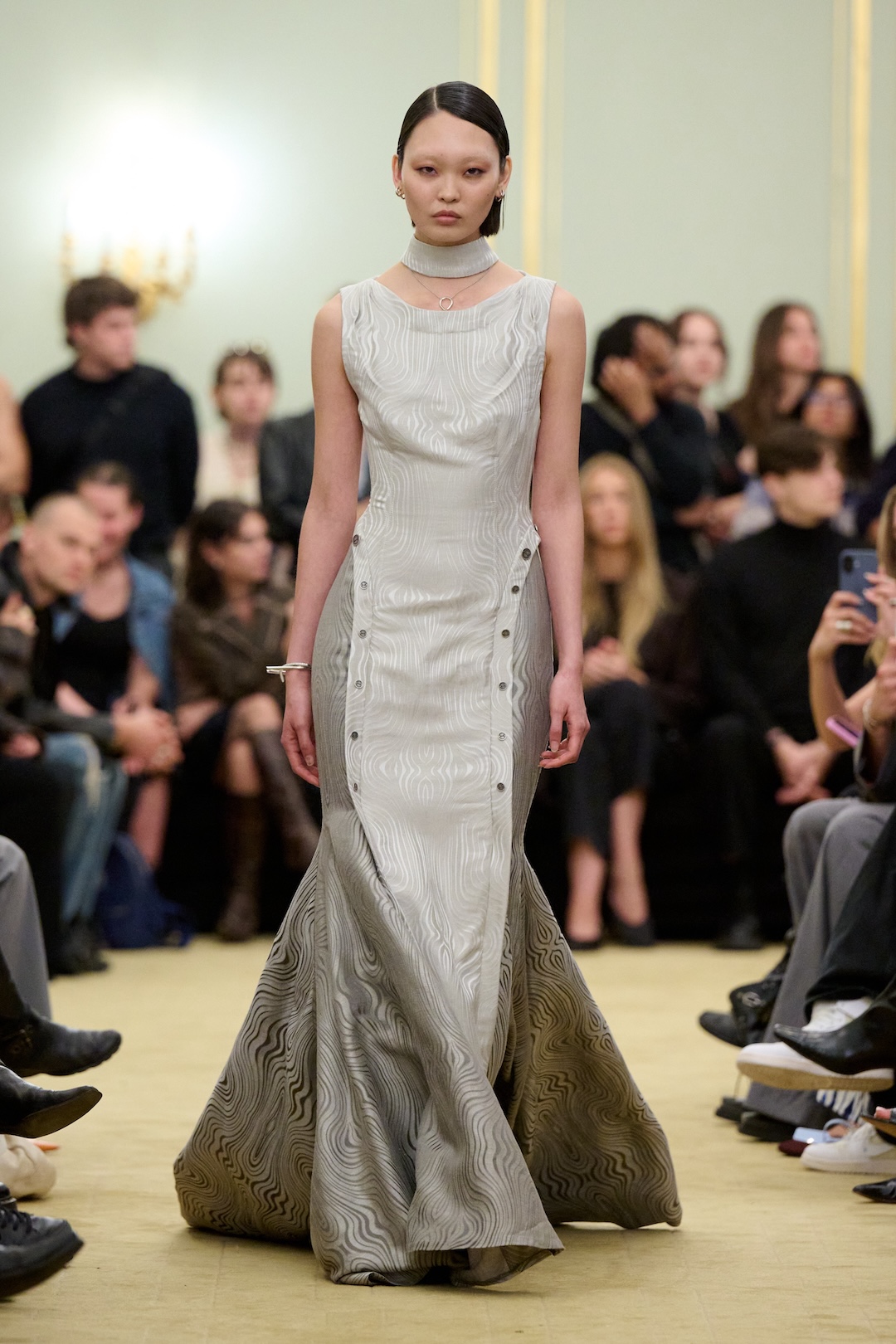
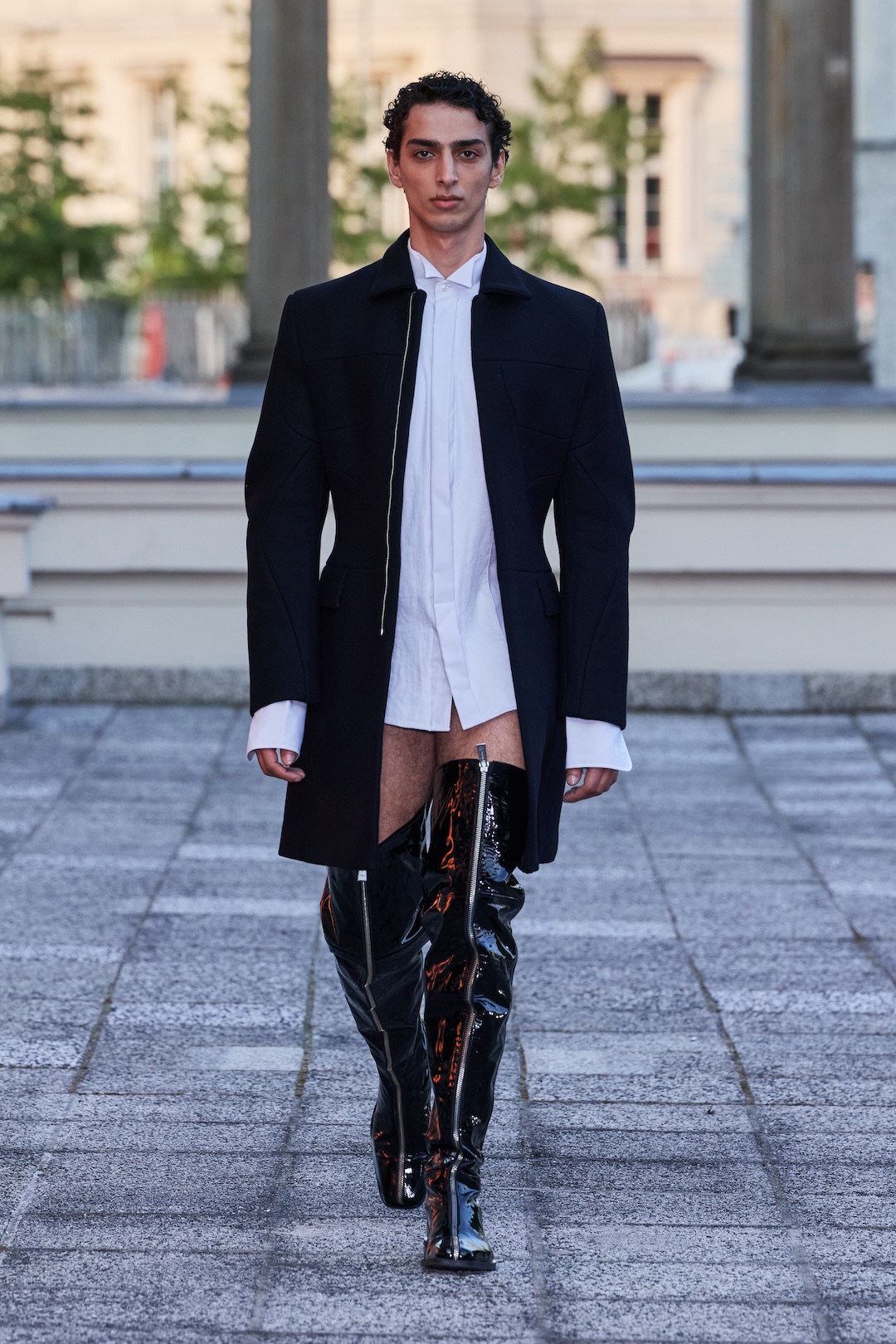
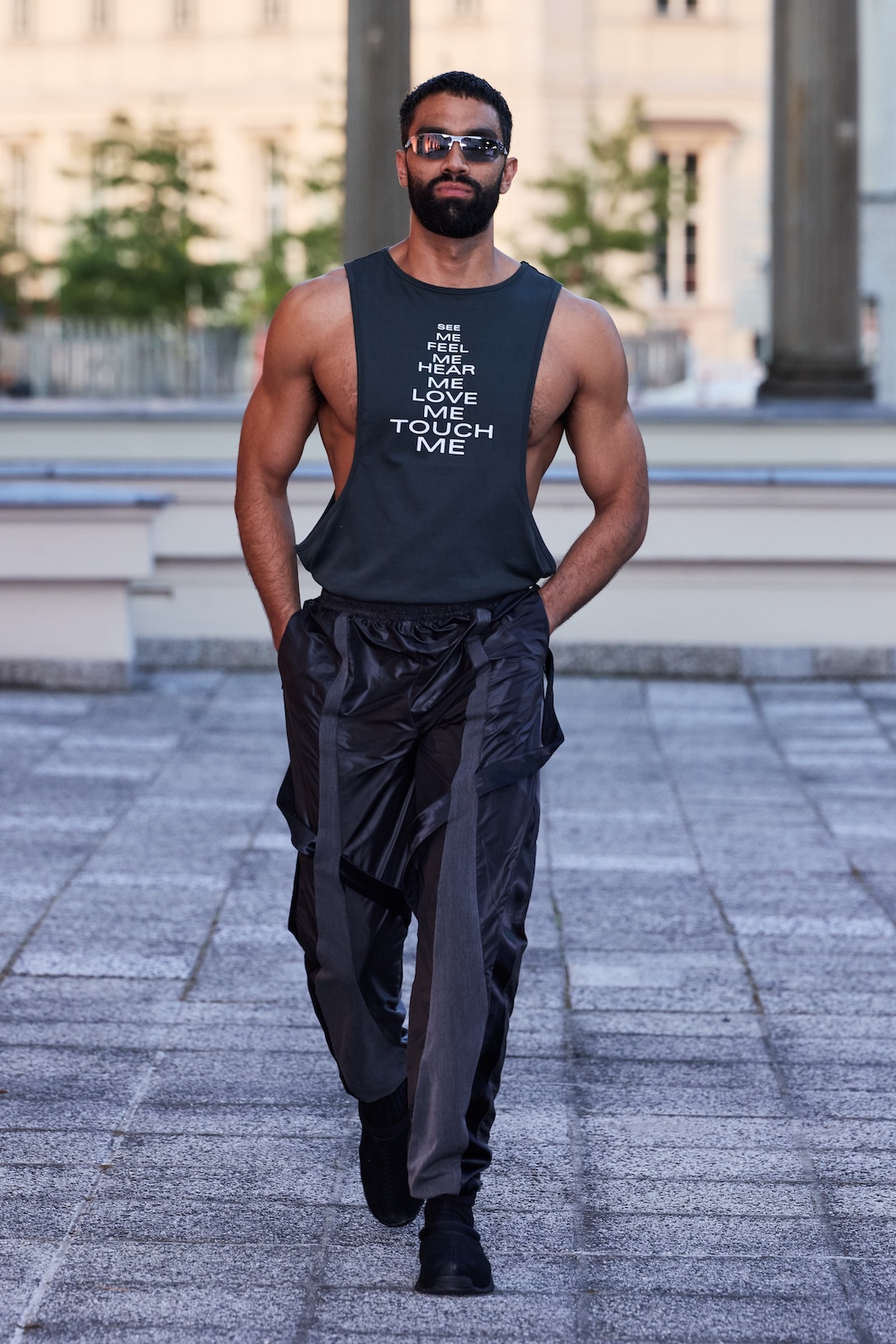
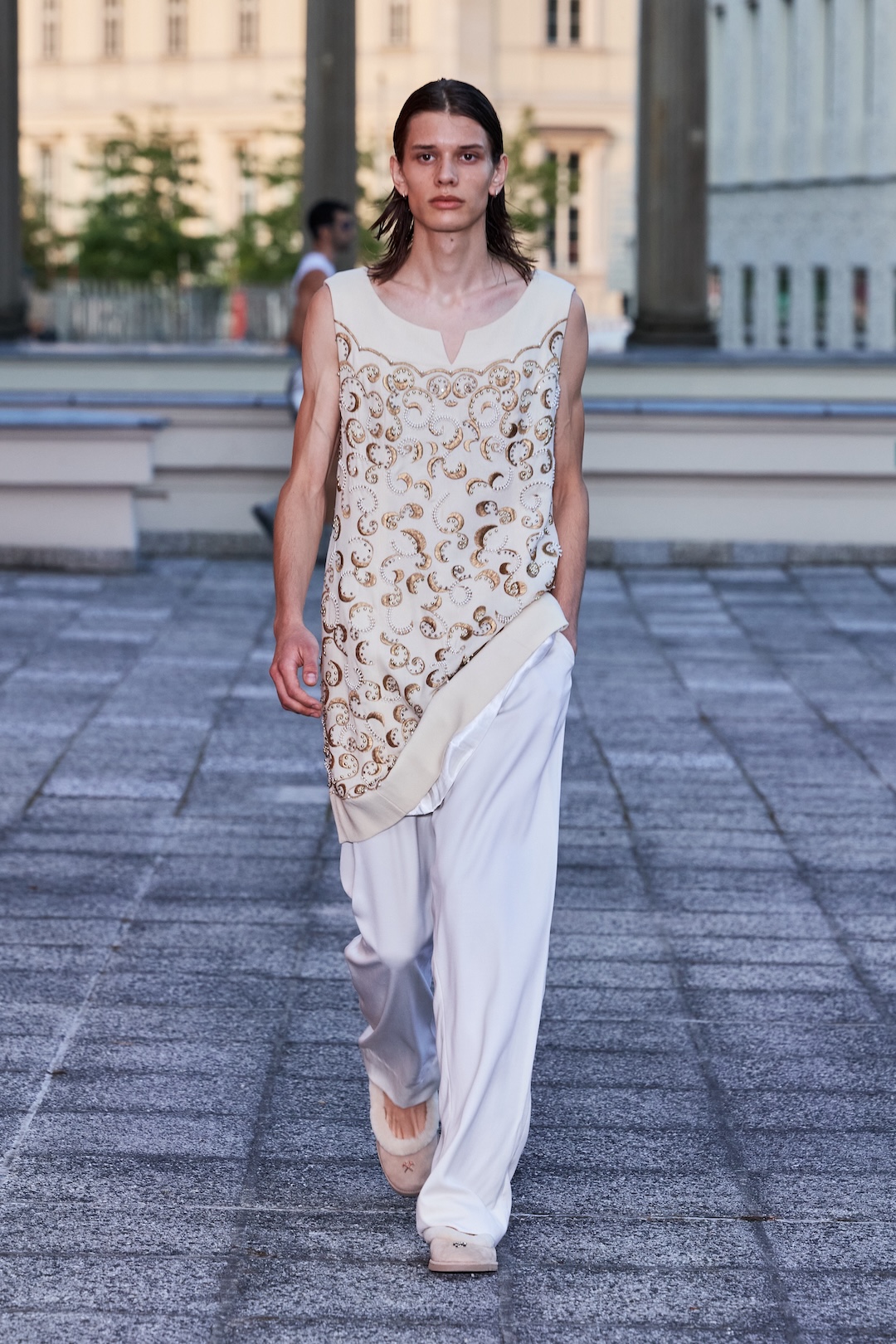
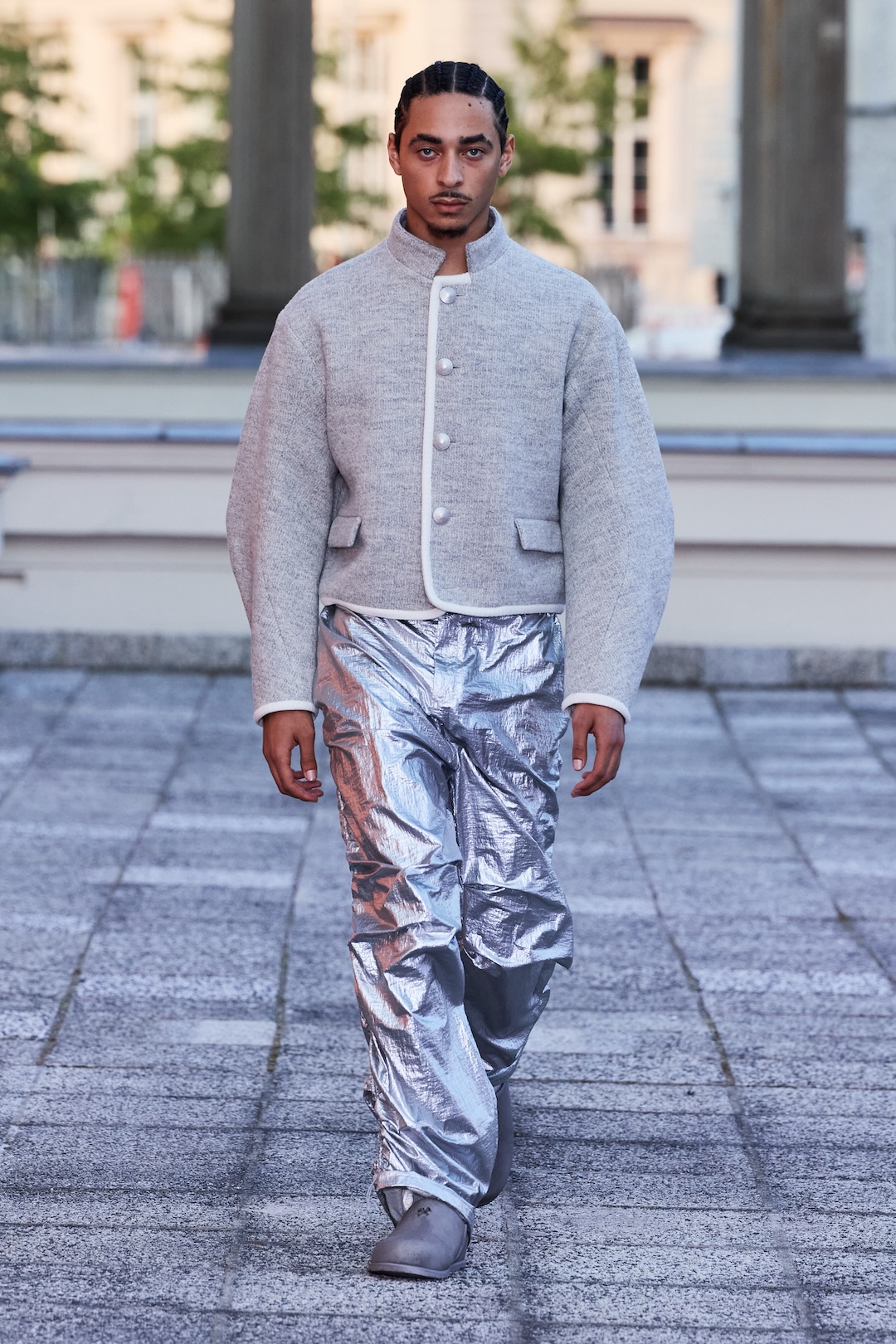
Berlin has never been a city that asks for permission, and its fashion week continues to prove the point. The SS27 edition of Berlin Fashion Week delivered its most expansive programme to date: 53 runway shows and 62 side events, stretching across the capital from Weißensee to Westend, Tiergarten to Tempelhof, Friedrichshain to Friedrichsfelde. The numbers alone tell a story of momentum, with 42 runway shows and 52 side events at the AW26 edition just months earlier, but the real headline is what that growth represents: a fashion week that is professionalising rapidly, courting major international media coverage while exploding in public reach with 153 events, from pop-ups to retail activations, exhibitions, and performances, marking nearly 90 per cent growth over the previous season.
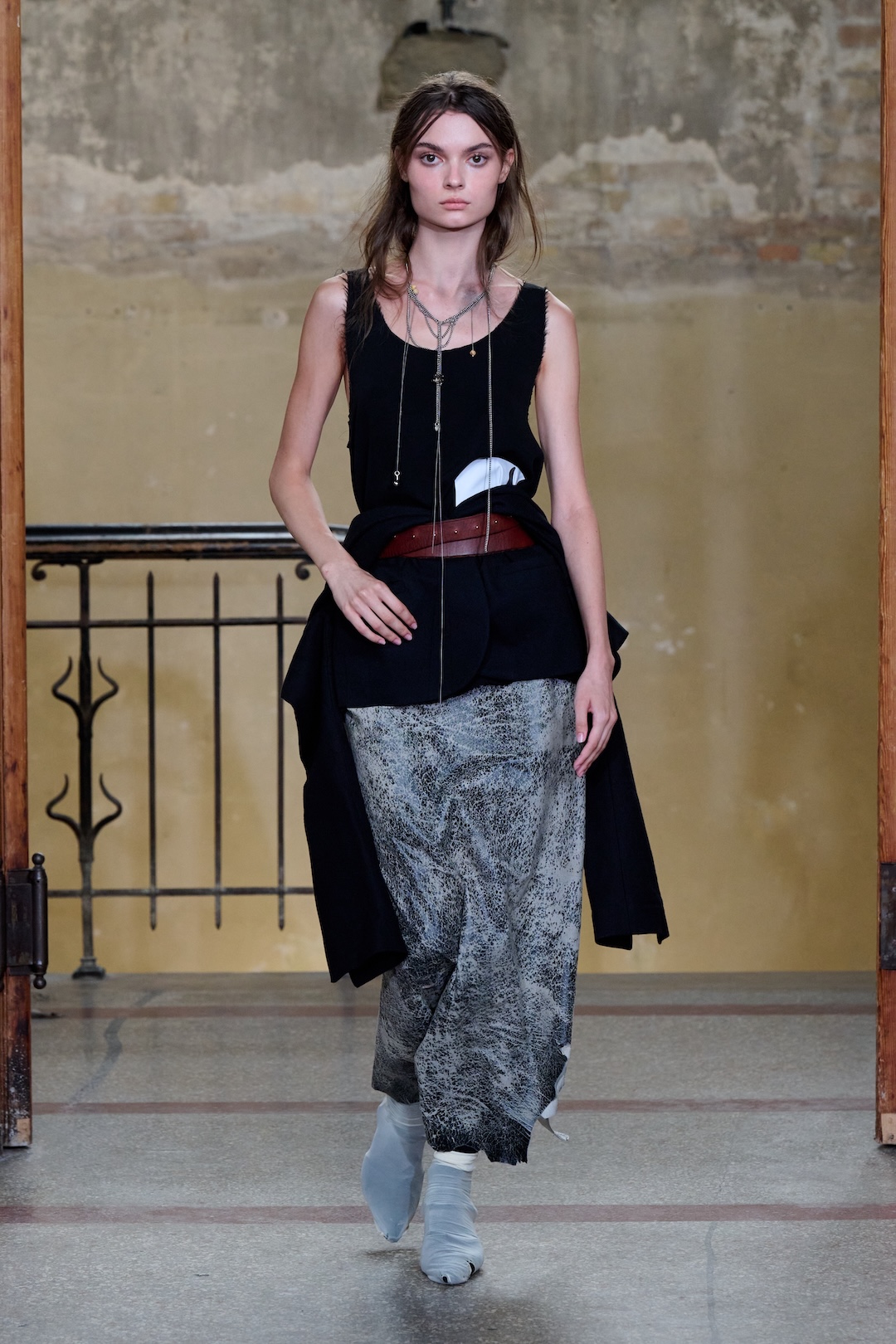
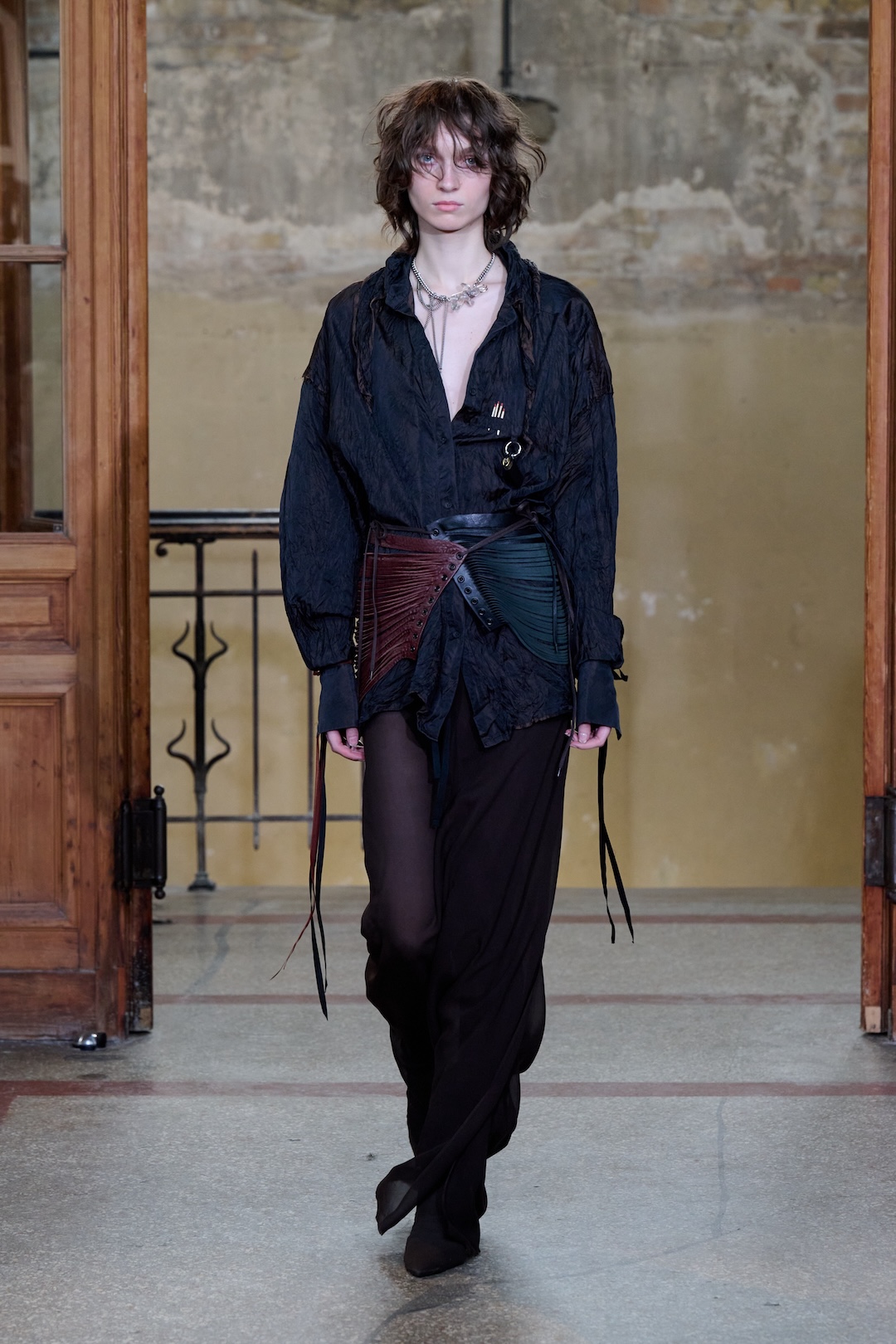
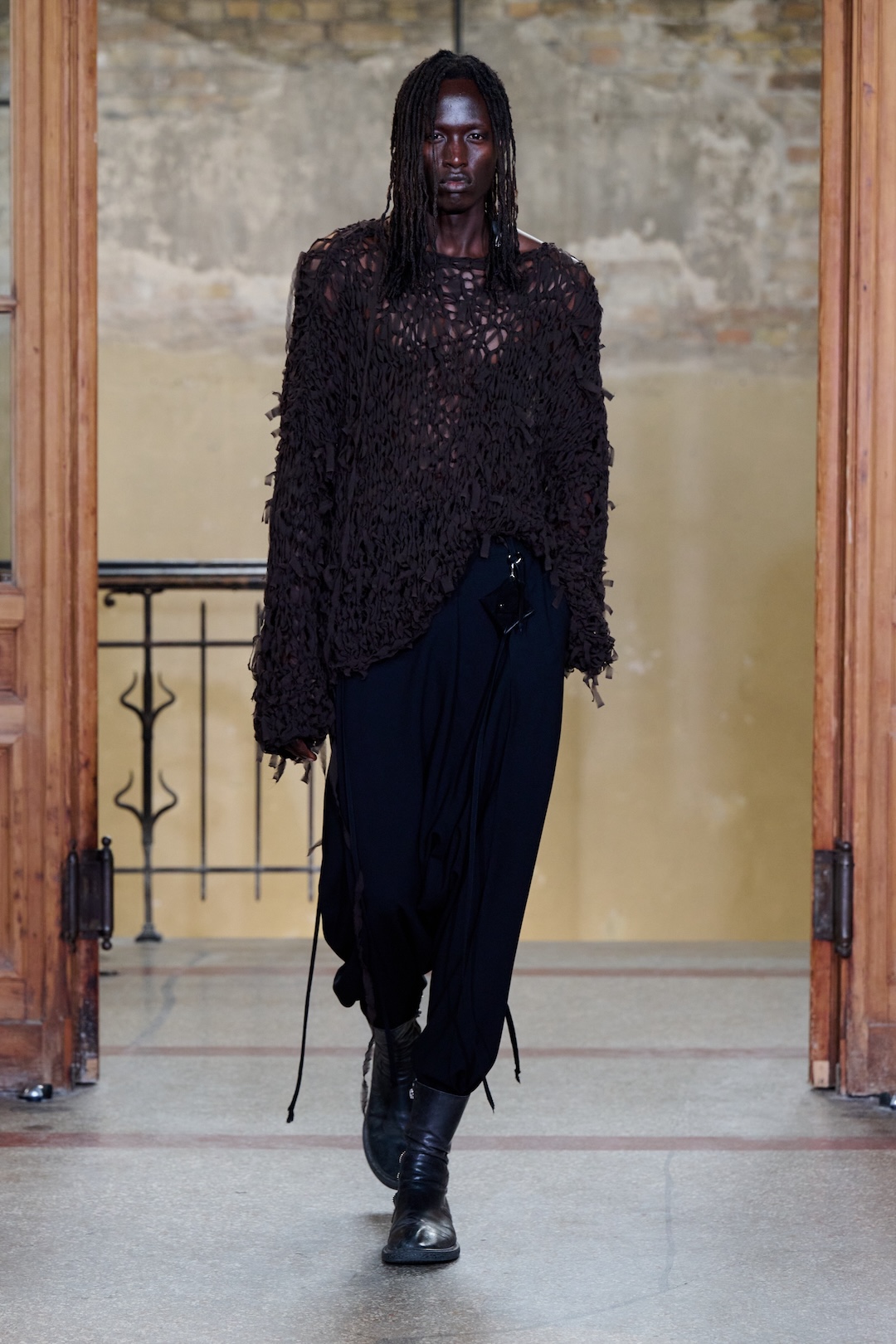
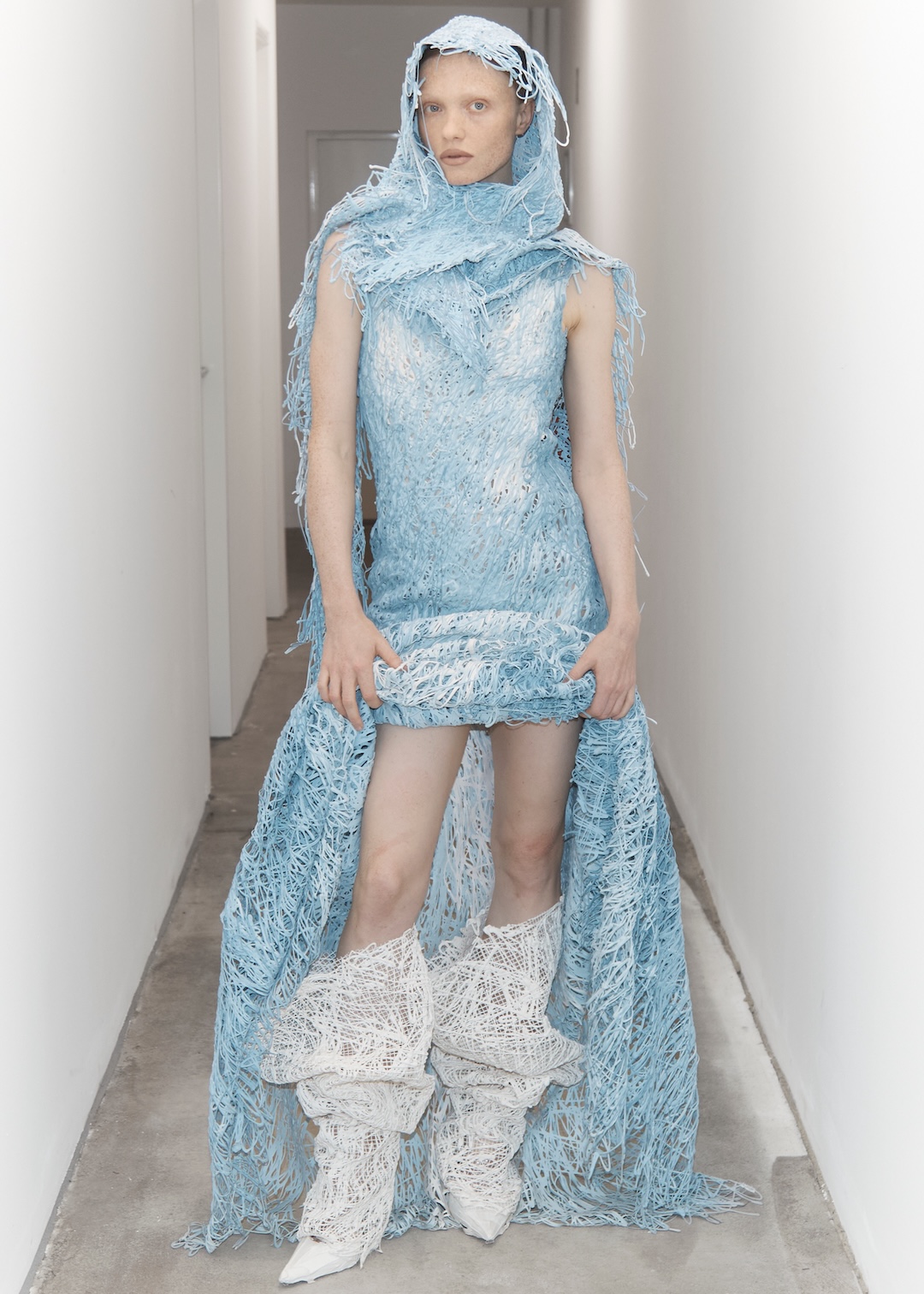
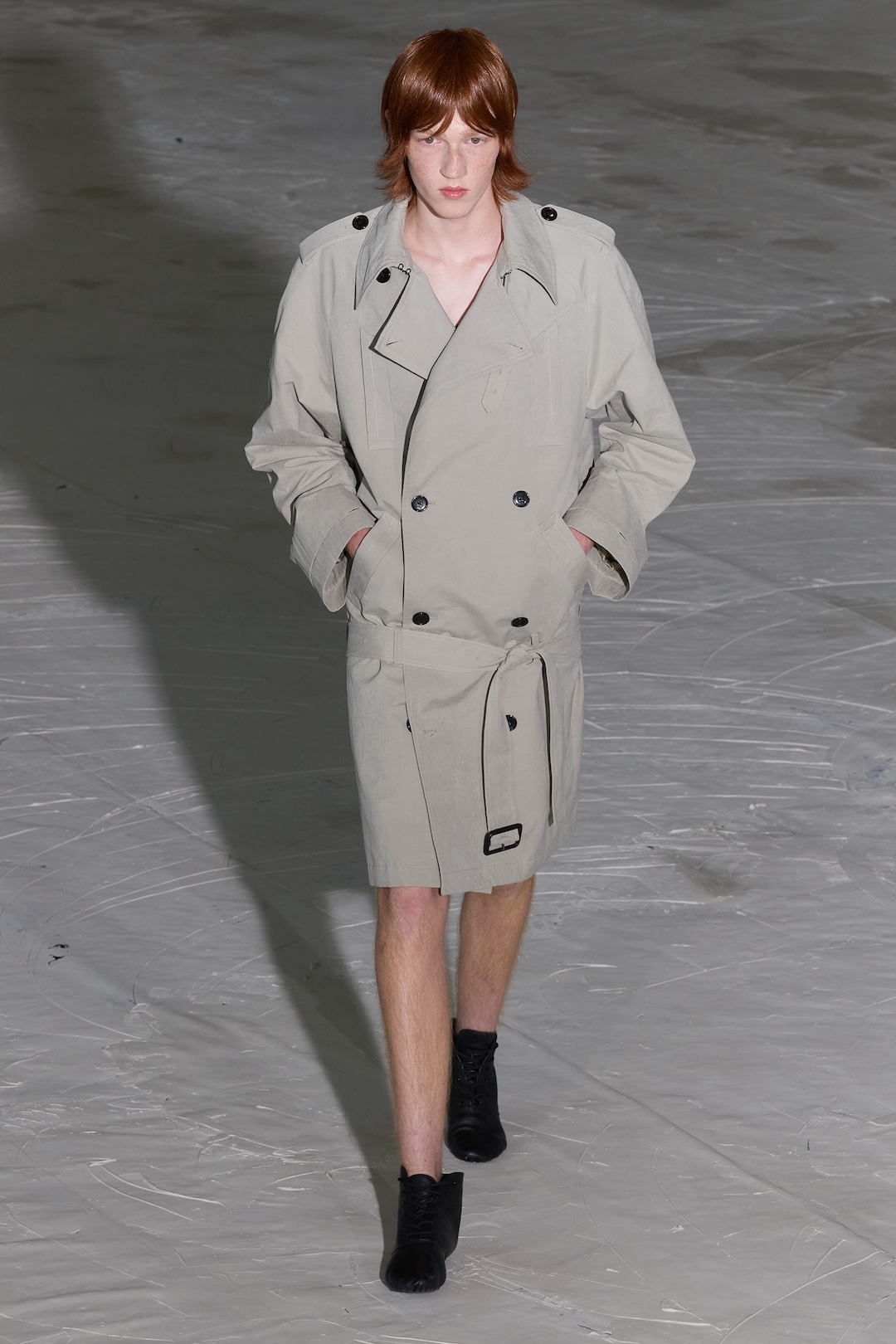
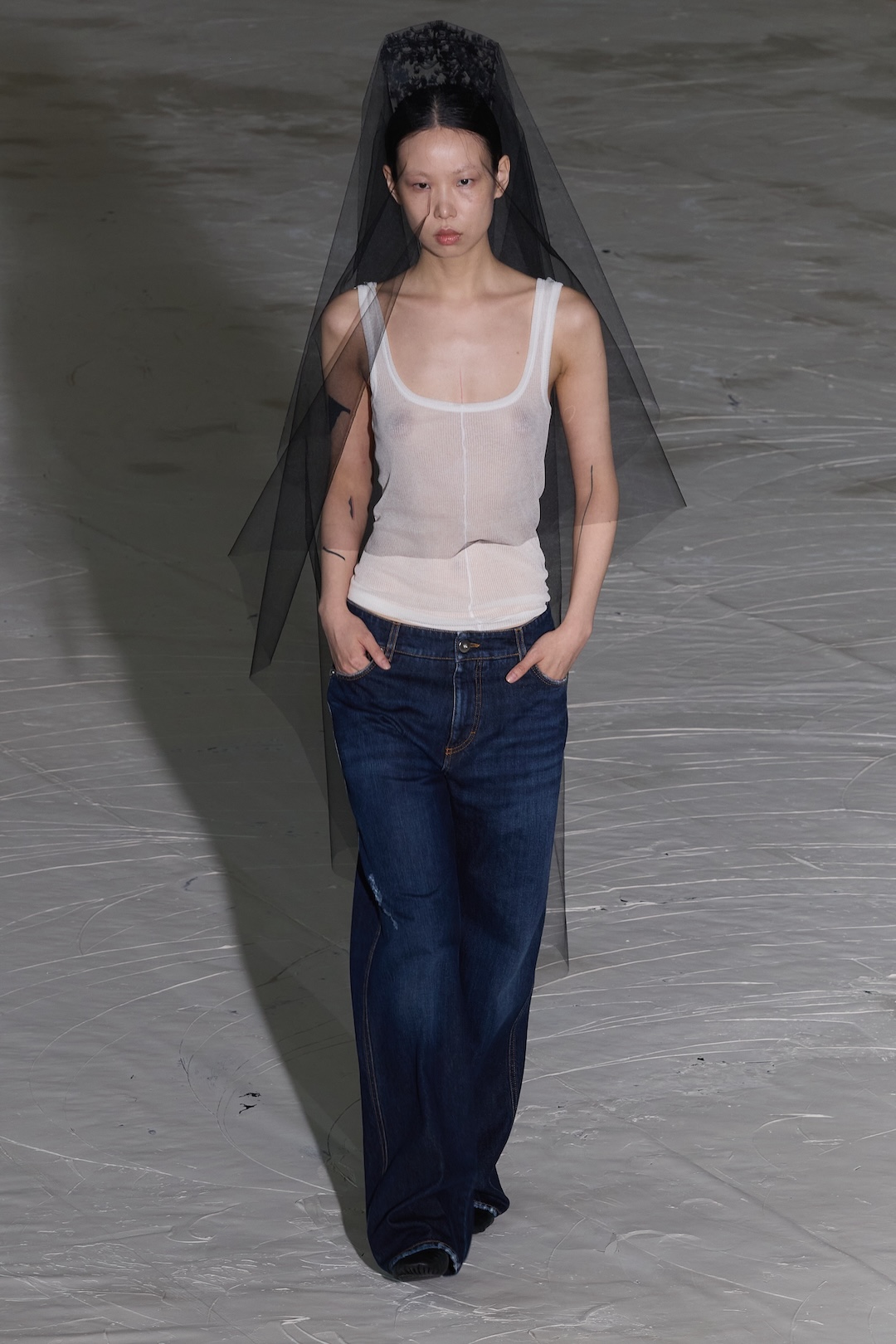
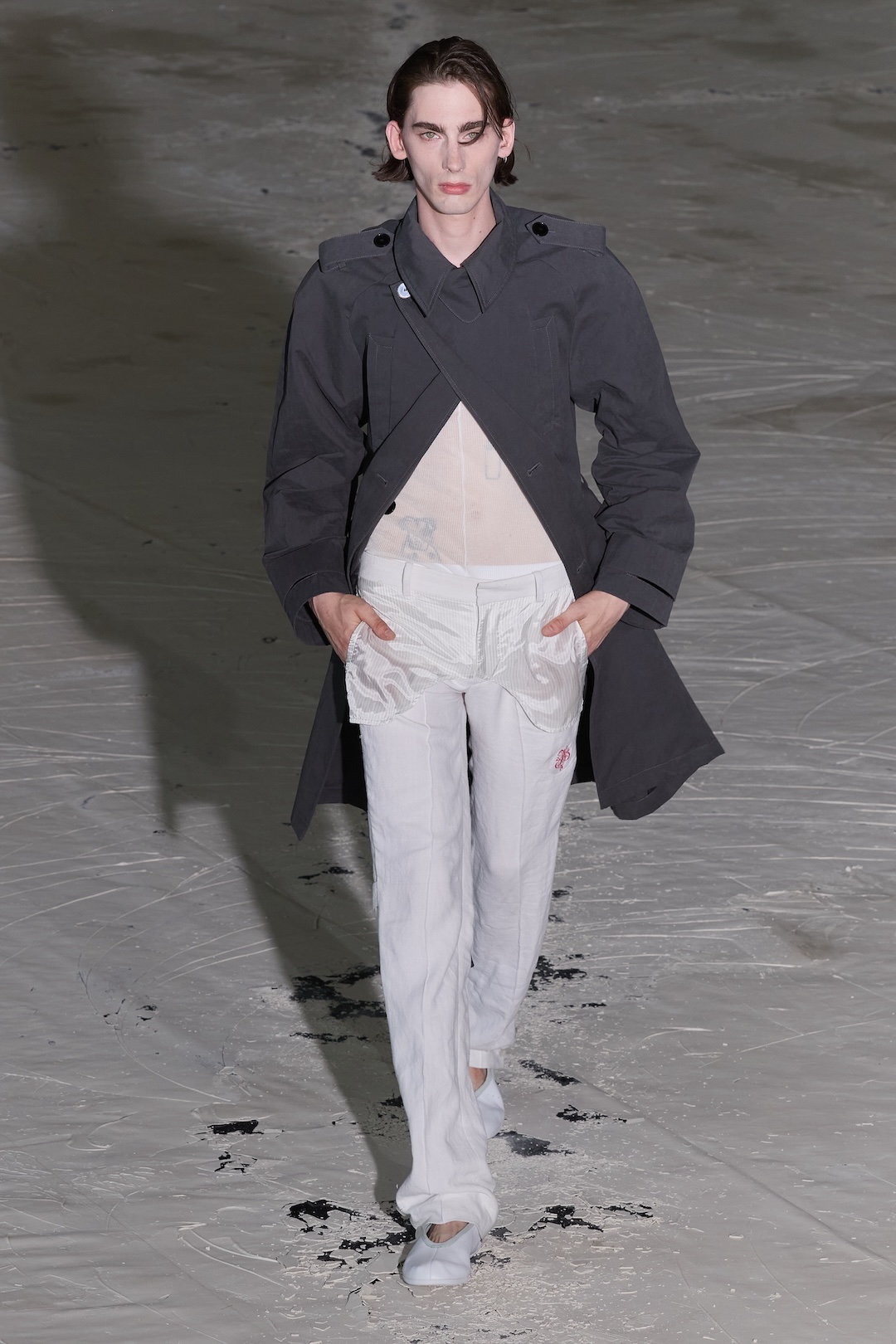
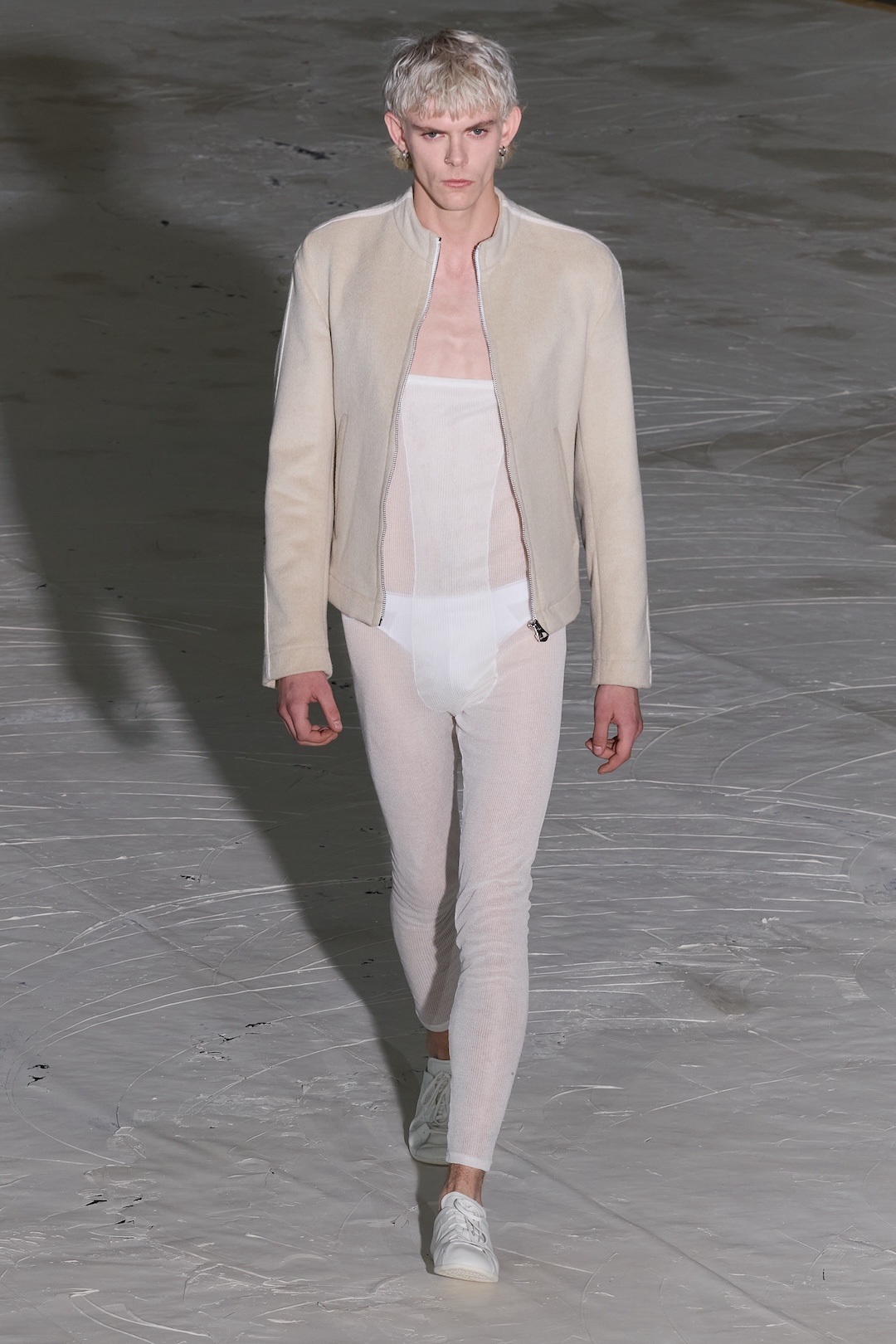
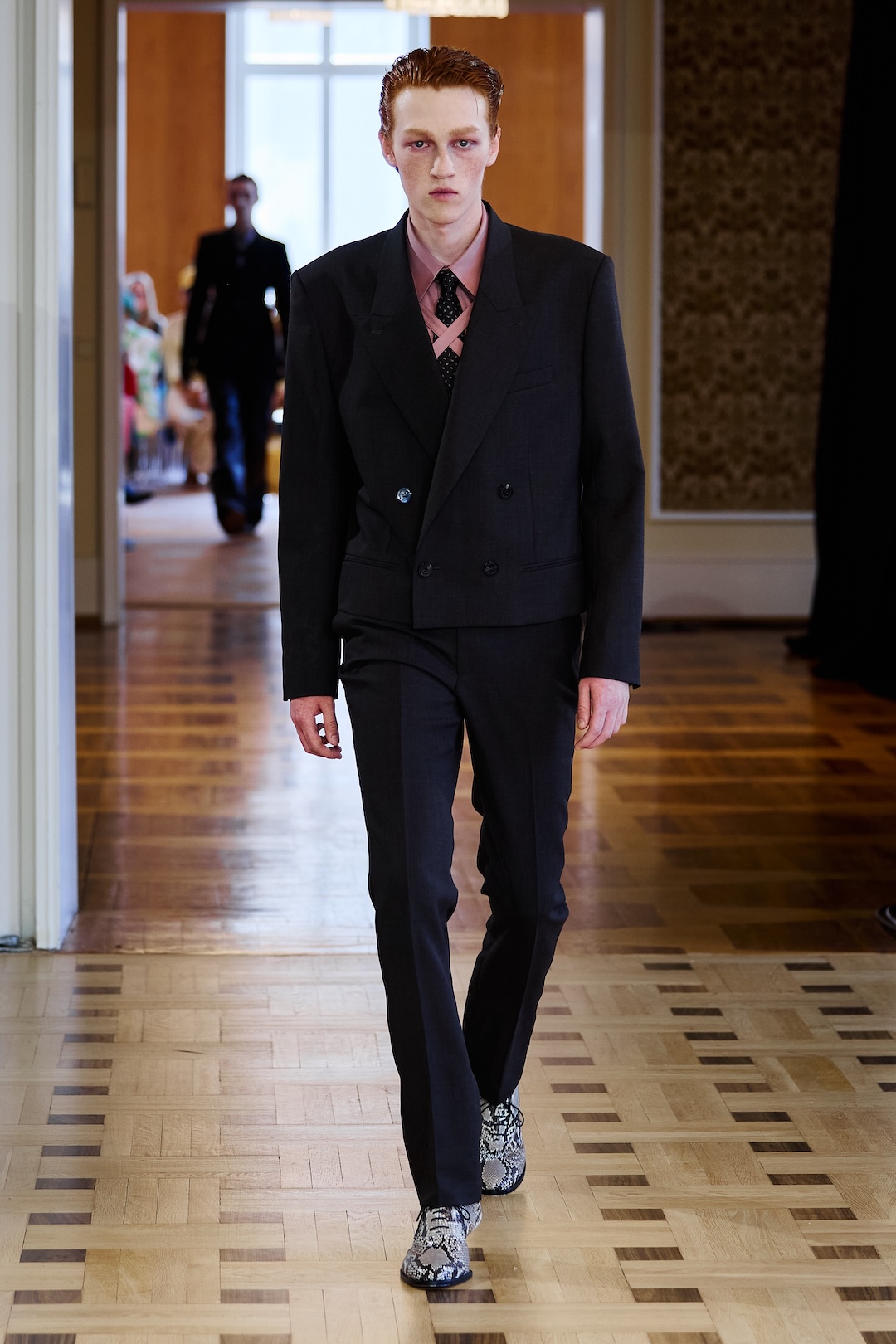
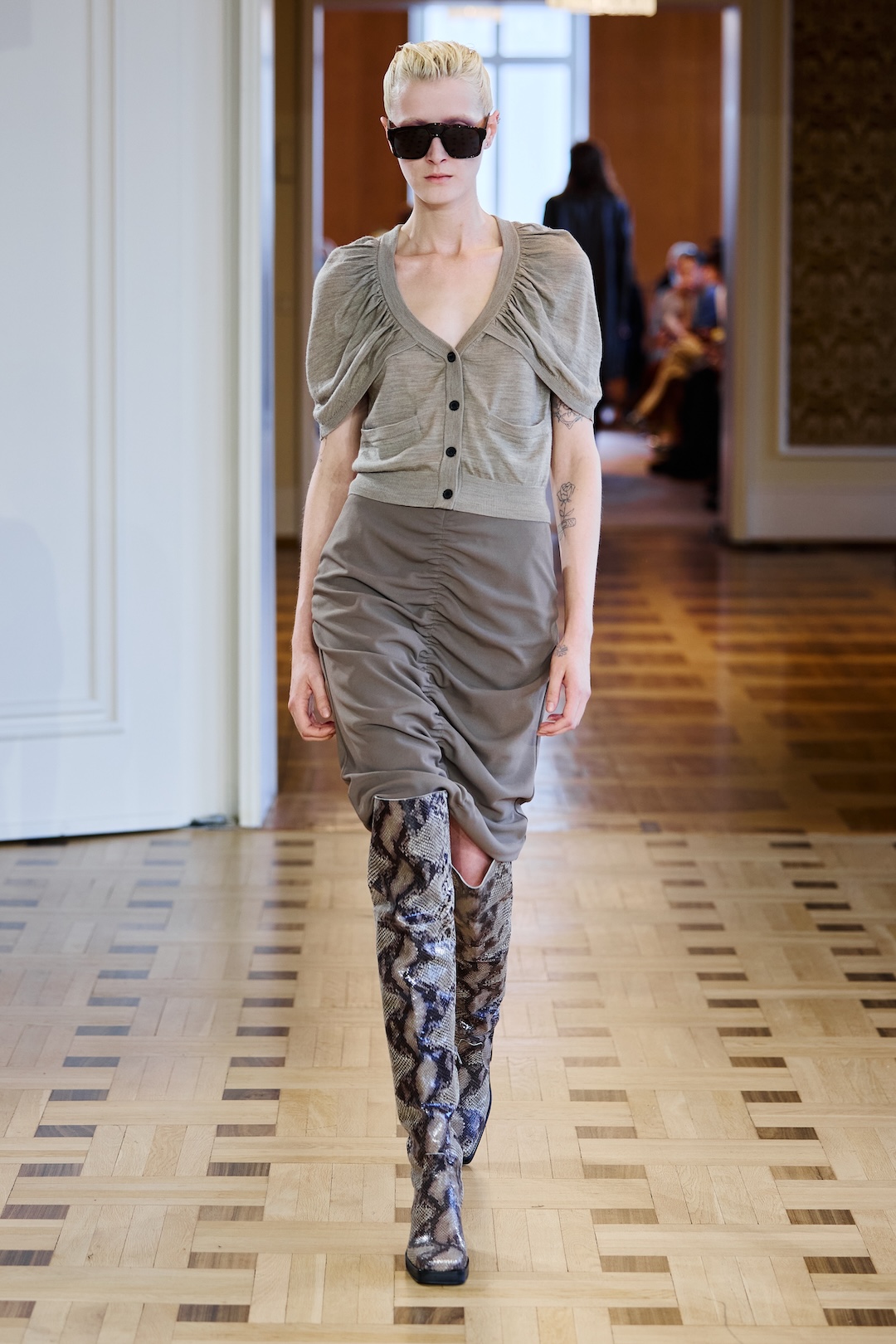
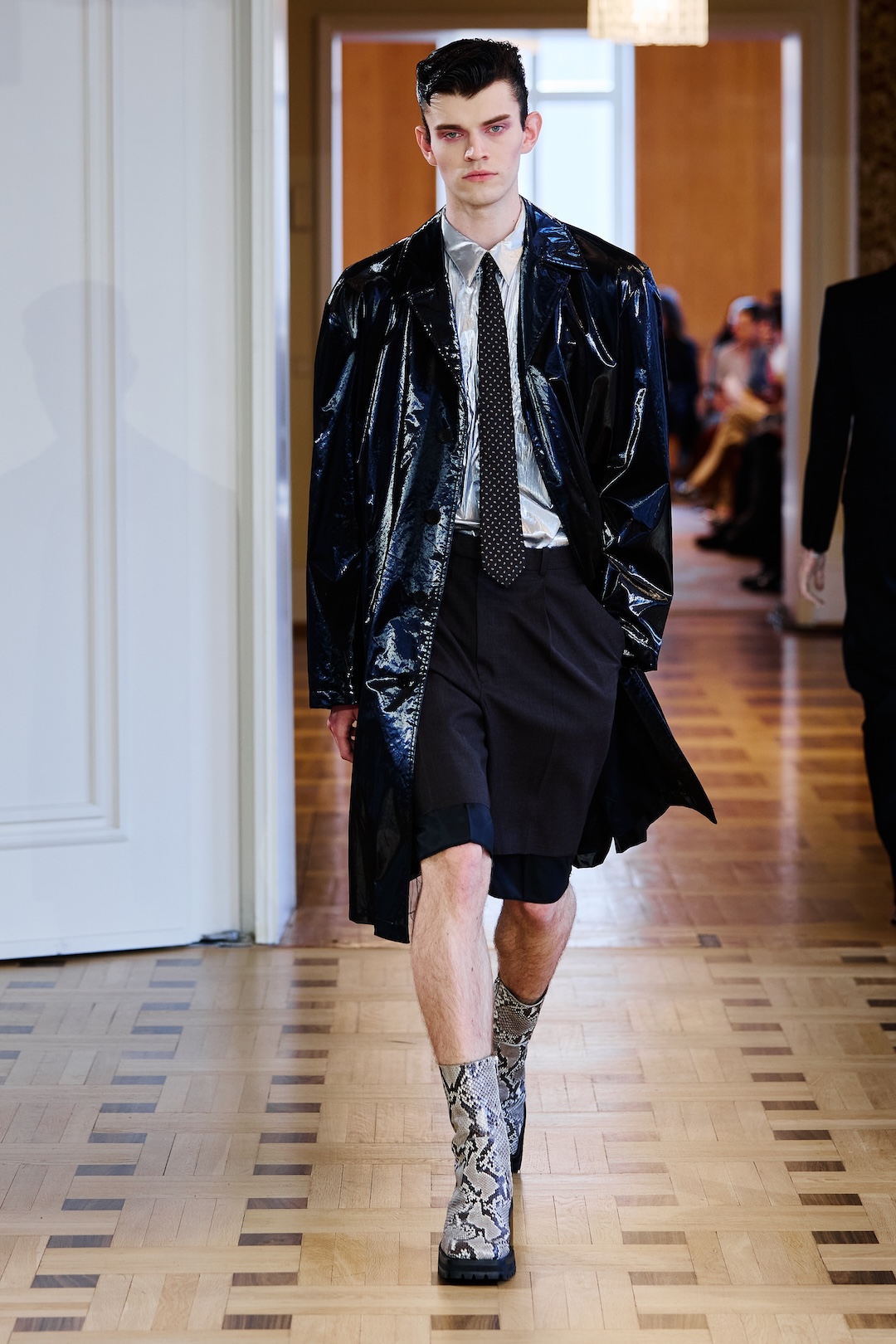
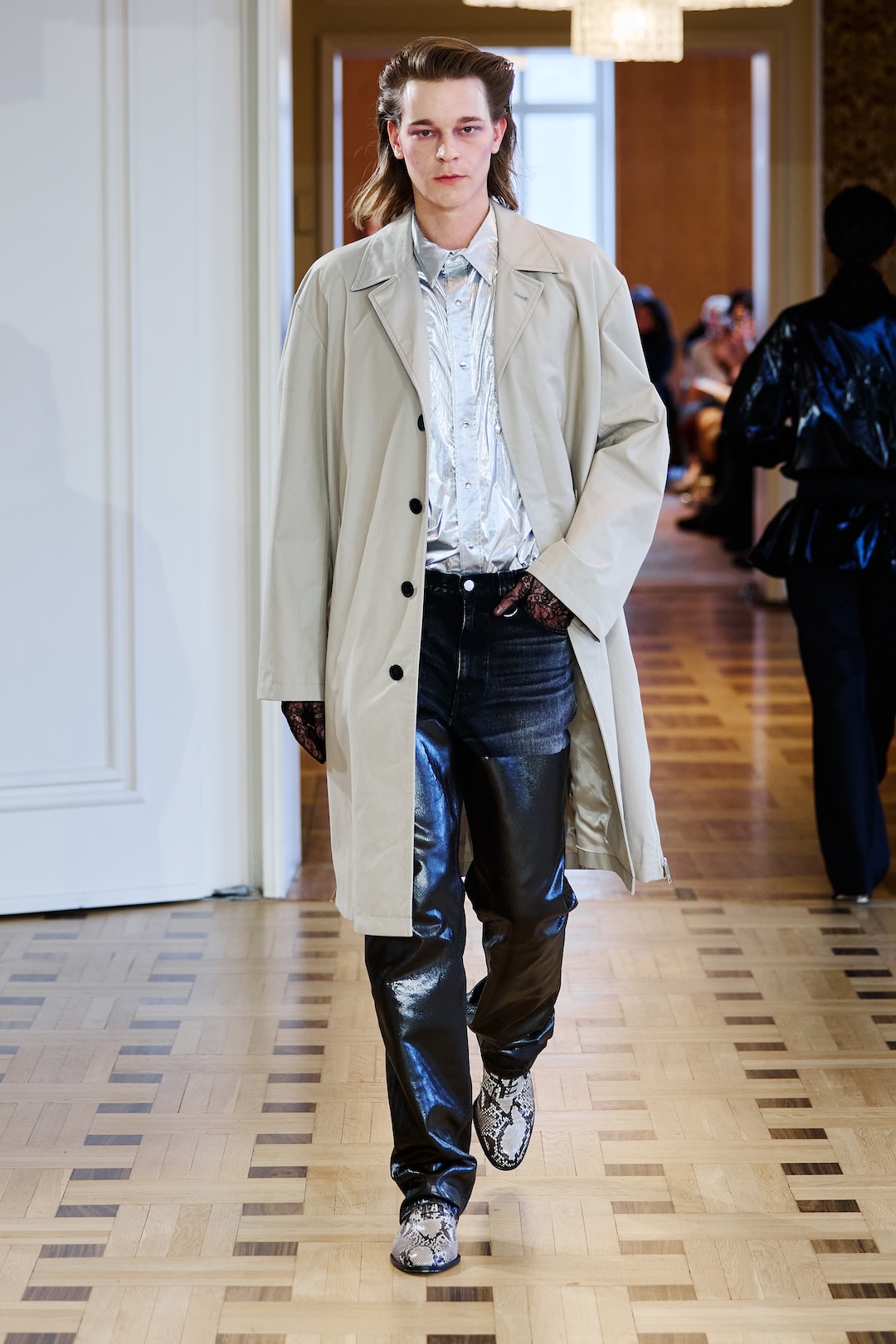
This is Berlin’s pitch to the world: fashion for all, built on the city’s own guiding theme of "the responsible movement of freedom, inclusion, and creativity". Beneath that framework, the designer lineup told a rich story, one that moved from architectural minimalism to upcycled activism, from theatrical performance to boxing-ring precision. Here’s our review of the season’s most notable presentations.


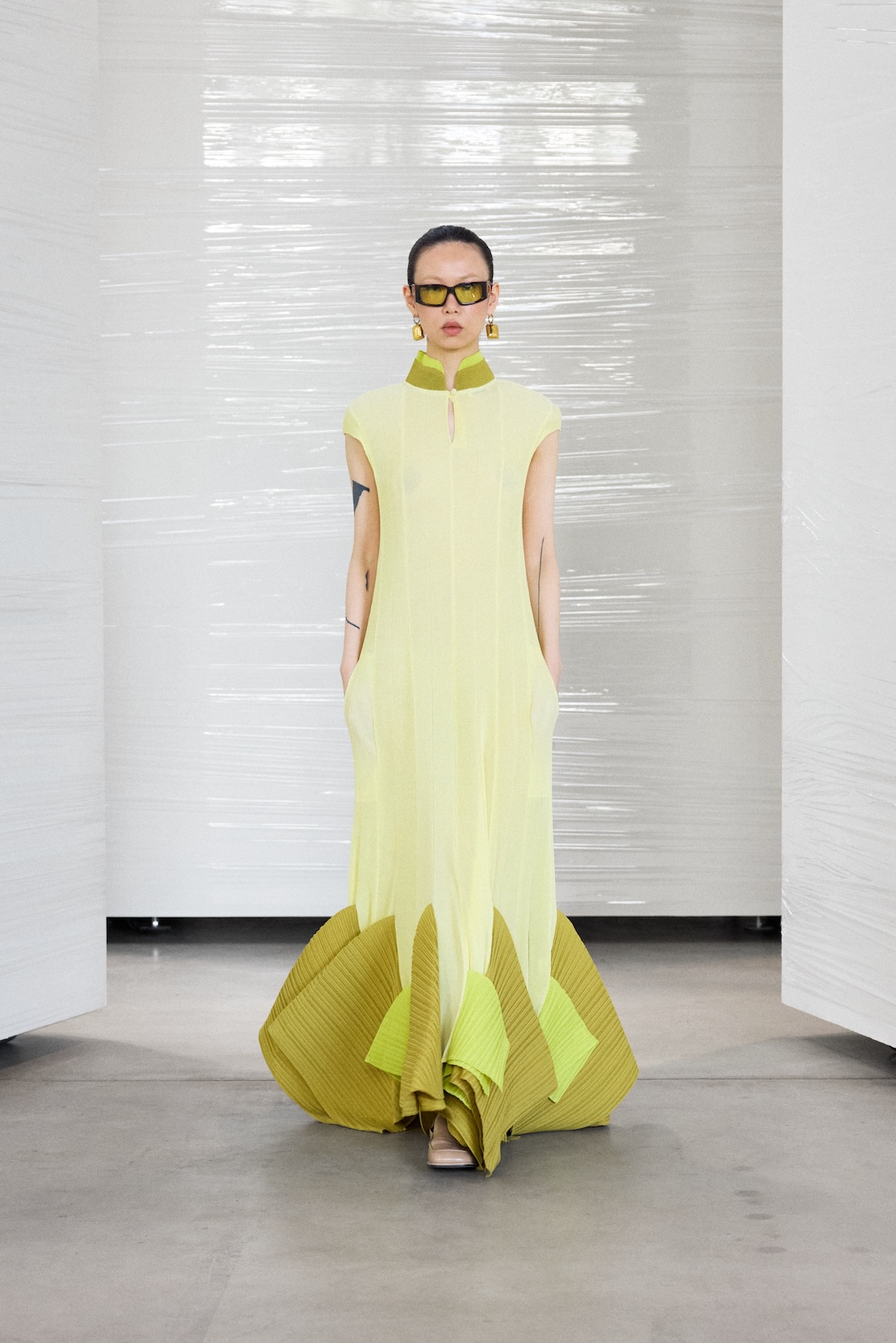
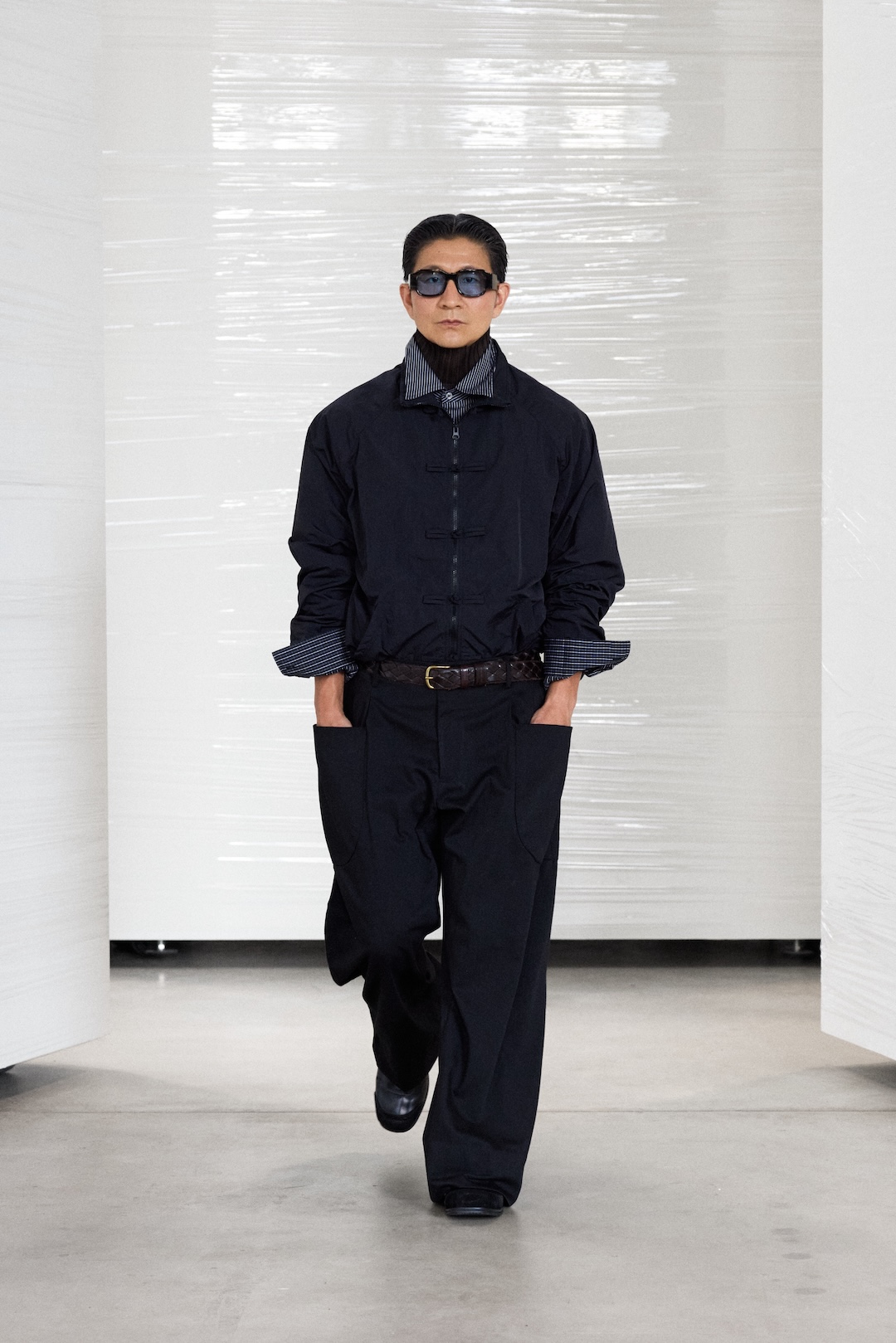
Few labels articulate Berlin’s cultural duality as fluently as William Fan. Established in 2015 by its eponymous designer, who grew up in Germany with Chinese roots, the brand continues its project of quietly dismantling the binaries fashion so often relies on: European and Asian, masculine and feminine, young and old. This season reaffirmed Fan’s timeless, progressive sensibility, one that resists trend-chasing in favour of a slower kind of hybridity. What distinguishes Fan’s shows from a straightforward runway presentation is his instinct for storytelling: rather than simply dressing bodies, he narrates a vision in which the classical fashion "label", with all its rigid categorisations, dissolves into something more personal and porous.
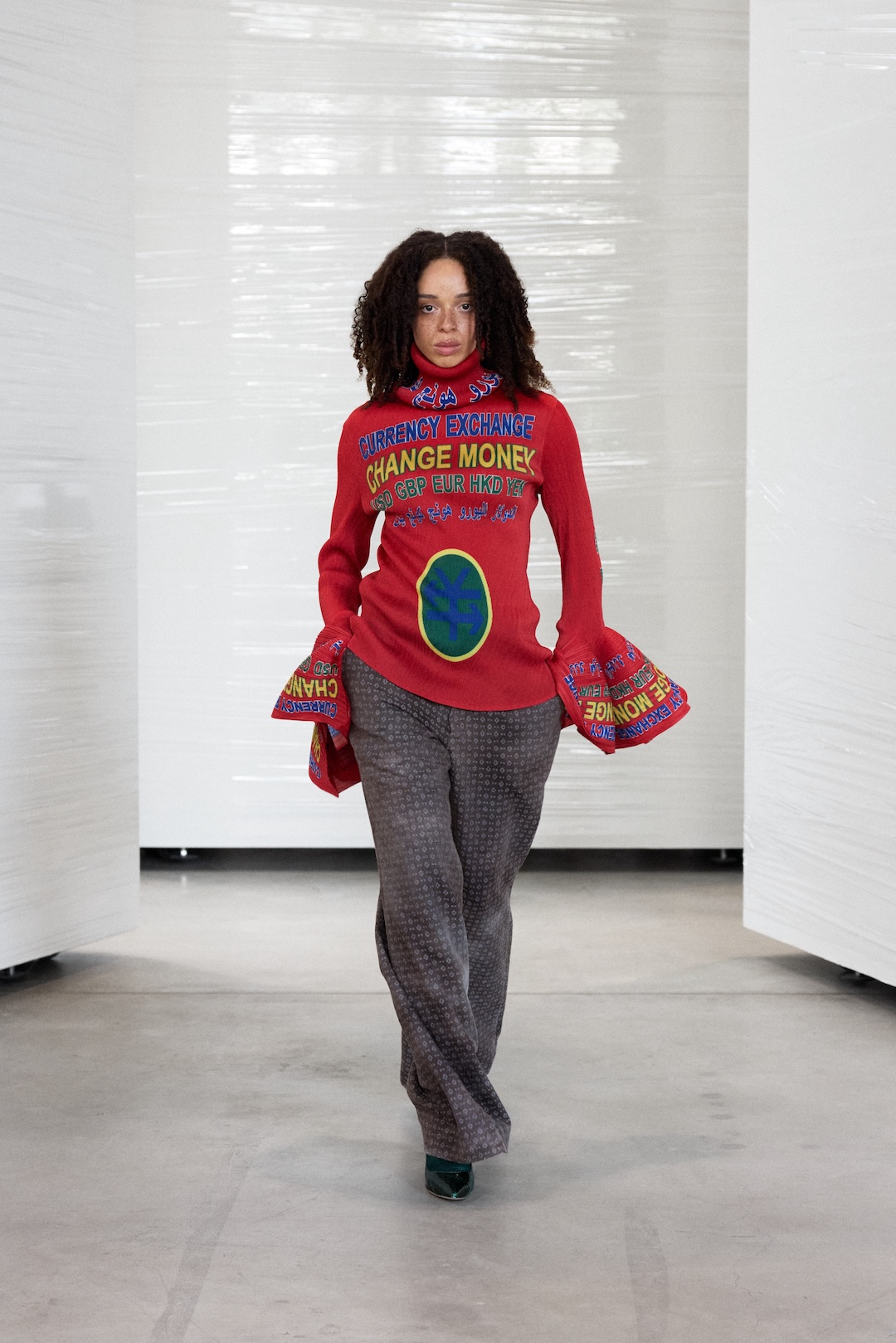
That instinct crystallised in Exchange, a collection inspired by wandering through international markets, from the souks of Marrakesh to Tokyo’s flea markets and the antique streets of Shanghai. Staged at The Foundry among more than 800 objects pulled from the label’s own "Fan Plaza" souvenir shop, the show moved between tailoring and easy leisurewear, with sculptural pleats and deliberately aged finishes turning garments like the opening "Currency Exchange" jumper into artefacts of a life spent collecting.


→ MARKE
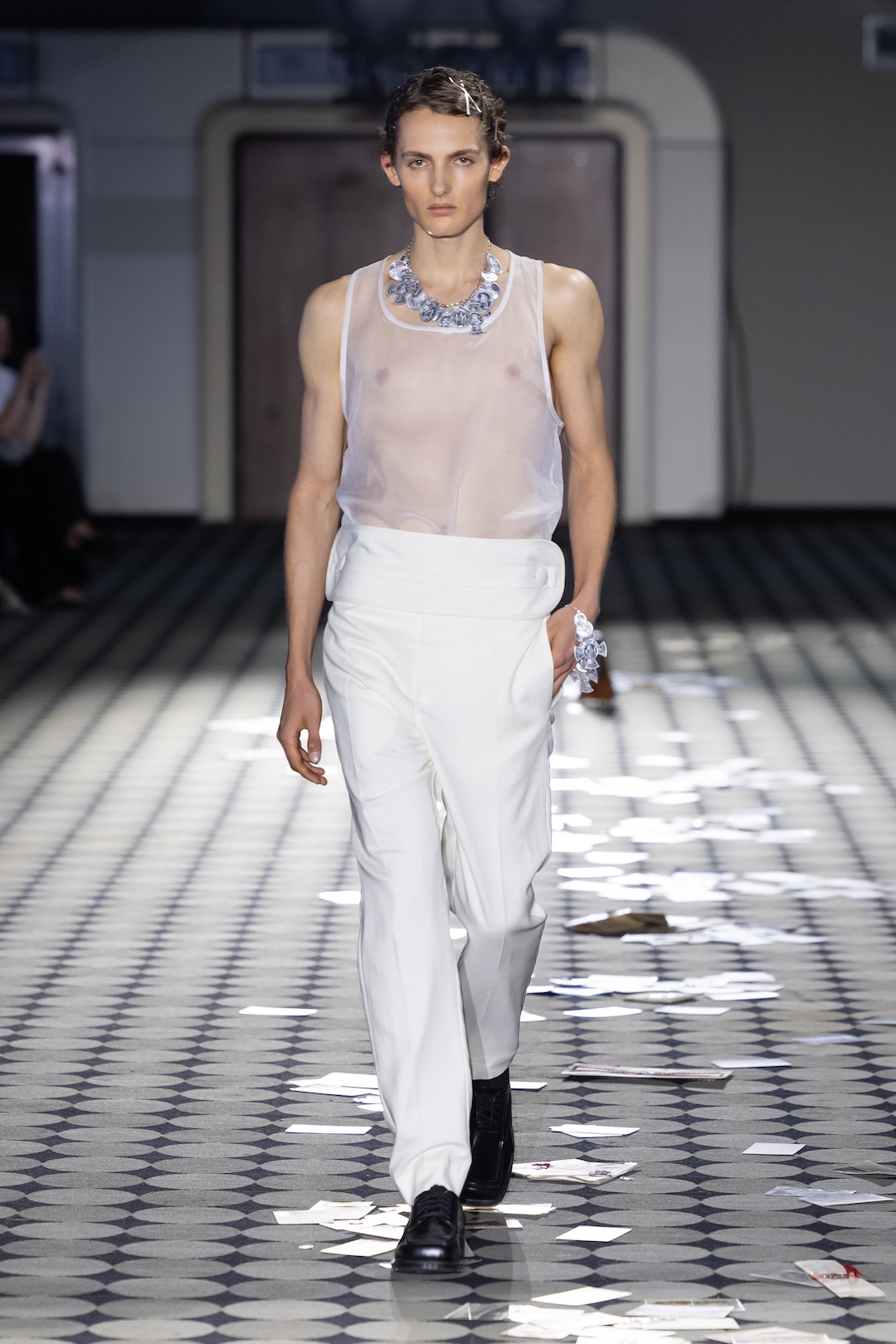
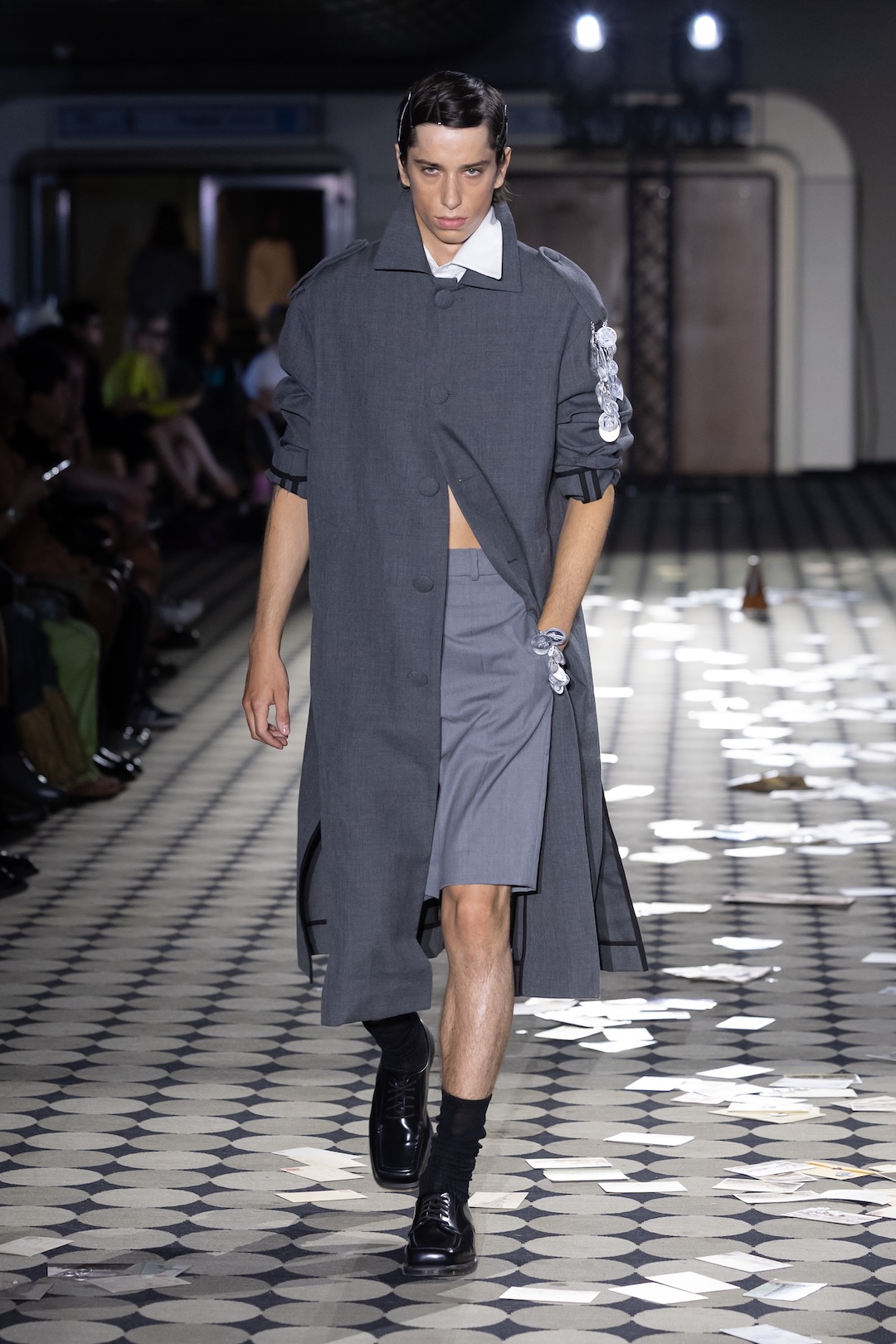
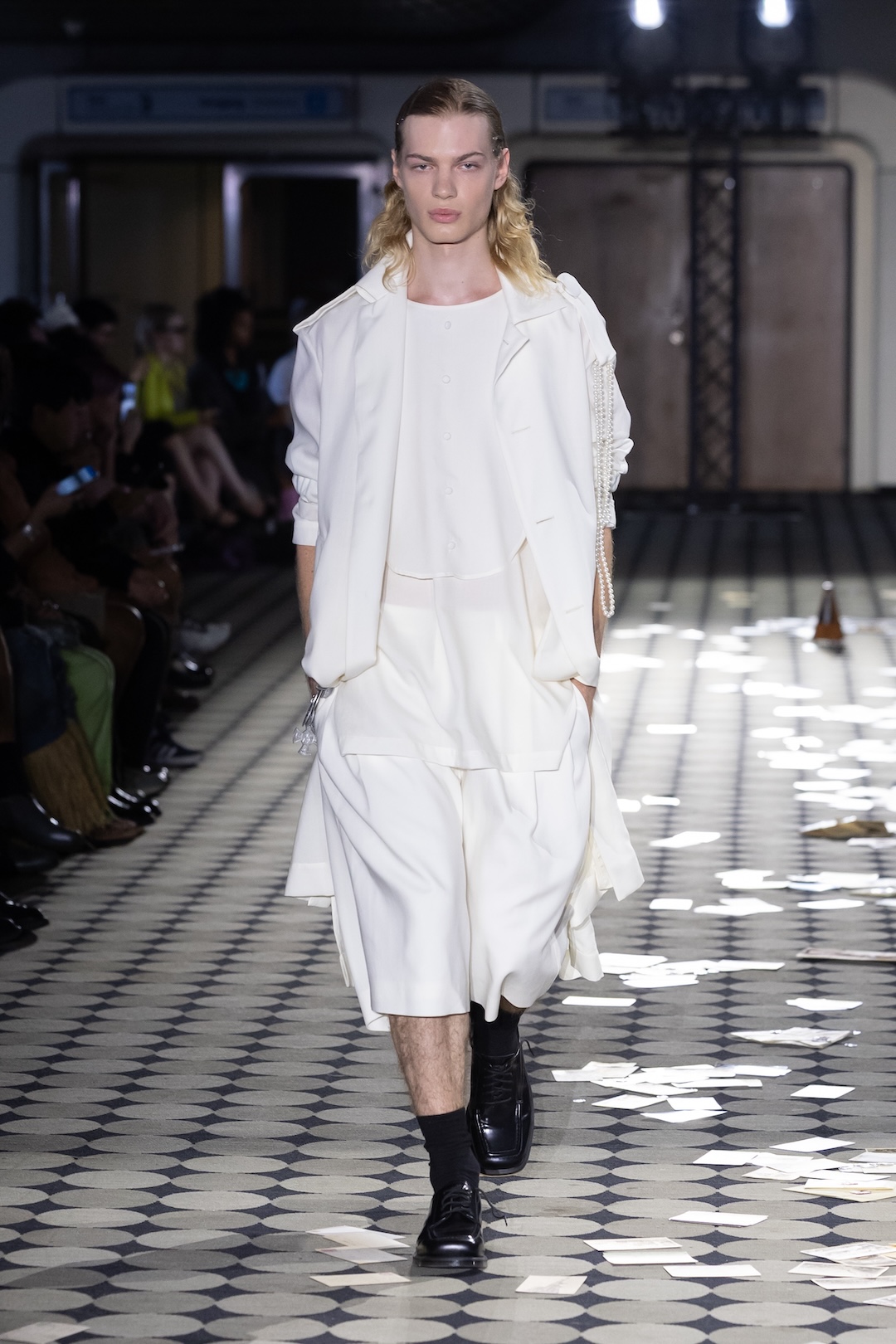
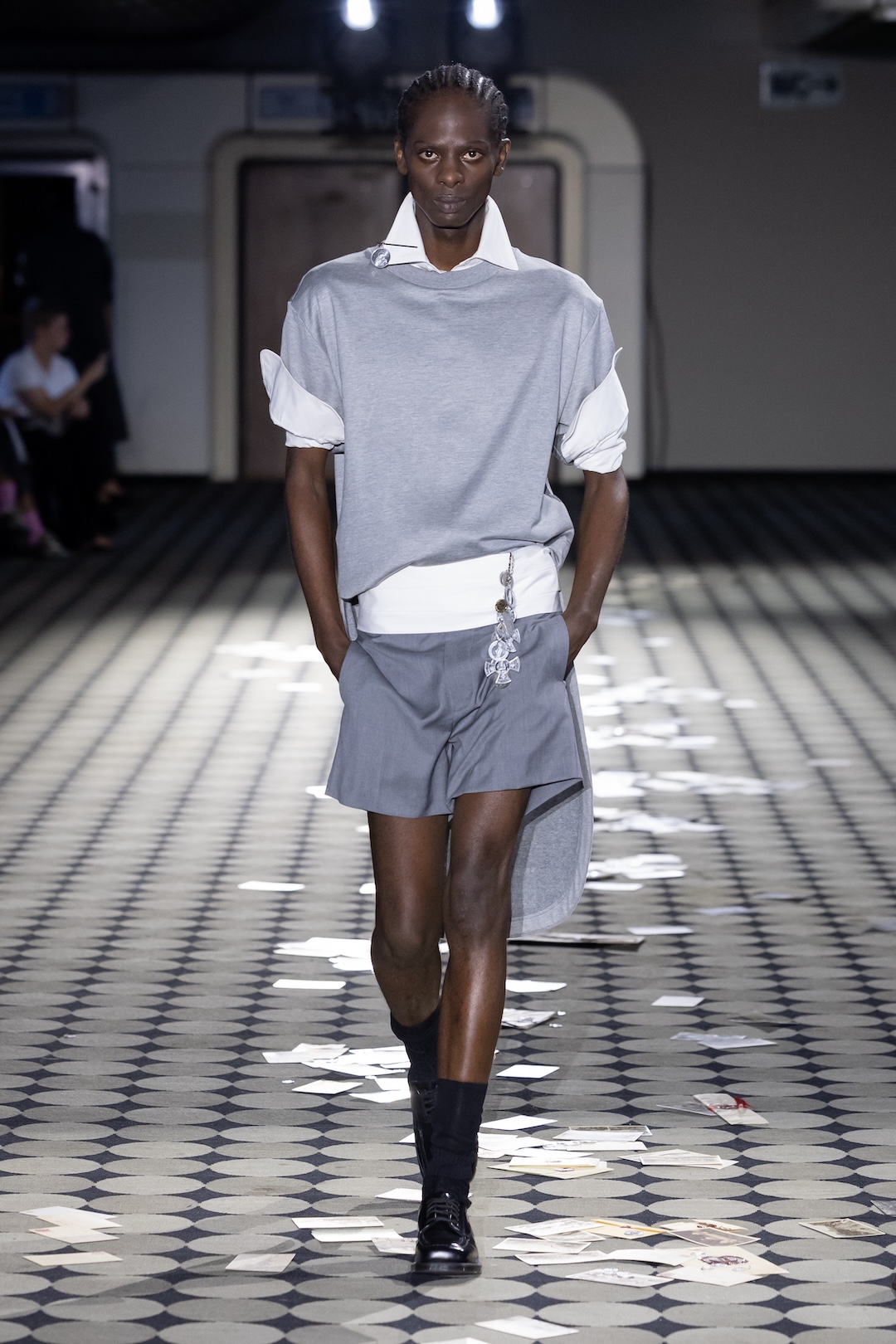
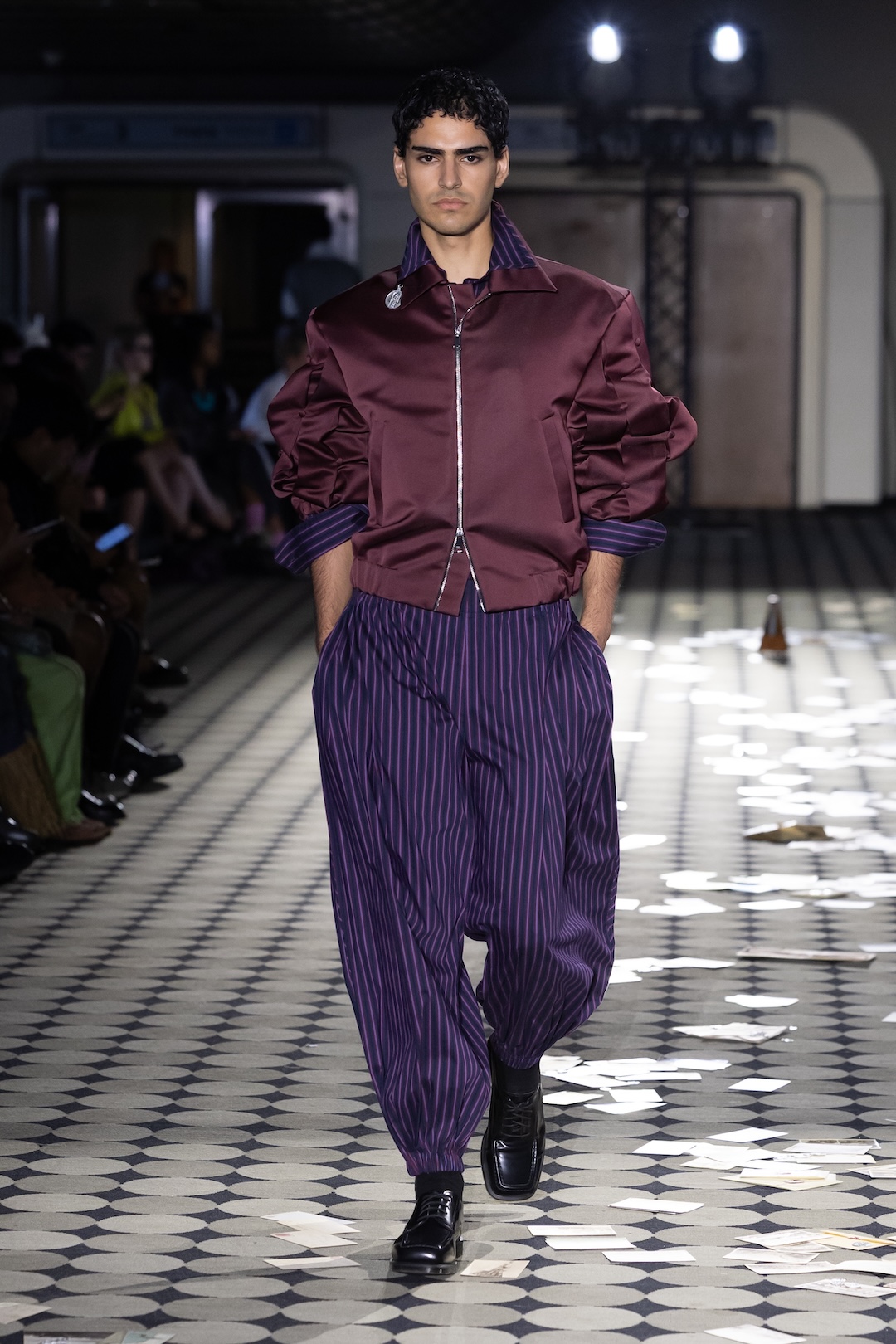
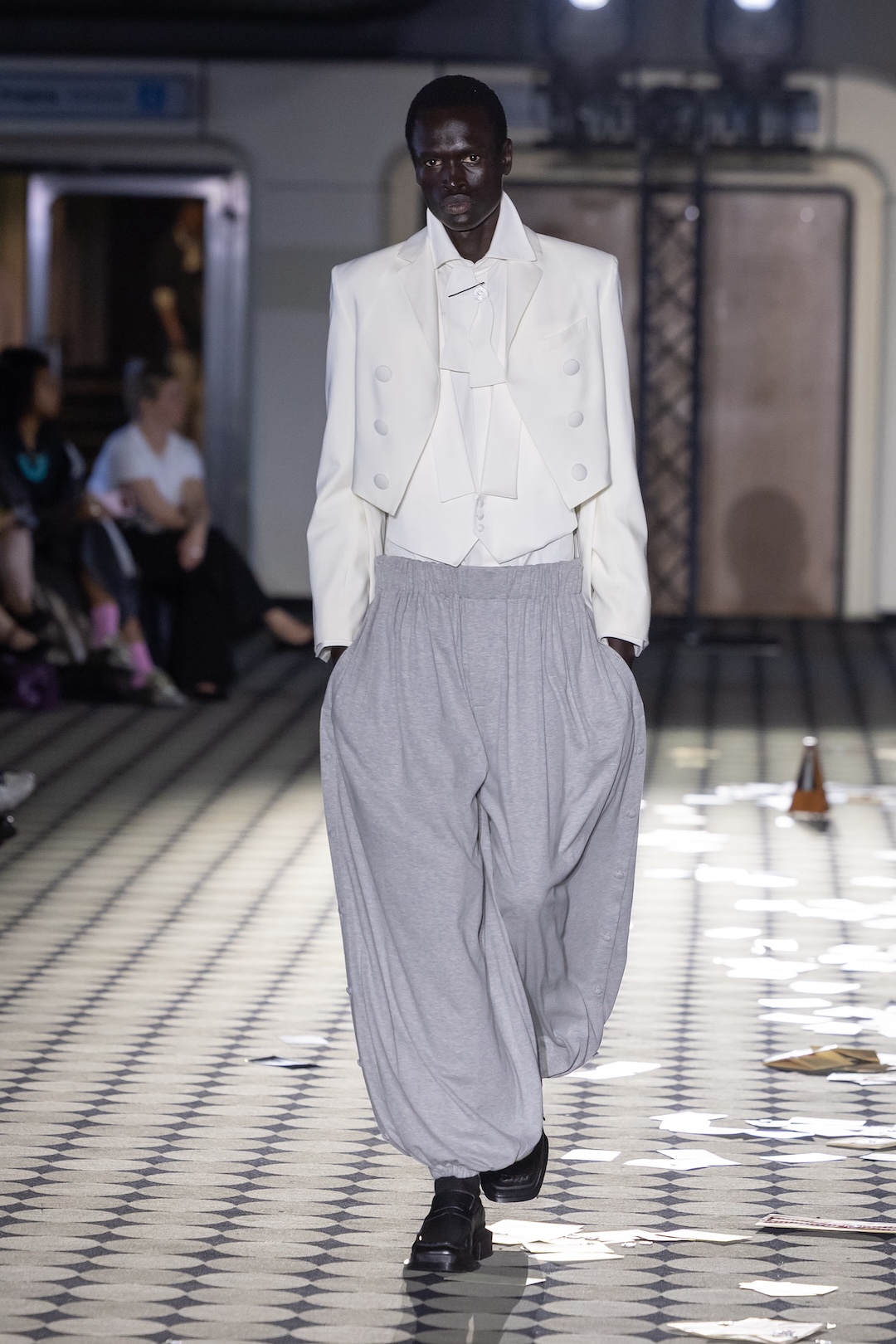
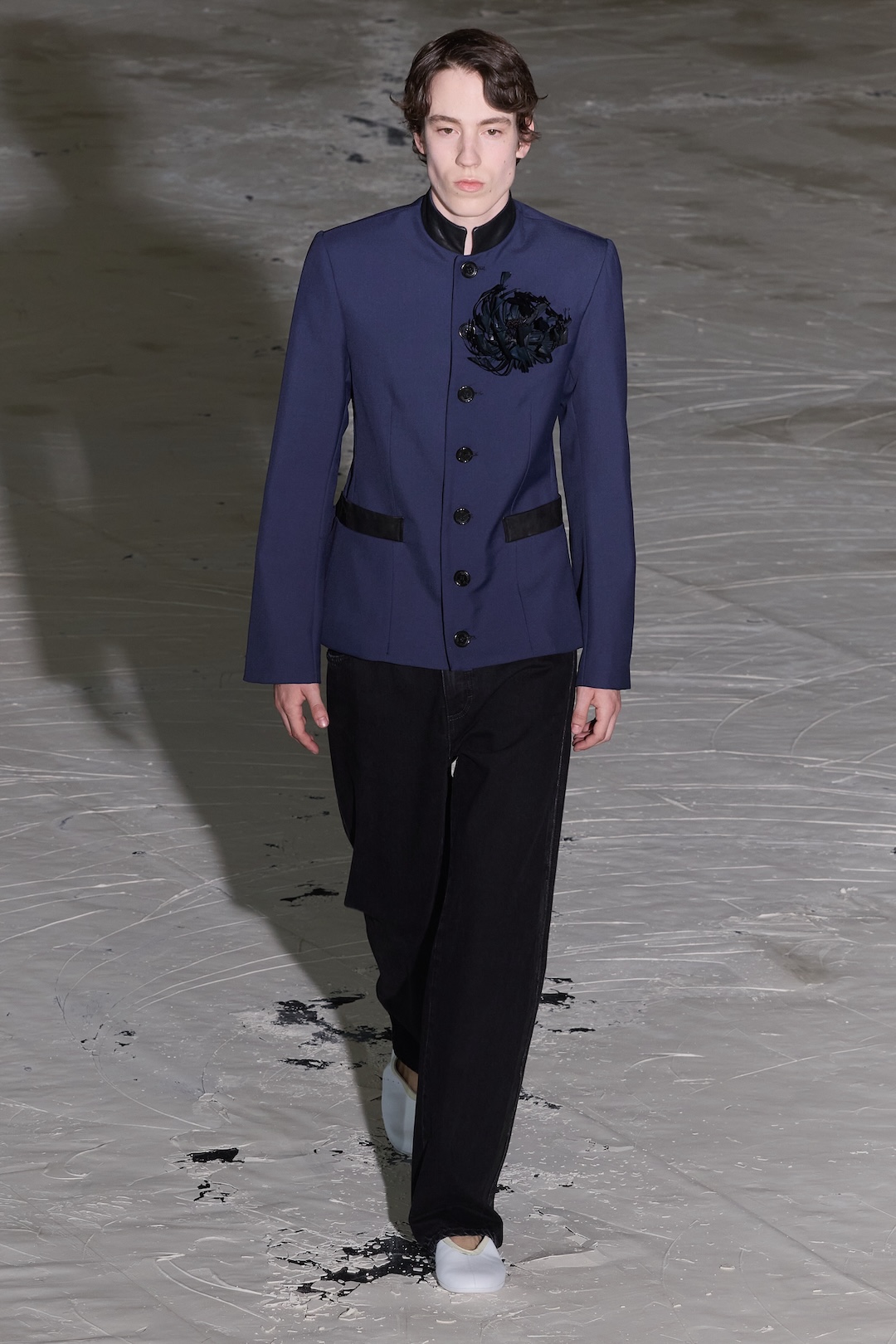
Founded by designer Mario Keine in 2022, MARKE approaches fashion as a conceptual practice as much as a craft, treating the human spirit as a fluid, layered construct shaped by memory and loss in equal measure with desire and imagination. The label’s melancholic reflections on the queer past and on the moments history never allowed to fully unfold result in garments that occupy a liminal space between what could have been and what could still be. Each collection draws on a wide field of references spanning art, literature, historical aesthetics, and cultural remnants, all refracted through a distinctly contemporary lens. Crucially, MARKE resists nostalgia: the work is inquisitive rather than wistful, asking how the past might be re-seen, re-felt, and re-worn in service of more inclusive, reflective futures.
This season’s Relics & Remnants continued that narrative around a solitary wanderer, not unlike Virginia Woolf’s Orlando, drifting through centuries with no fixed chronology: Renaissance references met Baroque-inspired underskirts, voluminous culottes nodded to the Counts of the Rhine, and coin- and heraldic-cross-adorned jewellery sat alongside the label’s now-signature sportswear staples, from joggers to bomber jackets.


→ UNVAIN
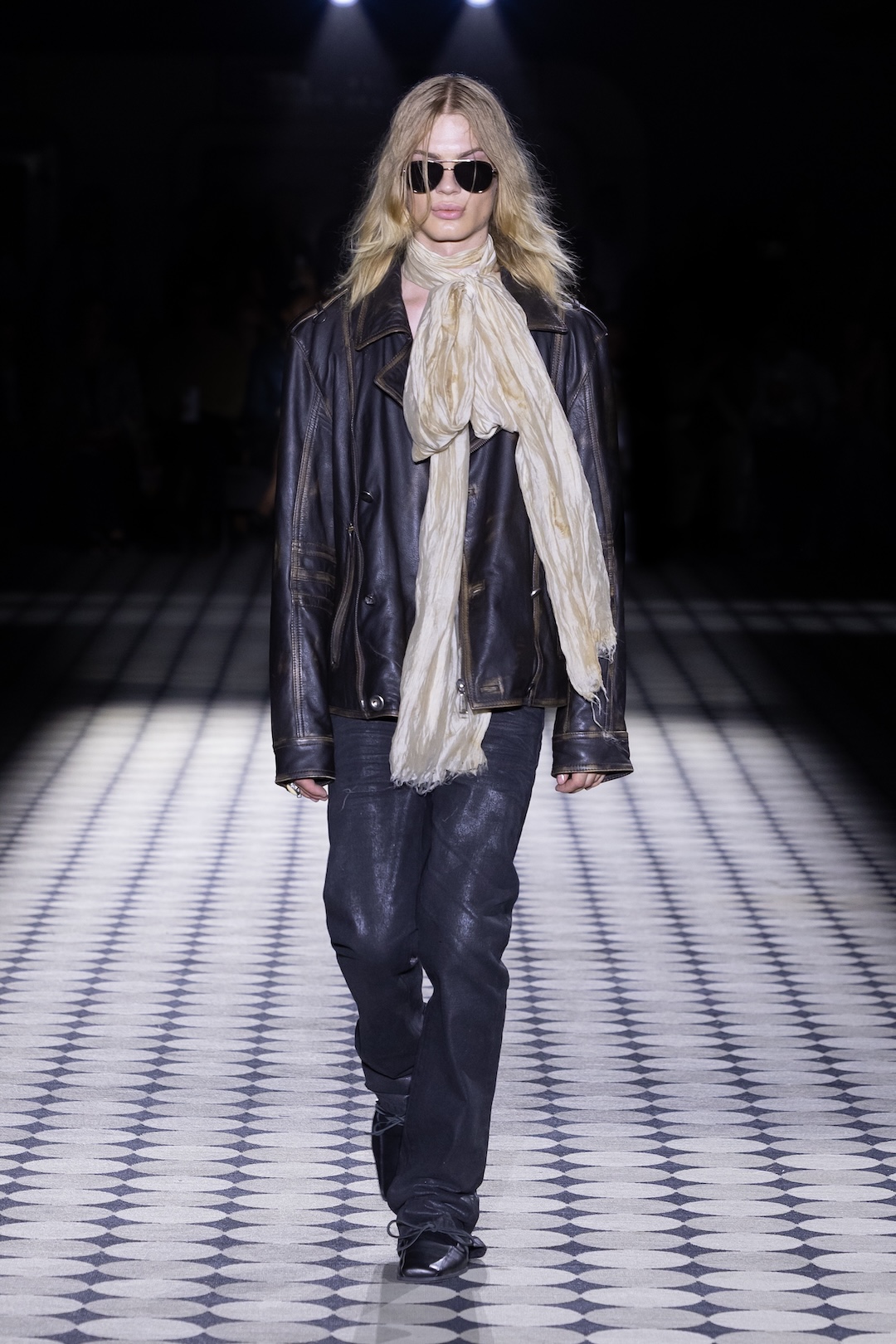
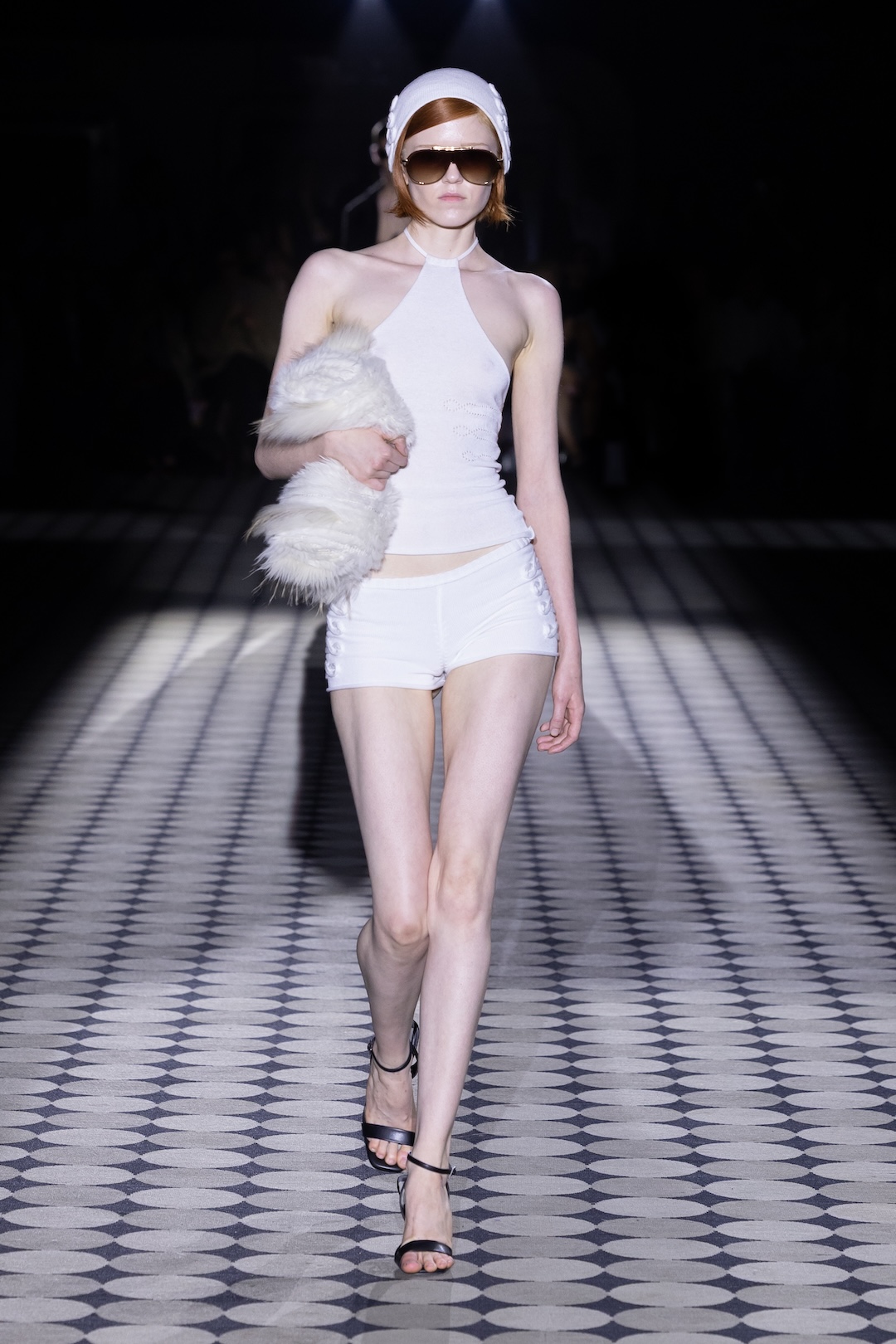
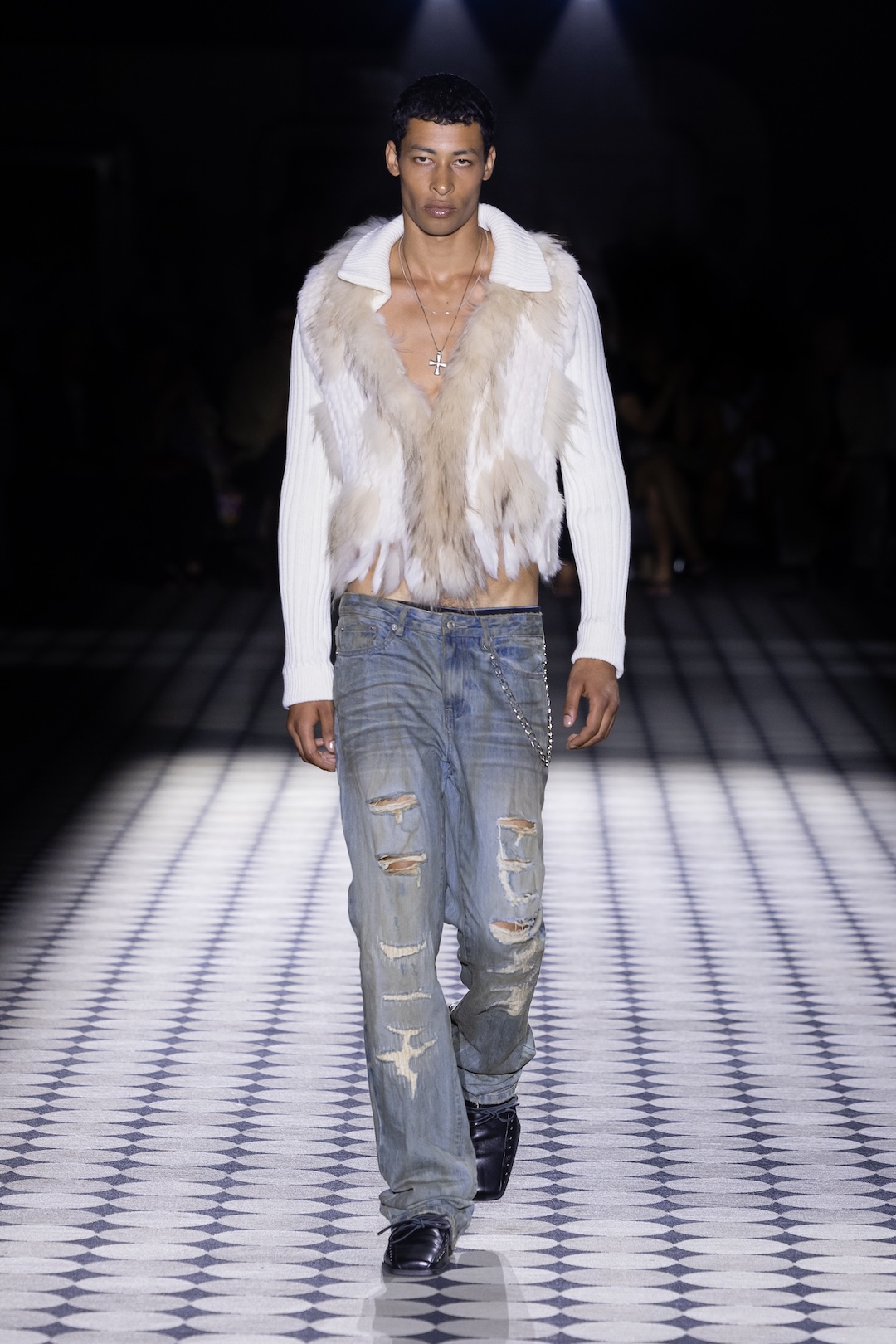
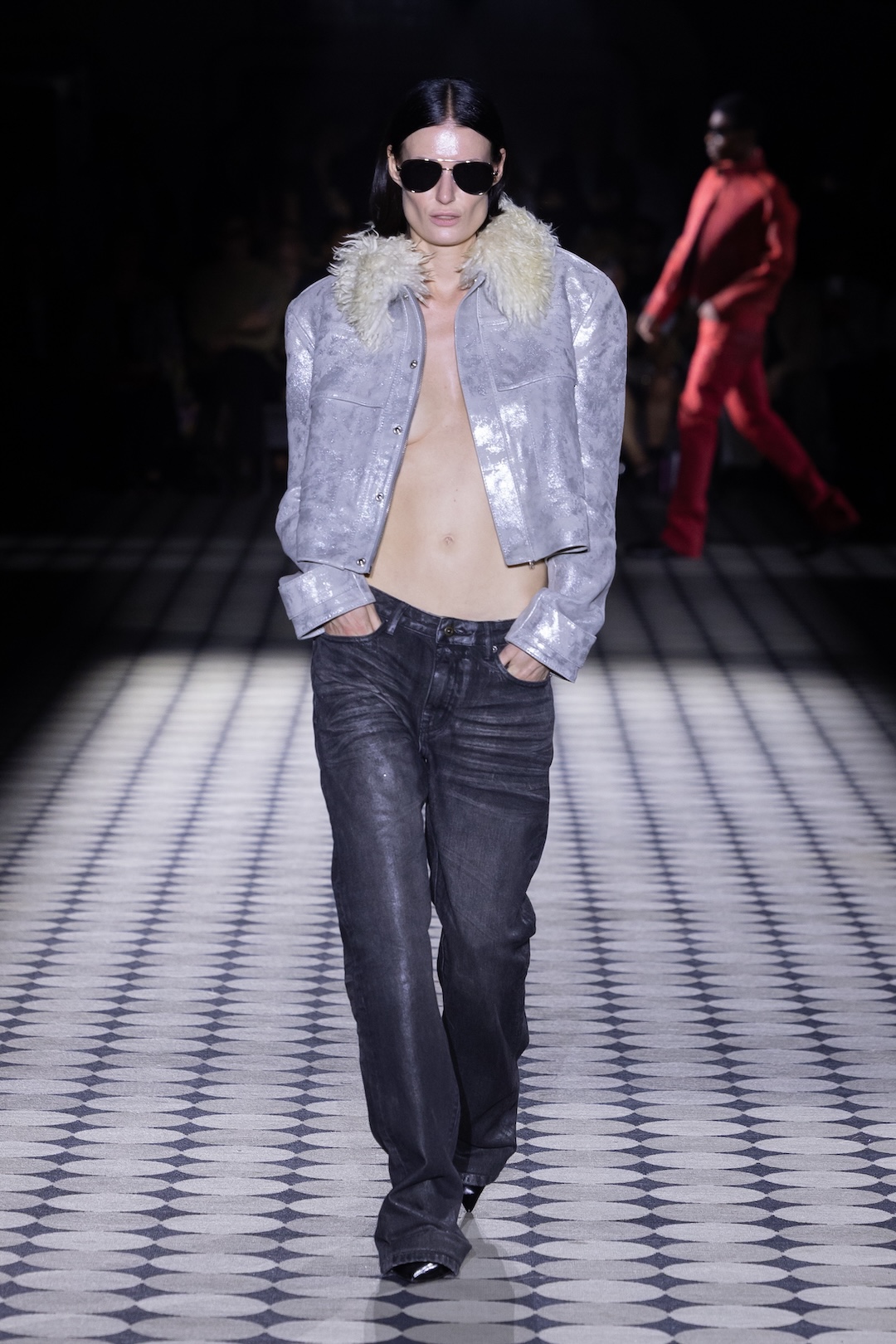
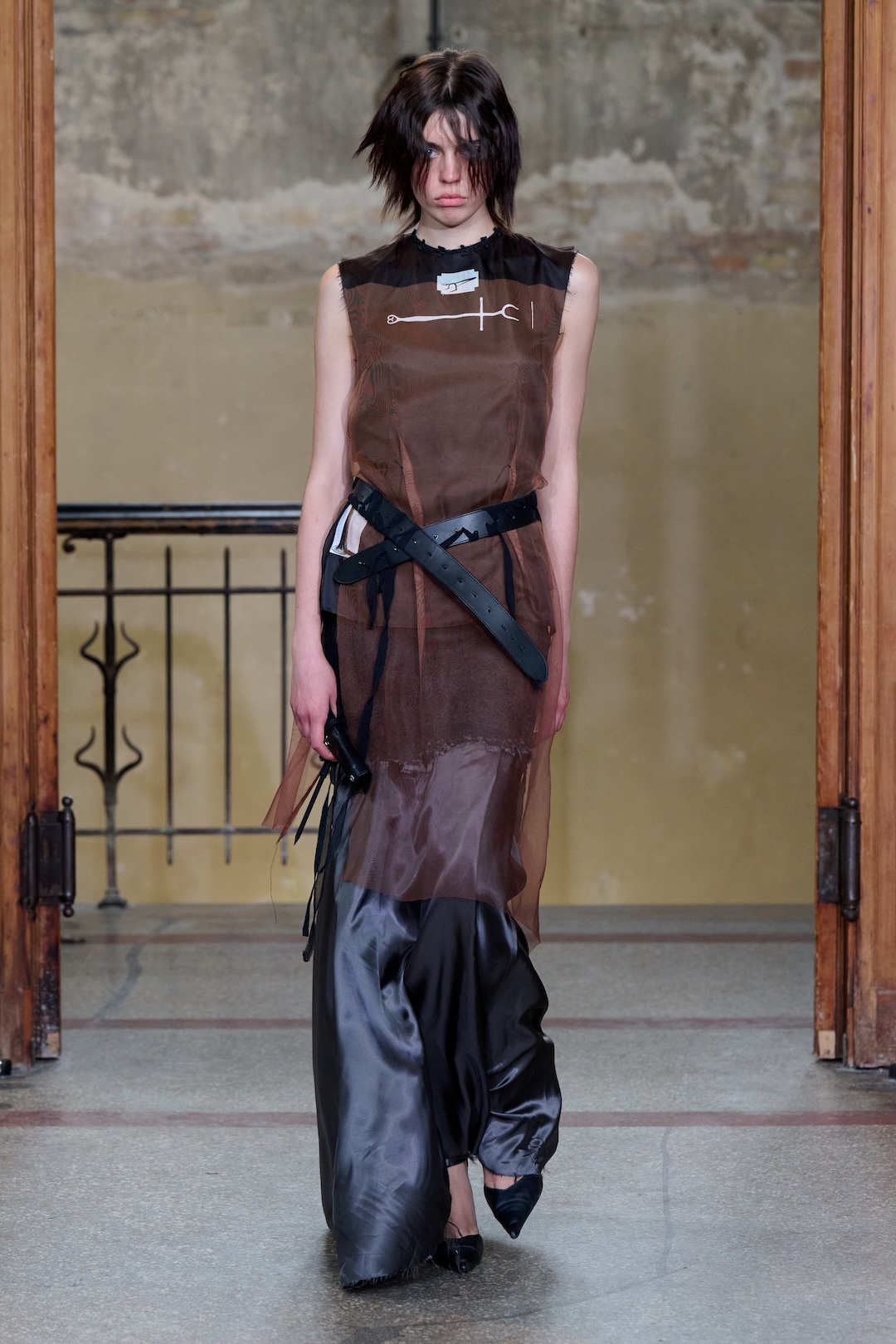
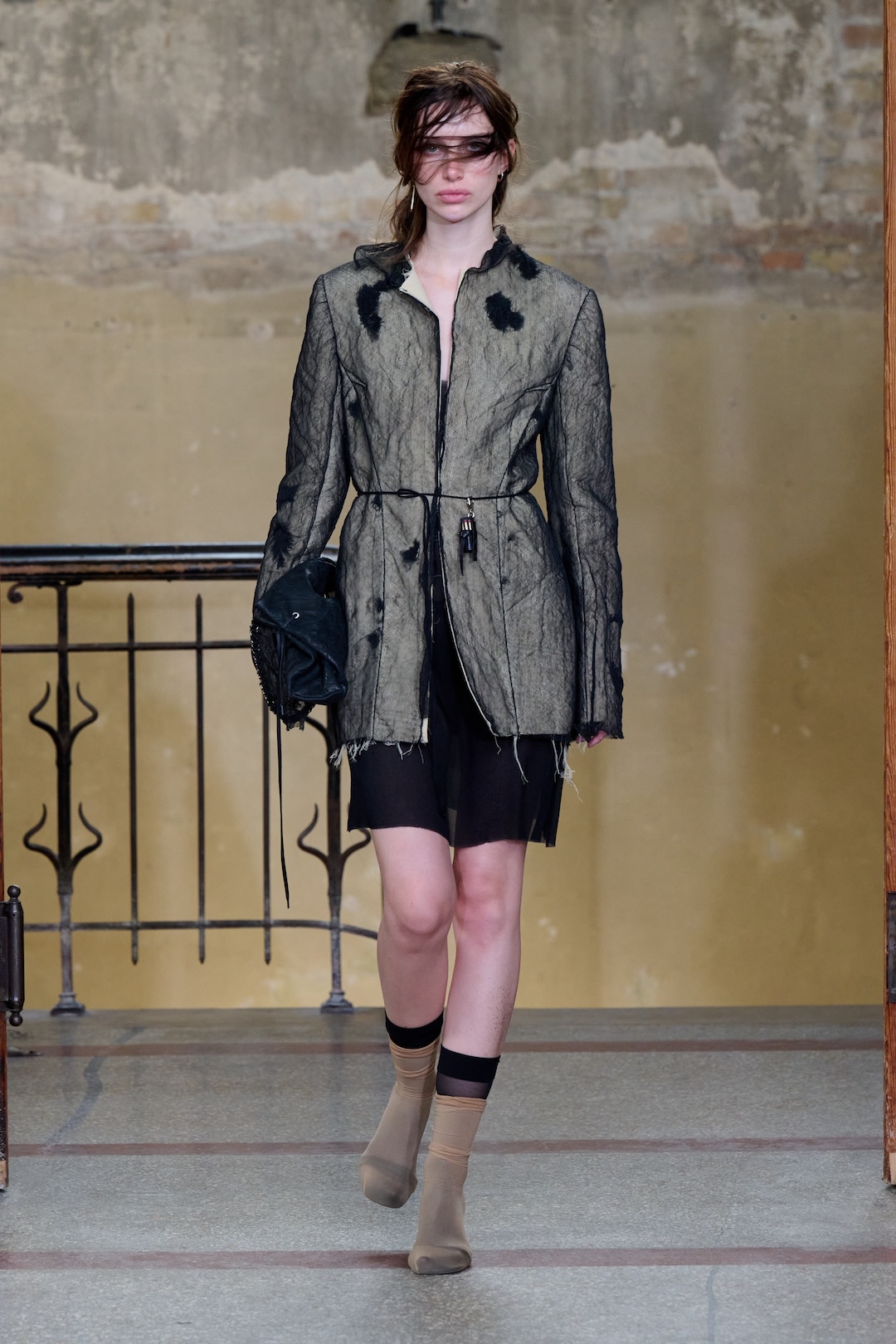
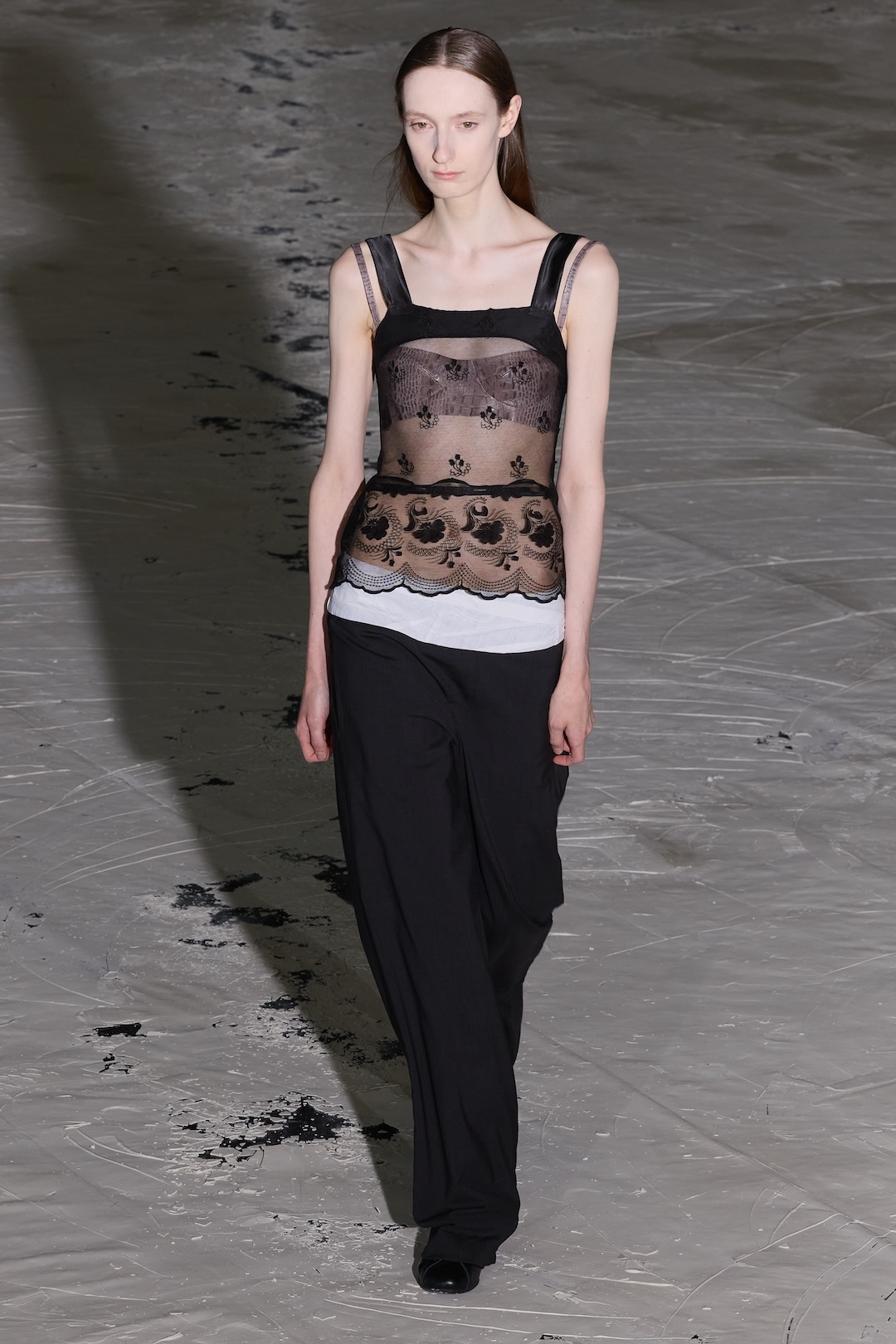
Founded in Berlin in 2020 by Robert Friedrichs, Unvain arrived at this edition on the verge of its runway debut. The label has built its identity on the raw, brutalist energy of Berlin’s subcultures’ architectural silhouettes, sharp tailoring, and industrial detailing, all filtered through a minimalist, almost puristic lens. What began as a solo studio practice has, in a remarkably short span, become one of Germany’s fastest-emerging names, propelled as much by a devoted online following as by the clothes themselves. Unvain’s proposition is a new kind of uniform: design stripped to its essential lines, but never cold, always carrying the pulse of the city that shaped it.
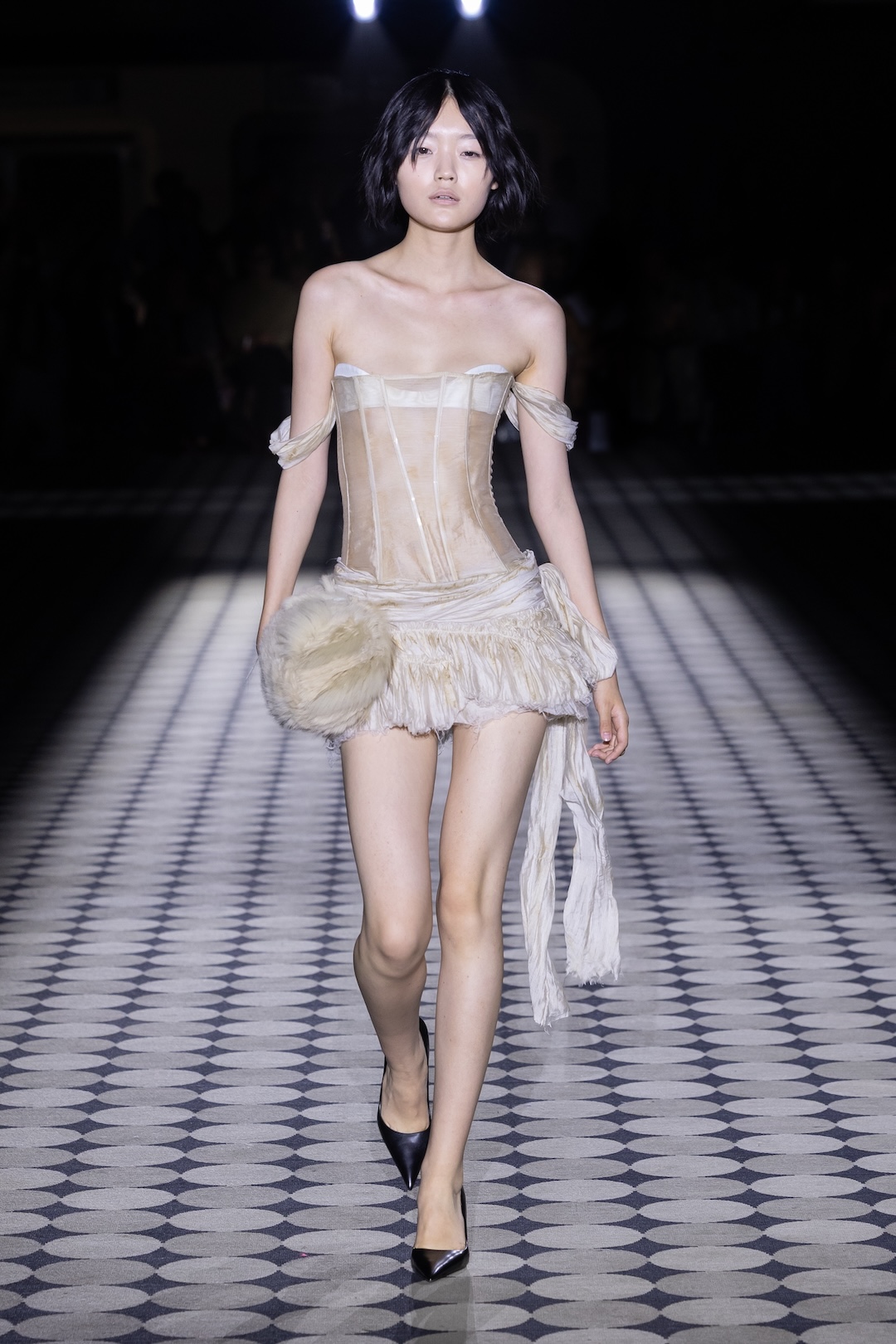
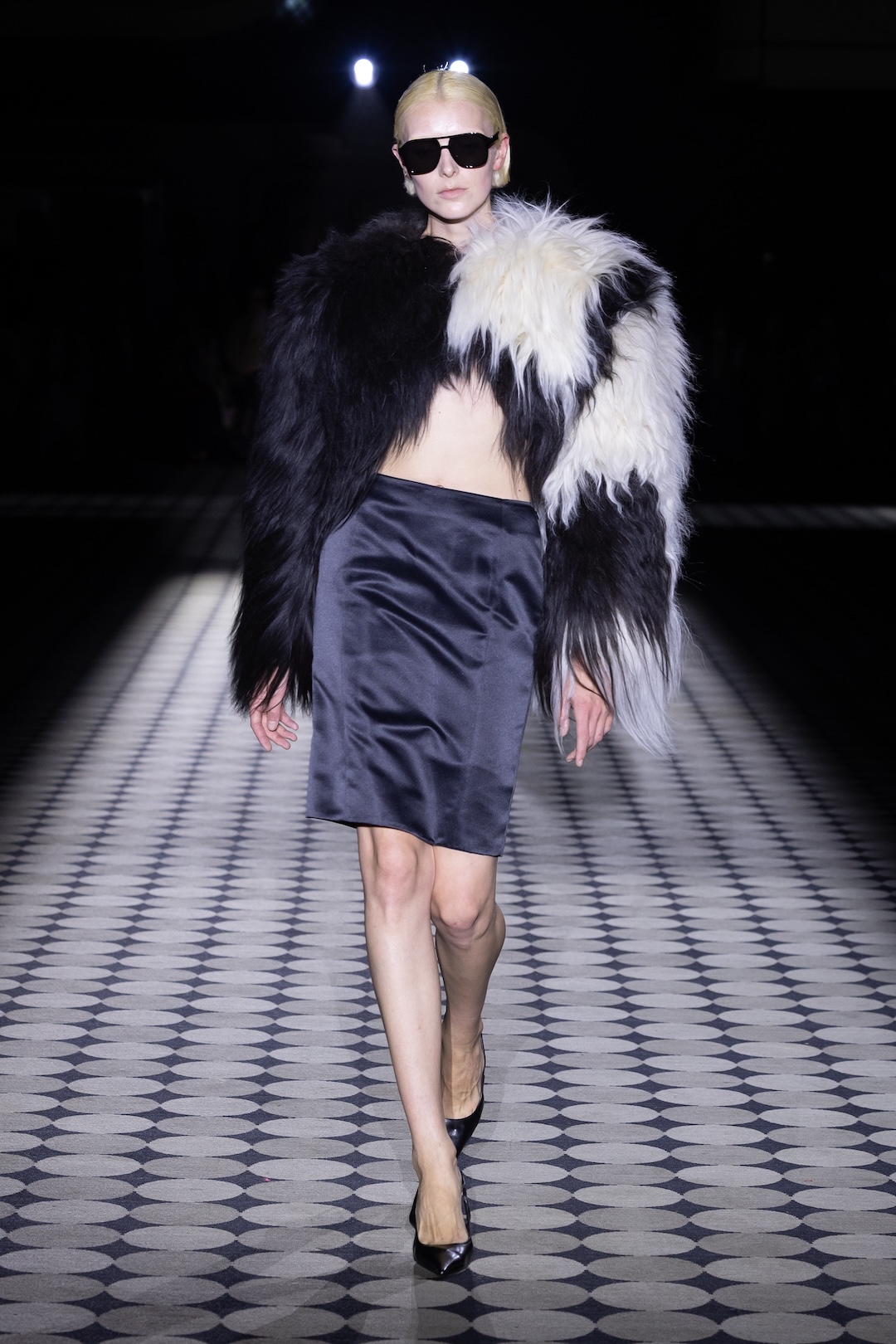
Titled Skins, the collection picked up directly where the label’s February BFW debut left off, leaning further into leather, faux fur, and transparency as a study of clothing as a second skin. Friedrichs gave each look its own character, distilled into a single line in a booklet handed to guests on arrival, from "rich parents, poor morals" to "self-doubt? unfamiliar", pulling the audience deeper into the label’s world.


Buzigahill’s mission is stated with the bluntness of a manifesto: to be the best upcyclers in the world. The label takes second-hand clothing discarded across Europe, North America, and Asia and returns it to its origins in the Global South, a practice it calls Return to Sender. At Berlin Fashion Week, that mission read less like a marketing angle and more like an urgent, necessary intervention in a fashion system still reckoning with its waste problem. Buzigahill’s presence on the calendar underscored something Berlin has increasingly made room for: designers whose creative process is inseparable from a broader ethical and geopolitical argument about where clothes actually come from, and where they should go next.
This season’s thirteenth Return to Sender collection turned to East Africa’s post-independence decade, drawing on figures like Zambia’s founding president Kenneth Kaunda, whose name lent itself to the tieless, climate-suited Kaunda suit, and Ugandan diplomat and model Princess Elizabeth Bagaaya of Toro. As designer Bobby Kolade explained at the show’s opening, both figures embody an era of optimism and a culture of freedom the collection sought to honour.


→ BARRAGÁN
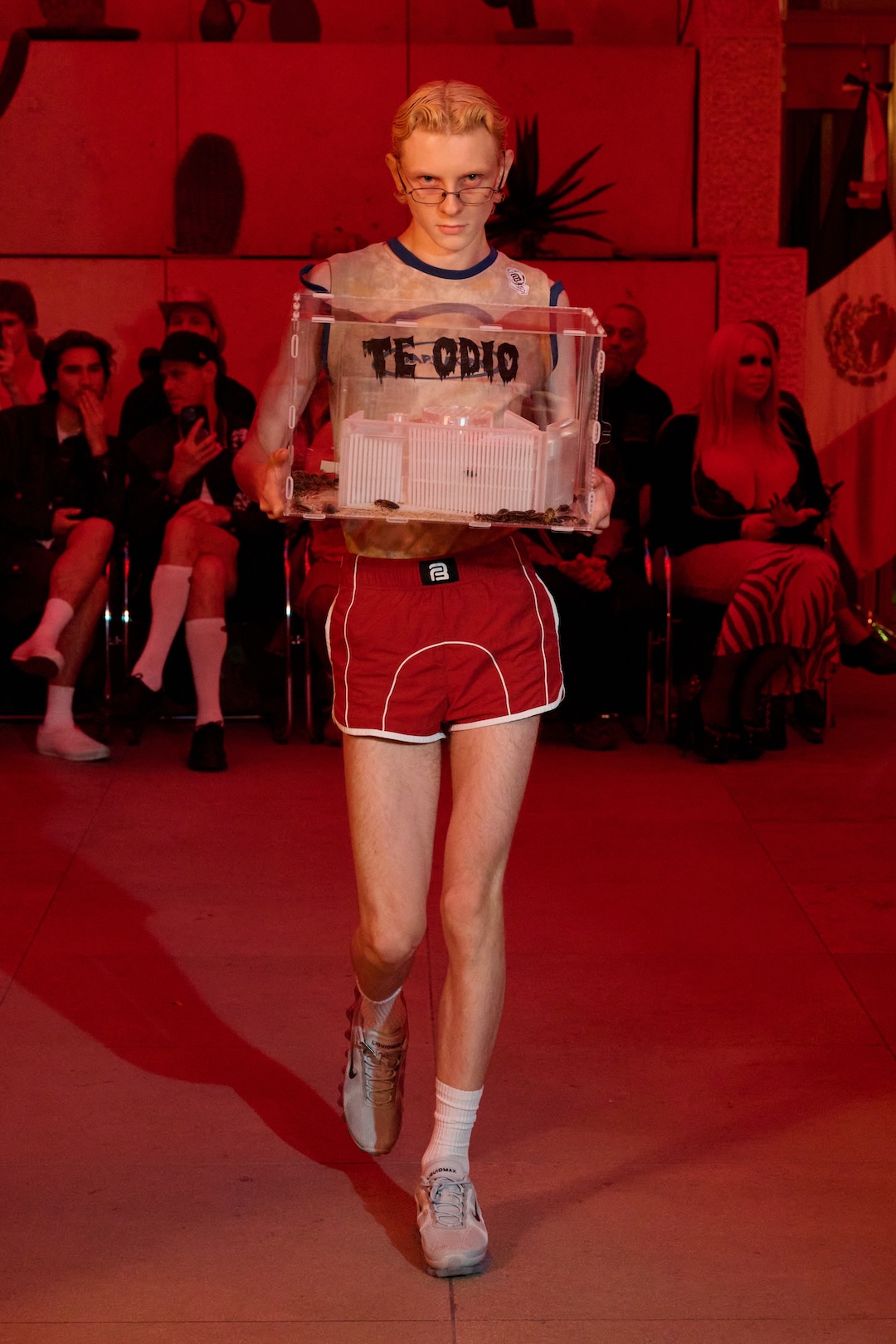
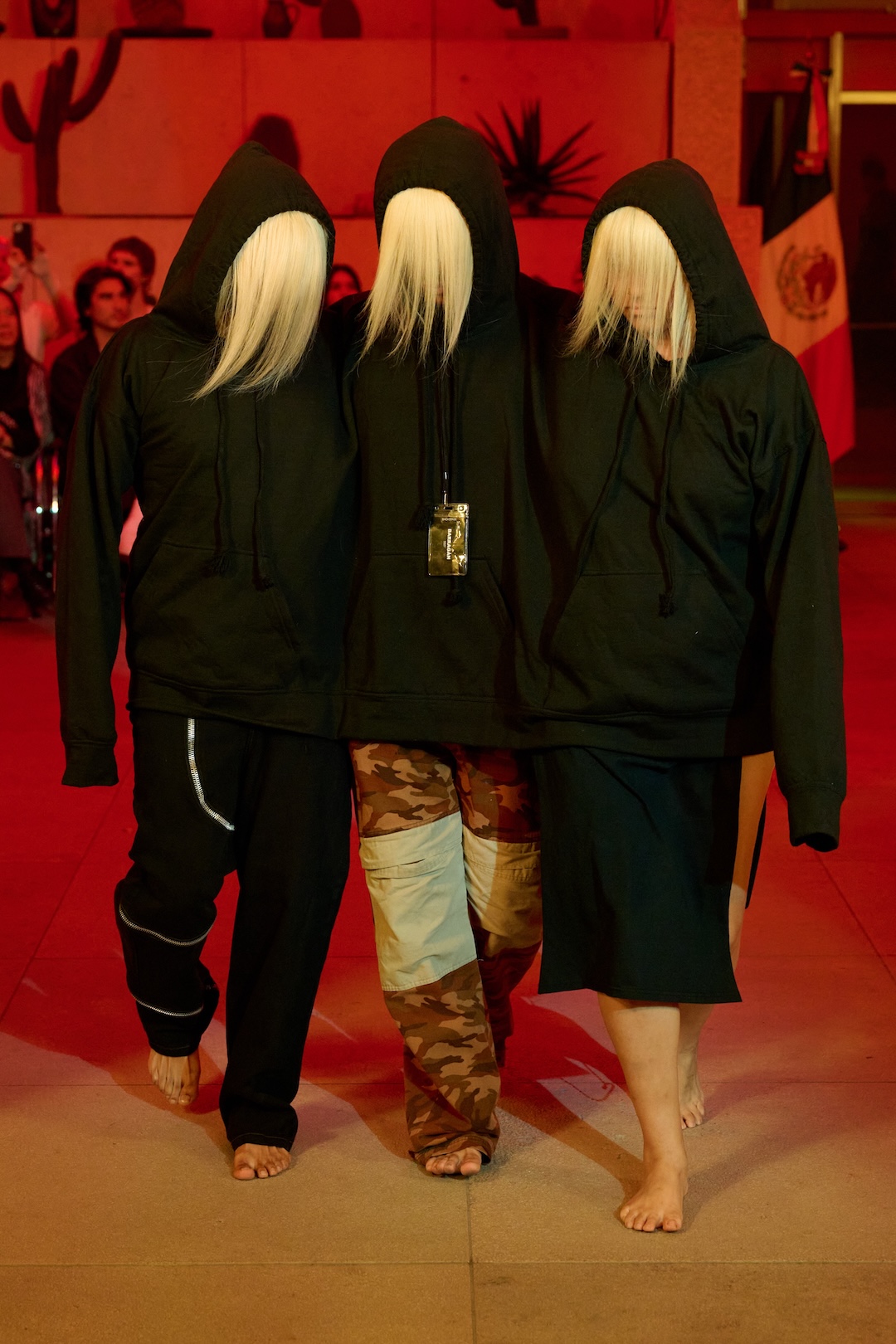
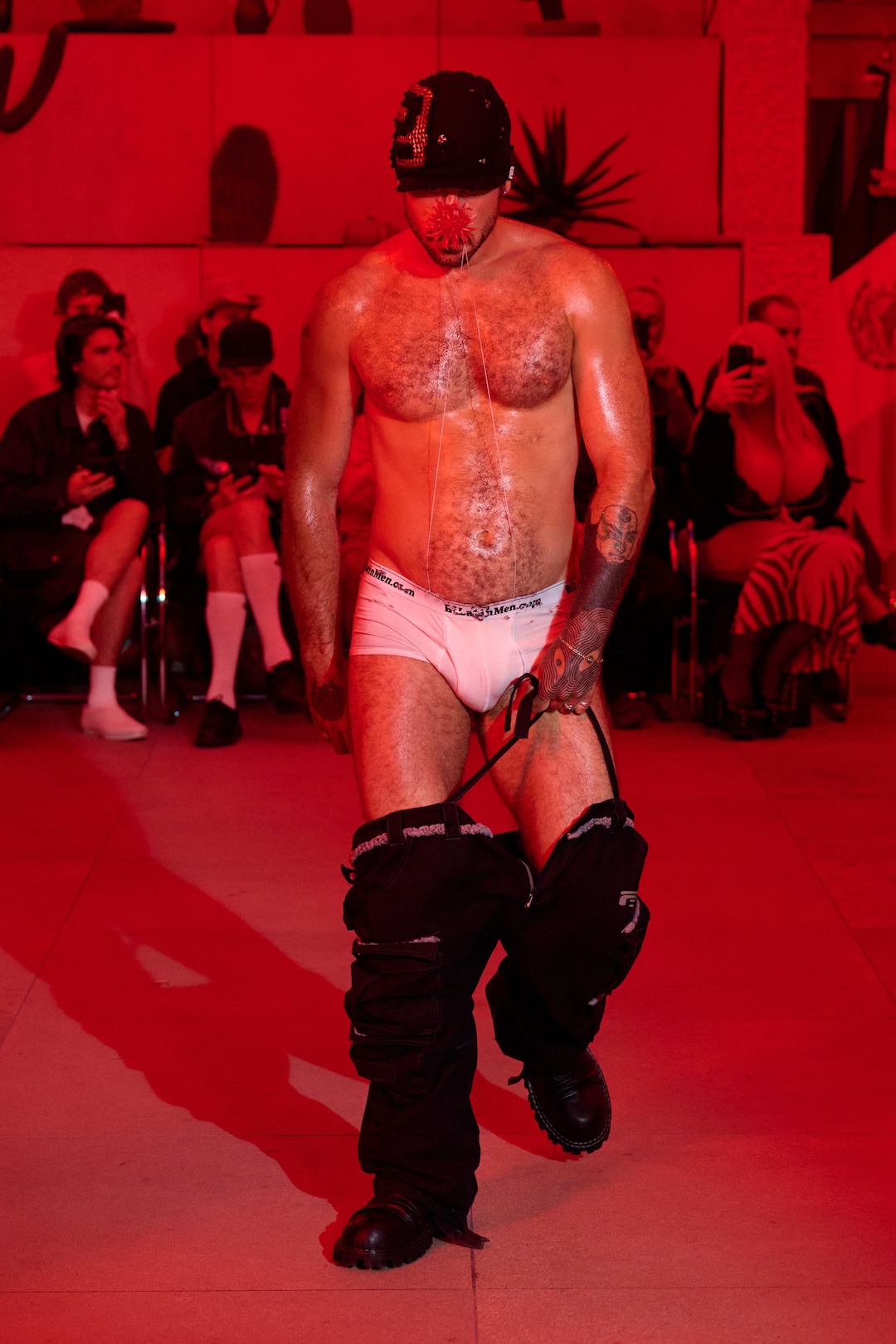
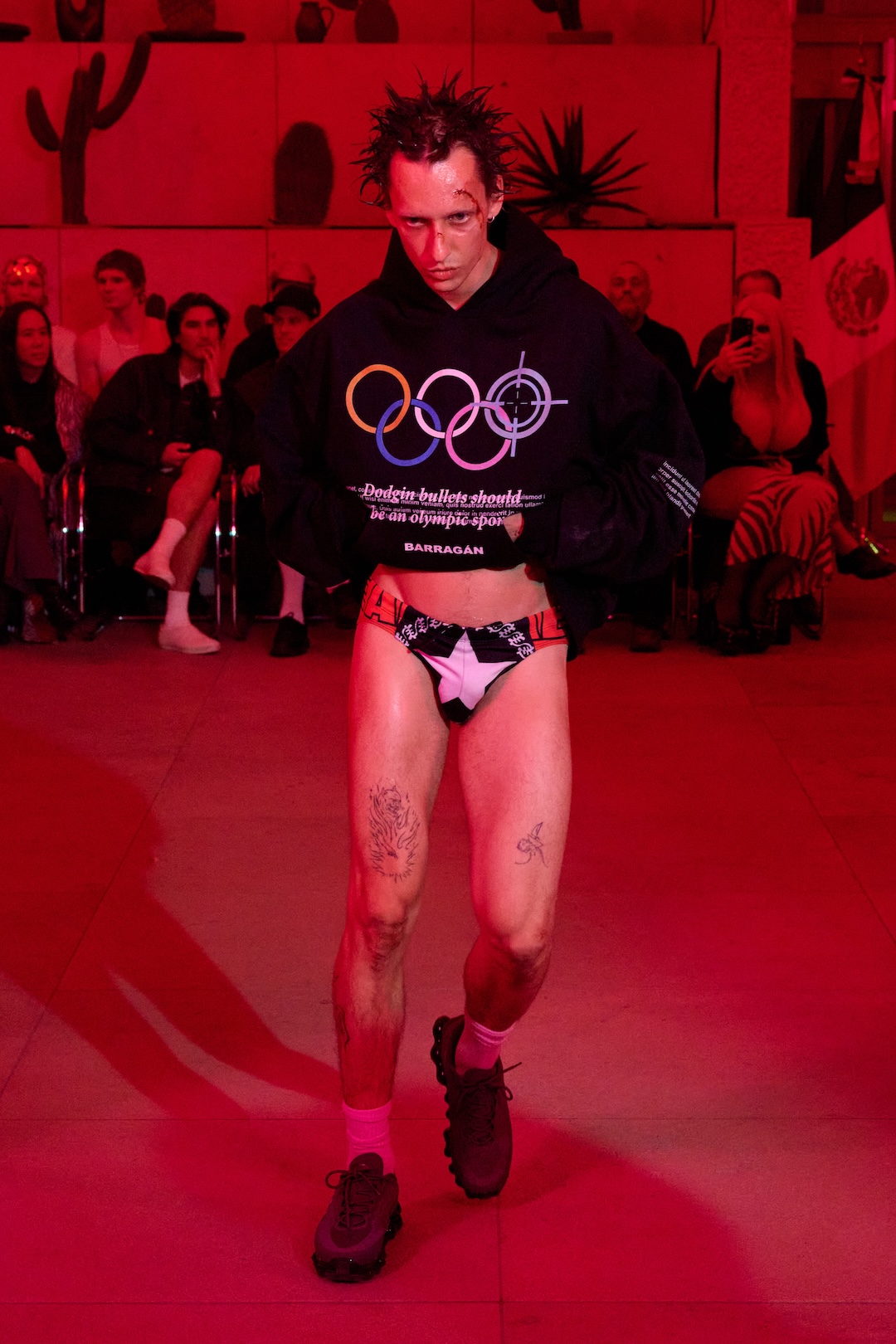
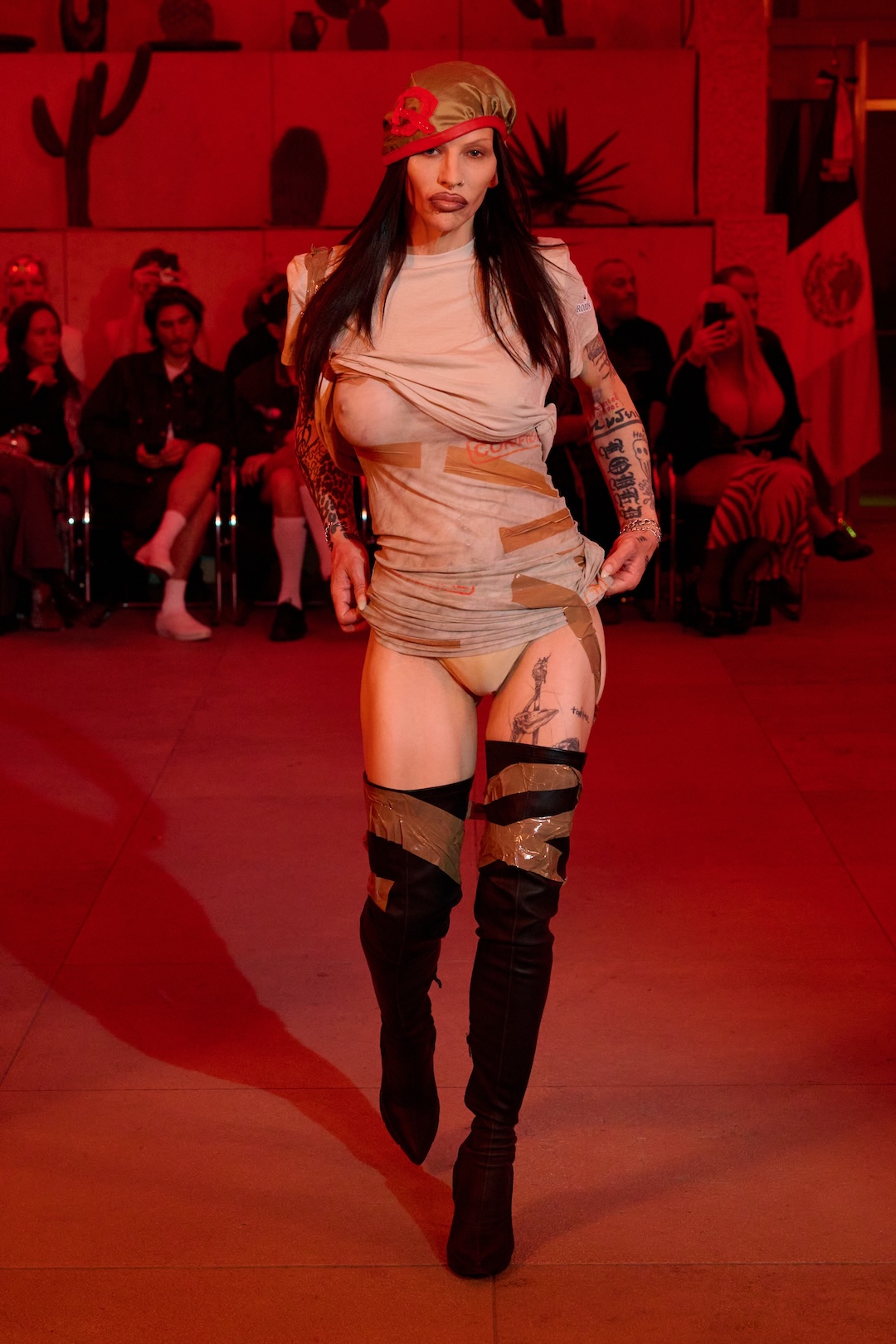
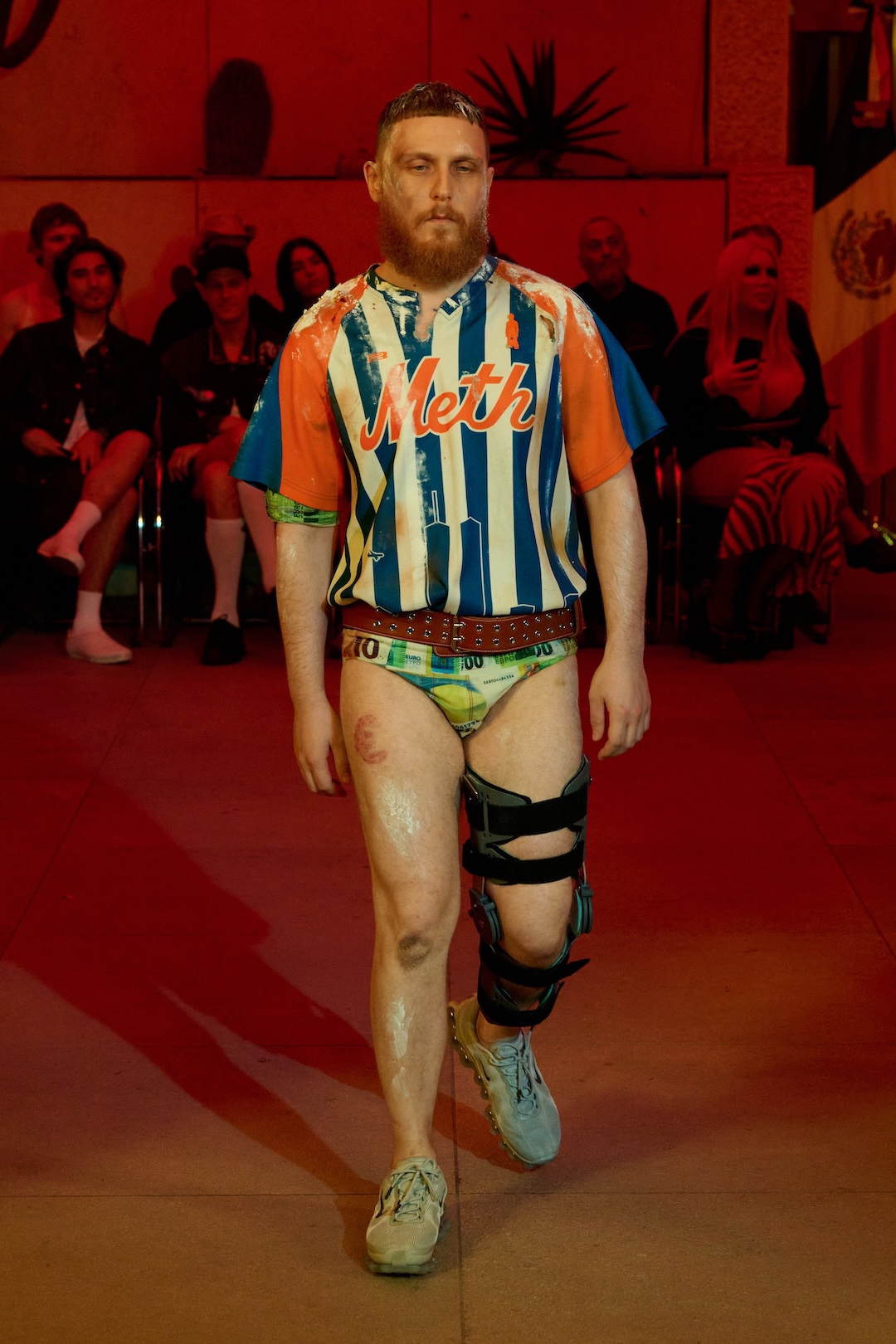
Victor Barragán’s ©Barragán has never been interested in fashion as mere clothing, and this outing reinforced that stance. Founded by the Mexican-born, Mexico City and New York-based designer in the mid-2010s, the label continues to blur the line between garment and performance through deconstructive cuts, provocative graphics, and combinations that shouldn’t work on paper but do. ©Barragán’s ongoing exploration of gender, identity, and cultural consumption, fusing Mexican heritage with New York counterculture and queer aesthetics, has earned it CFDA/Vogue Fashion Fund recognition and a fiercely loyal following. In Berlin, that irreverent, concept-driven approach found a natural home among a city that rewards designers willing to provoke.
Barragán staged its BFW debut at the Mexican Embassy with SS30, a title gesturing toward a future beyond Donald Trump, and a collection confronting migration and identity head-on: models moved at a rapid pace, marked by visible scars, low-slung trousers, bound hands, and dirt-streaked skin and clothing, while pointed prints on T-shirts and hoodies skewered anti-migrant rhetoric even as the show dismantled any single, homogeneous idea of Mexican identity.


Milk of Lime works in contrasts: rural and metropolitan, unique and mundane, harsh and romantic, and lets those tensions define its mood. The label’s process-driven approach starts with the making itself: textures sourced from its surroundings are collaged into garments, resulting in pieces that read like fragments of an ongoing poem about life and what comes after it. It’s a quieter, more contemplative presence on the Berlin calendar, but one that rewards close looking, with finely manufactured goods that carry as much narrative weight as visual impact.
The German-Belgian duo’s fourth collection, Ashes, leaned fully into that tension, pairing destruction with the promise of renewal in the spirit of the phoenix. Draped menswear, knitwear reworked from torn silk, crinkled textures, and graphic prints across cotton tops, coats, wool trousers, and sheer silk deepened the label’s signature blend of the romantic and the sombre.


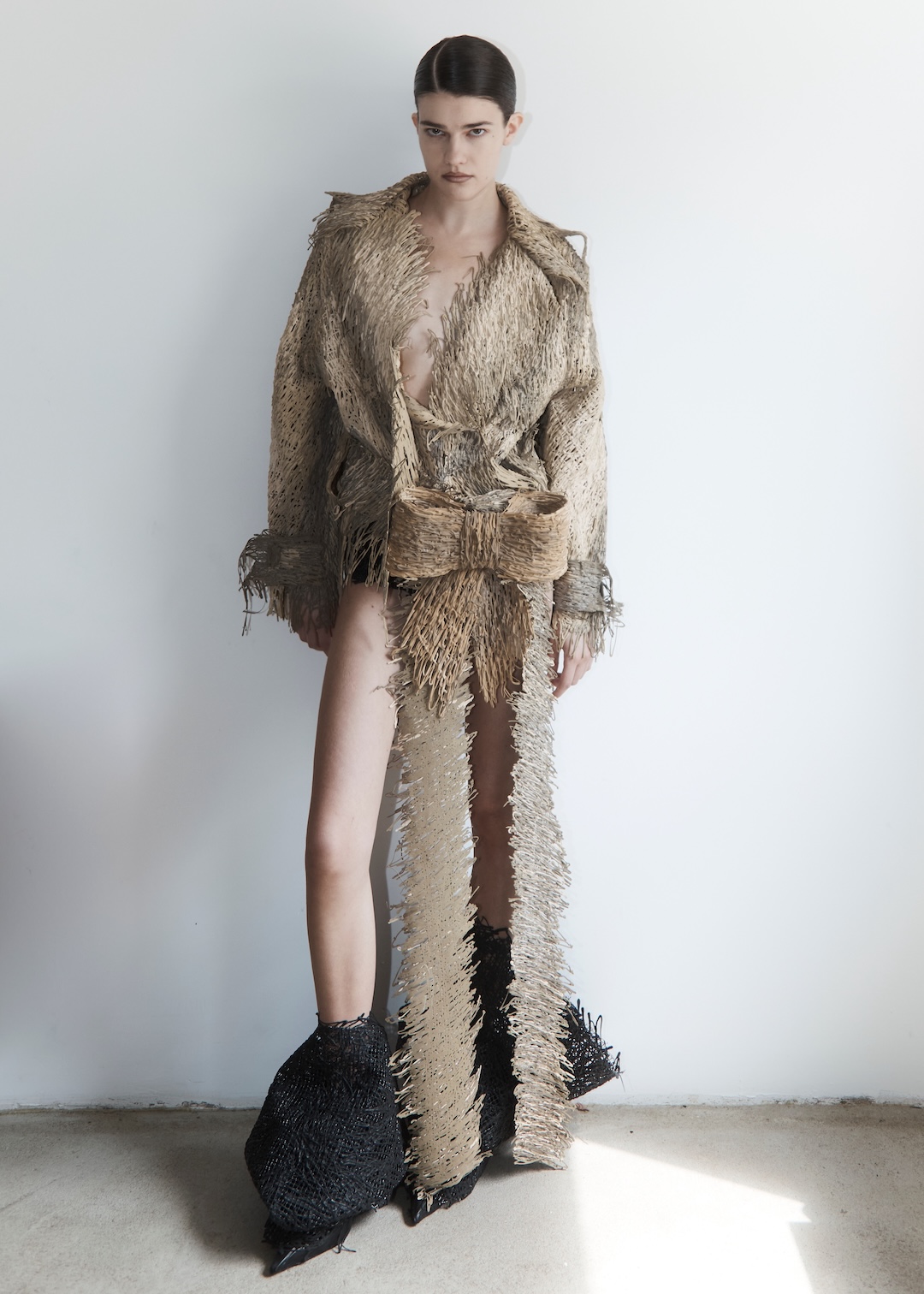
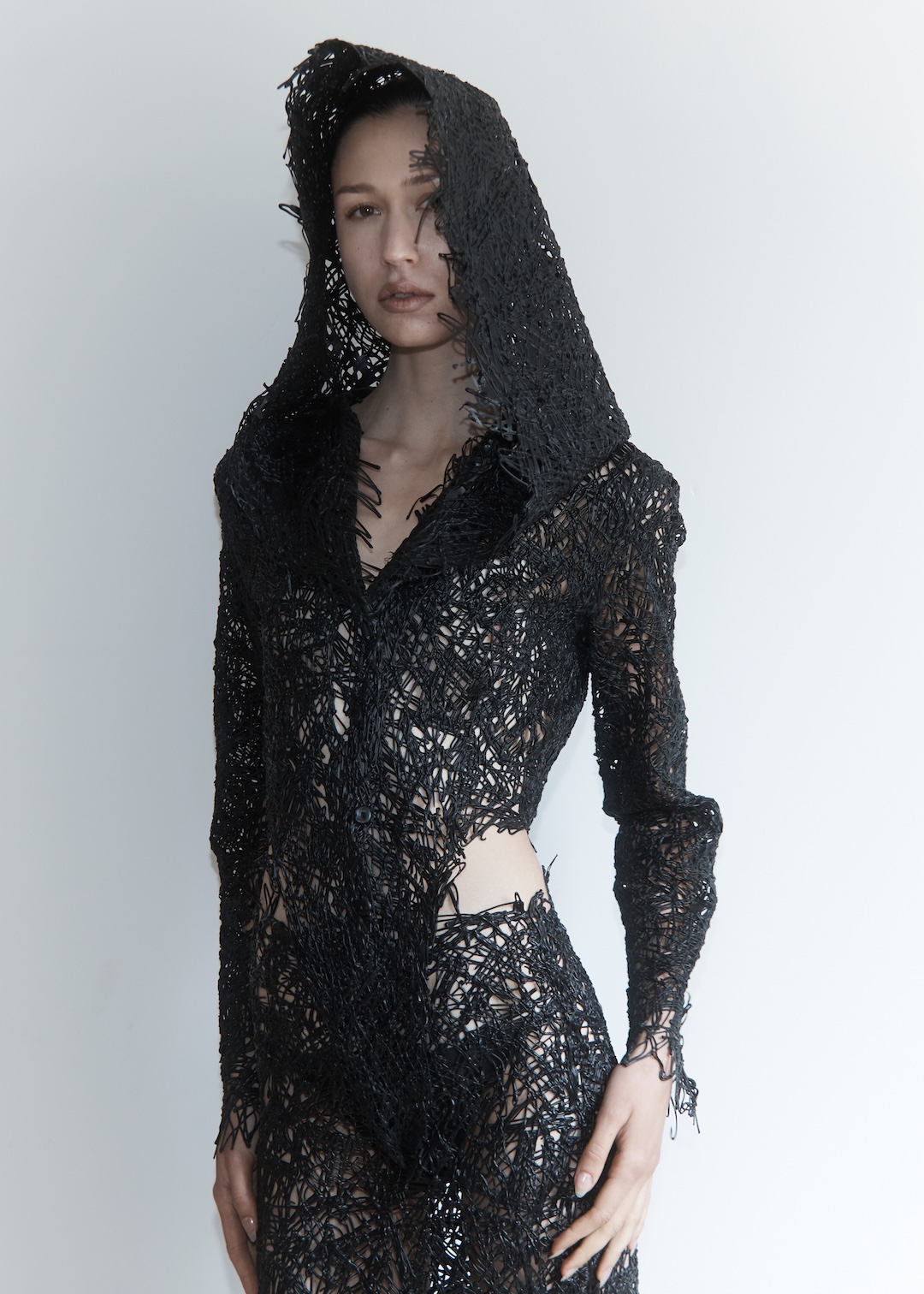
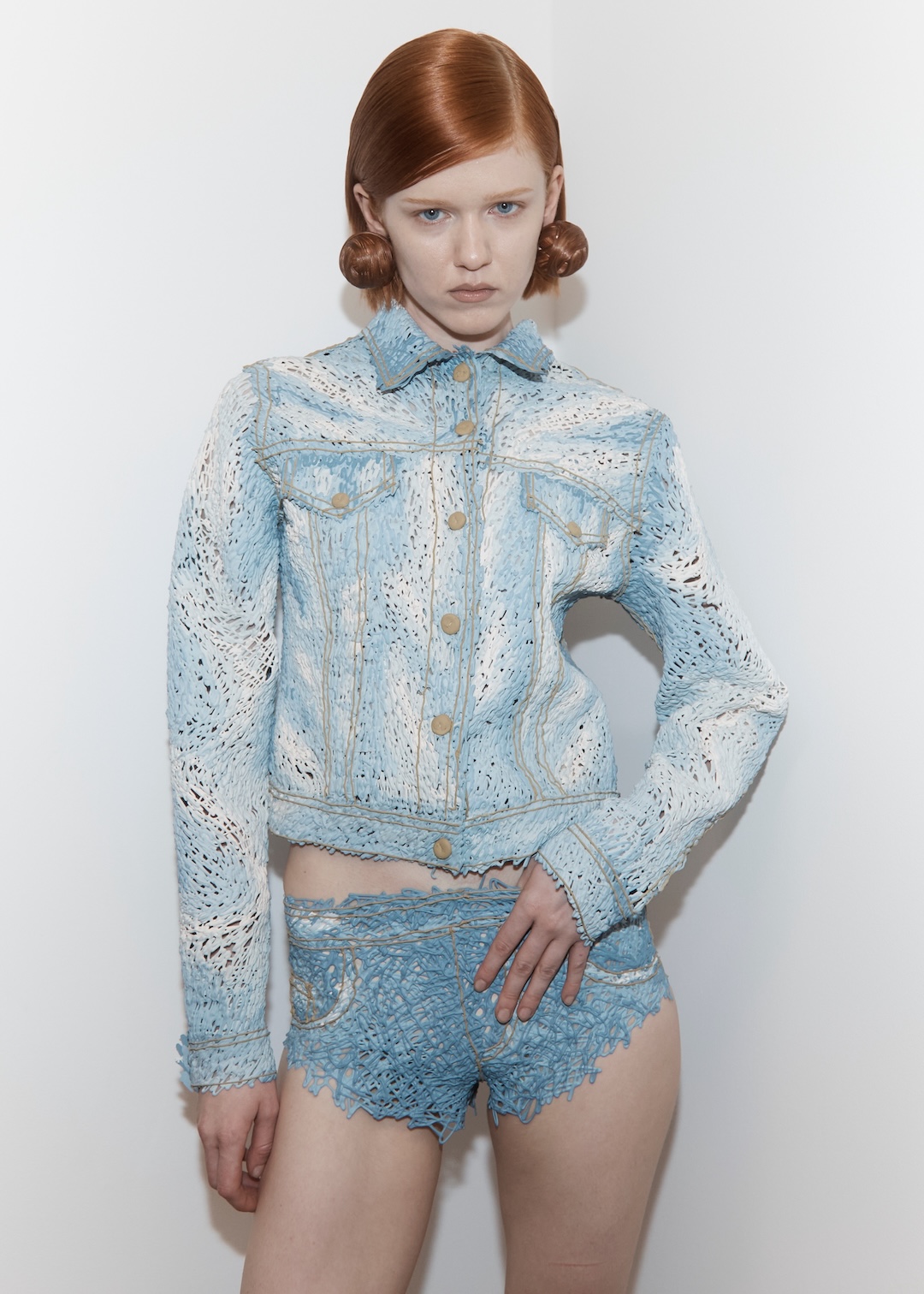
Founded in Berlin in 2021, Kasia Kucharska continues to push against the basic mechanics of garment-making itself. The label’s central provocation, printing garments rather than sewing them, reframes what confidence and sensuality can look like in a technology-driven present. Kasia Kucharska isn’t especially interested in silhouette for its own sake; the philosophy here is process-first, rooted in reinventing traditional craft through new manufacturing techniques and conscious, sustainable production. The result is a suggestion, repeated collection after collection, that clothing remains a medium far from exhausted.
For her ninth collection, Kucharska returned to her signature latex-casting technique after seasons spent working with ruched cotton, recasting denim, trench coats, and knitwear entirely in latex, alongside earrings crafted from synthetic hair. An immersive installation developed with AAS:set:project by Gonzalez Haase AAS & Stéphane Moun framed the presentation as a new chapter for the brand.


→ SF1OG
SF1OG trades in the friction between nostalgia and zeitgeist, pulling references from the past and reworking them into pieces built for the future. The label respects traditional technique without being precious about it, breaking classic rules whenever the material or the cut demands it. Each tailor-made piece is meant to tell its own story, a philosophy that has already earned SF1OG international media coverage. That attention was visible in the room this season, with a collection that felt both detail-obsessed and instantly wearable.
Staged in a sports hall inside a residential building designed by Berlin architect Hinrich Baller, the show drew on Luca Guadagnino’s Suspiria to explore good and evil hidden within institutions and inherited power structures, expressed through a material interplay of velvet, satin, sheer fabric, and leather, and underscored by a live musical performance inspired by Seville’s traditional Easter processions.


Haderlump’s contemporary urban aesthetic sits at the intersection of confidence and resilience, offering fashion that evolves rather than settles. Every garment is handcrafted in the brand’s Berlin atelier, a commitment to craftsmanship that grounds the label’s forward-thinking silhouettes in genuinely historical technique. The result is a collection that challenges convention while still holding onto elegance, proof that Berlin’s fashion identity doesn’t have to choose between edge and refinement.
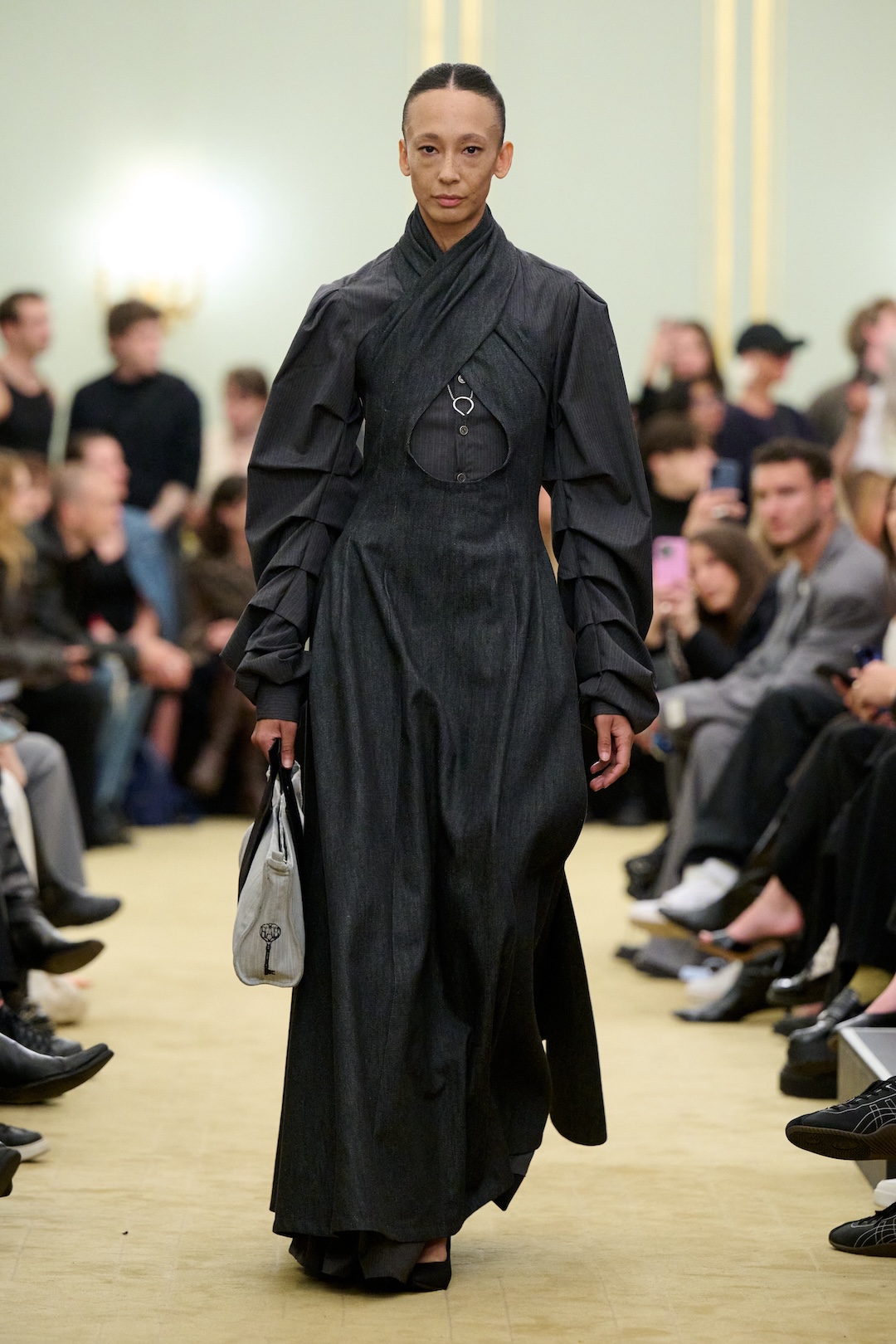
Around 400 guests gathered in the Grand Ballroom of Hotel Adlon Kempinski for Atrium, a 28-look collection built around 28 distinct characters and a nod to Creative Director Johann Ehrhardt’s early years working as a hotel waiter. Signature tailoring met denim across trousers, shorts, dresses, and boots, while a recurring key motif, drawn from the crossed keys of hotel concierges, reappeared as accessories, belt details, and hand-painted graphics, alongside two new footwear styles developed with Matthias Winkler.


→ DAGGER
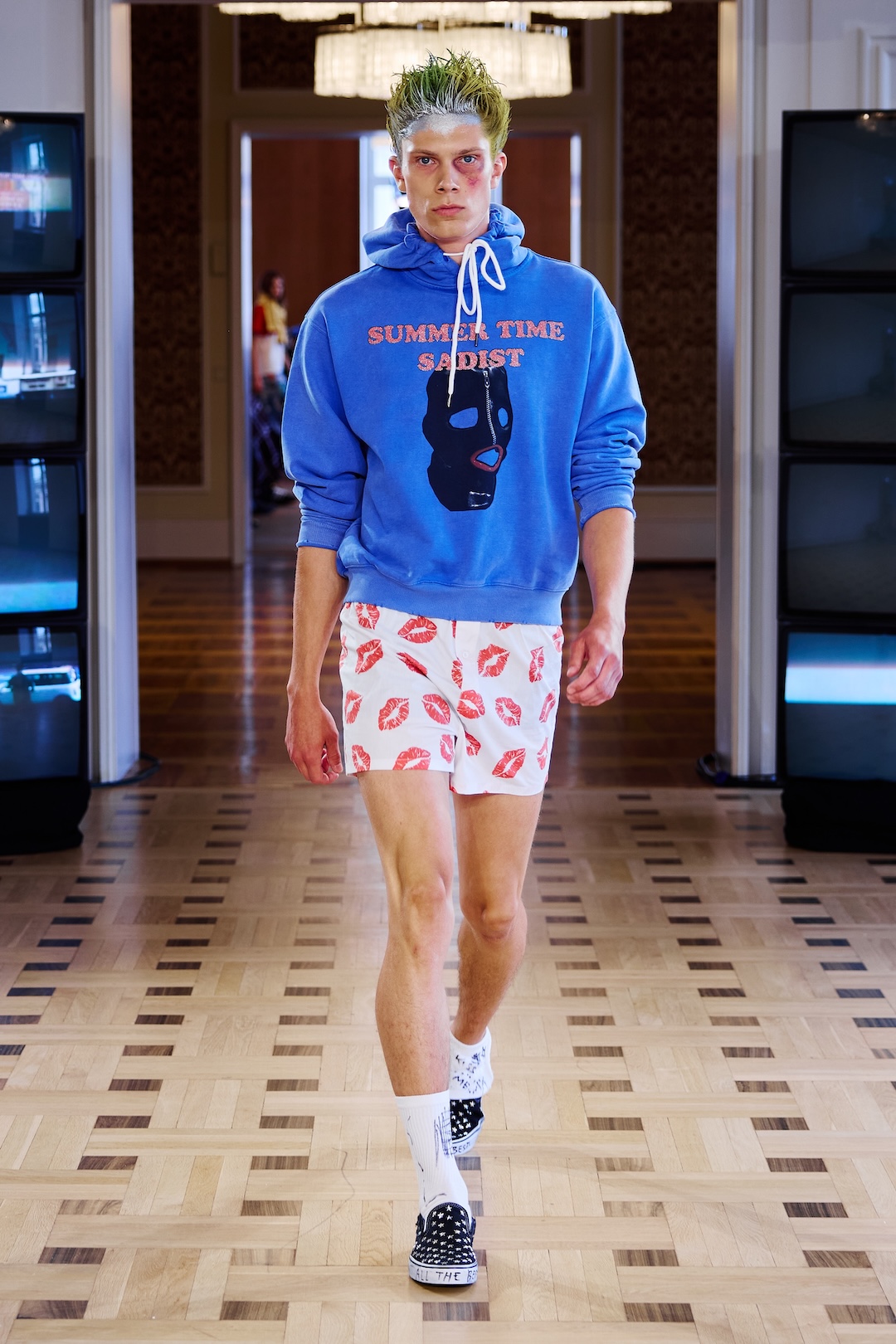
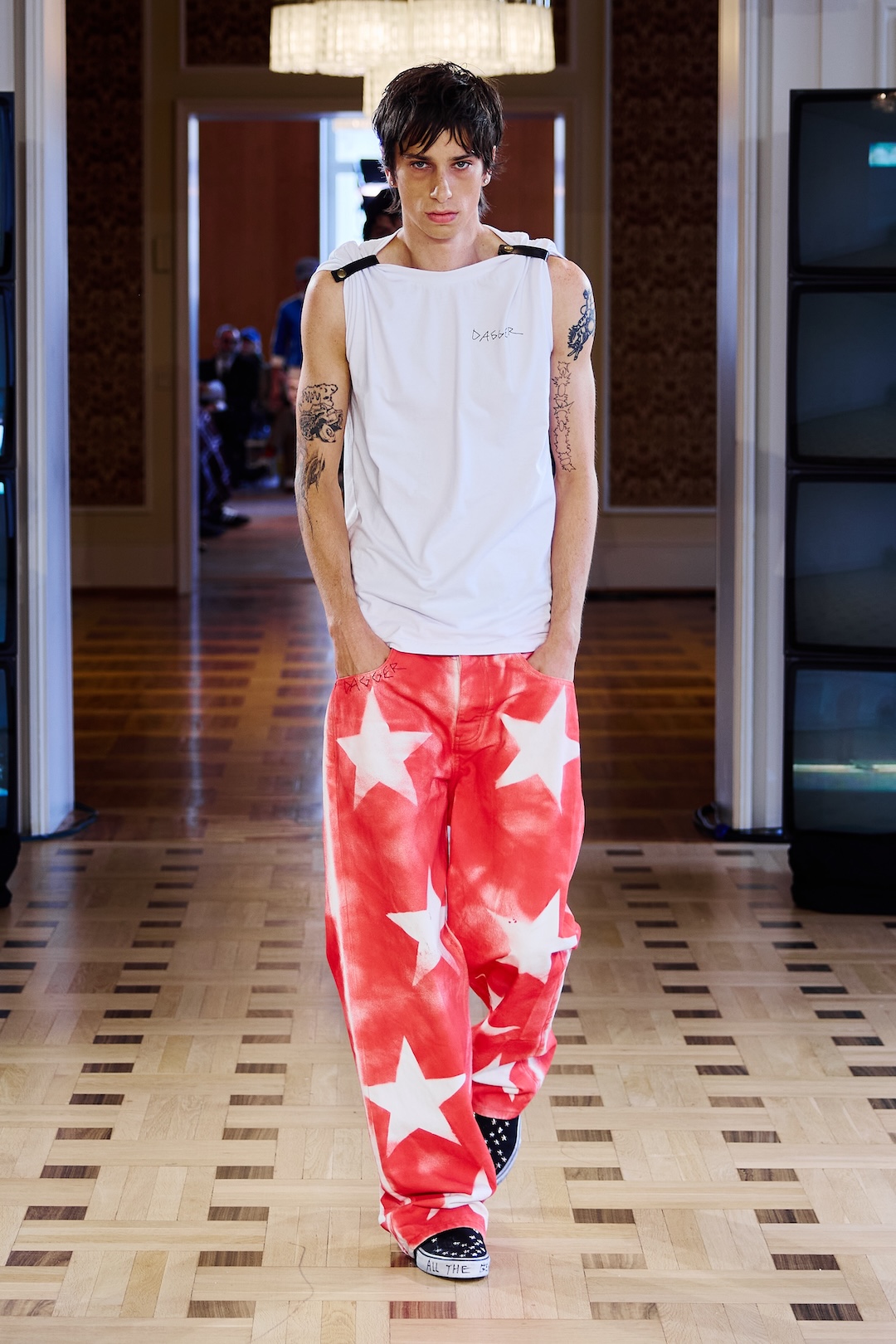
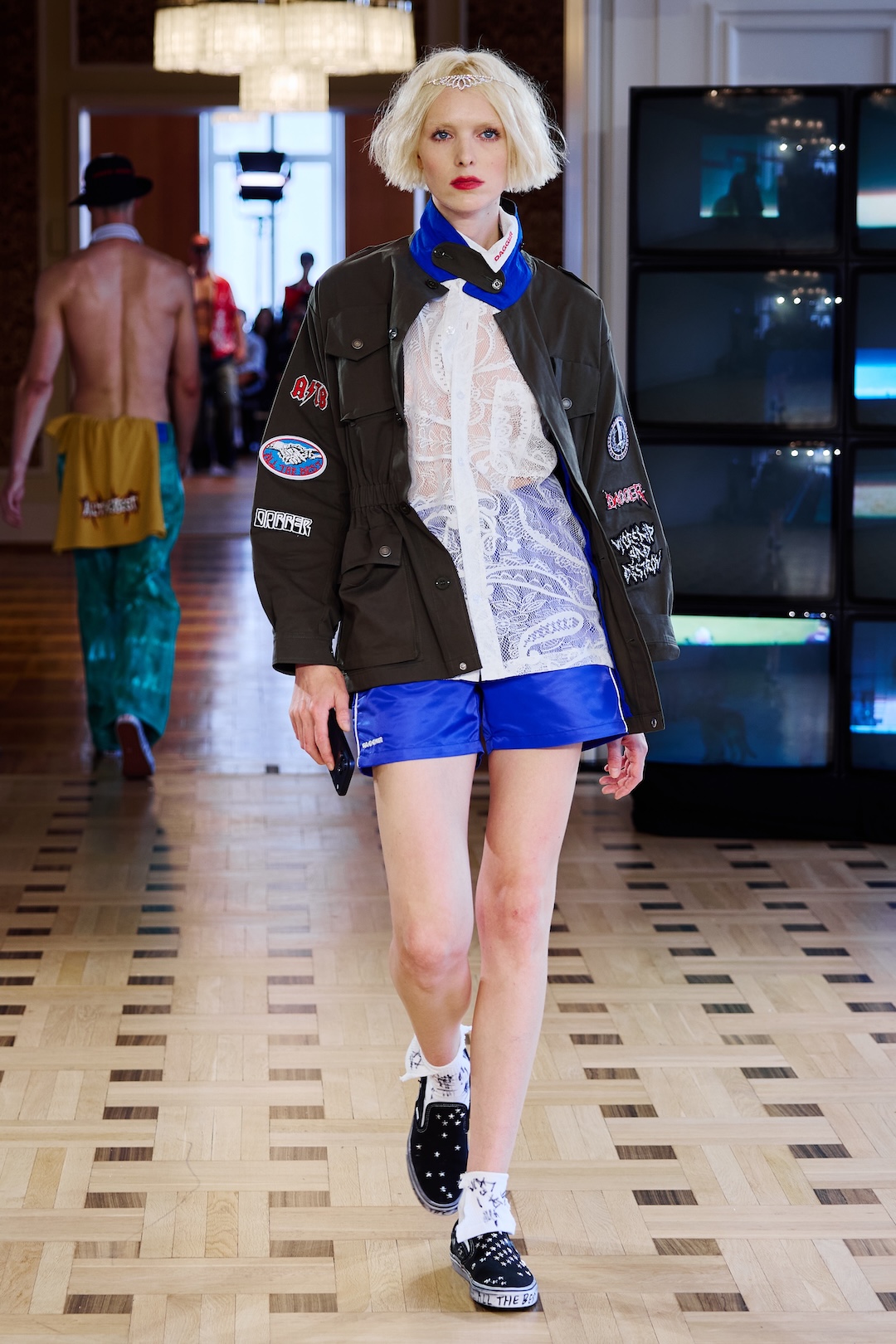
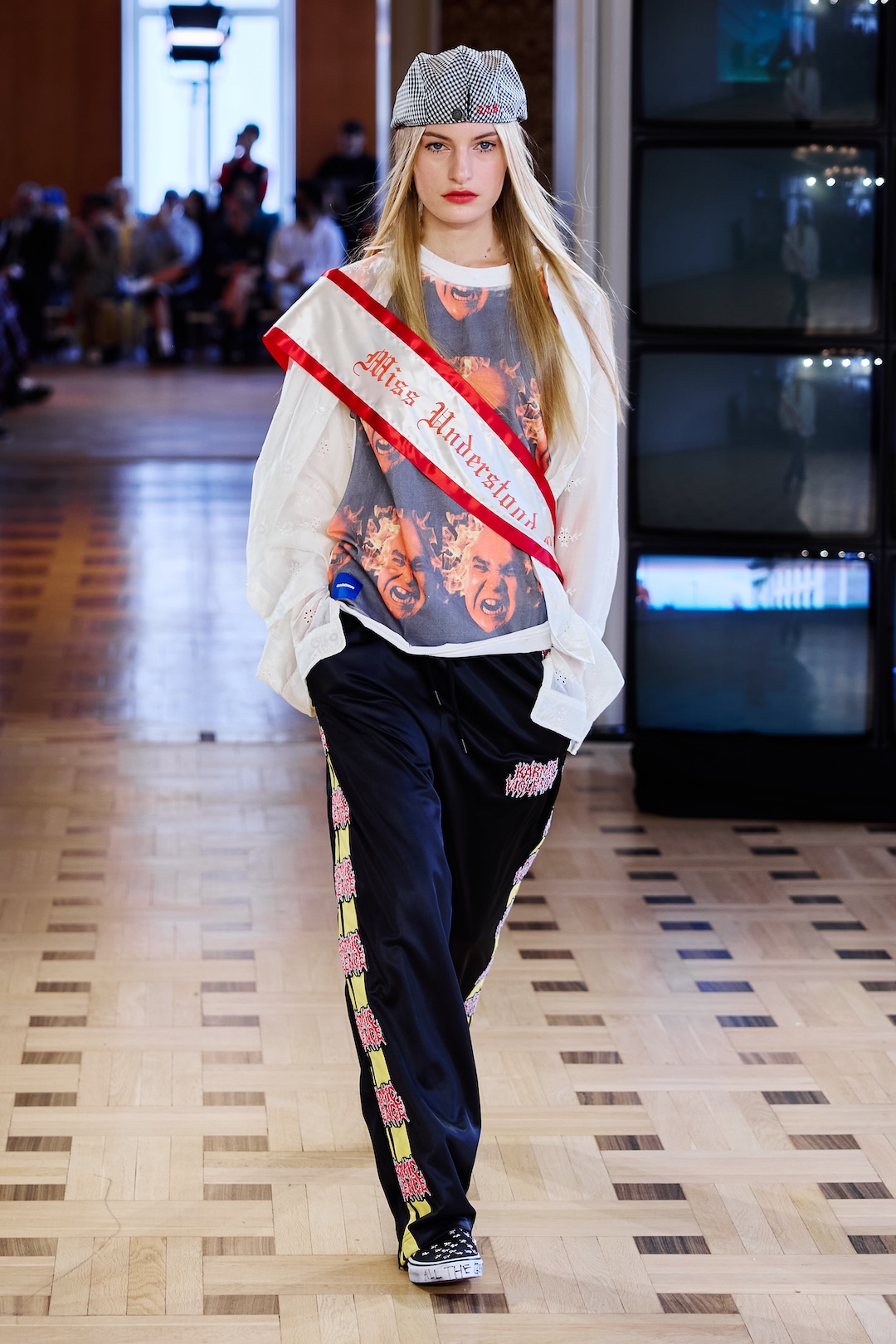
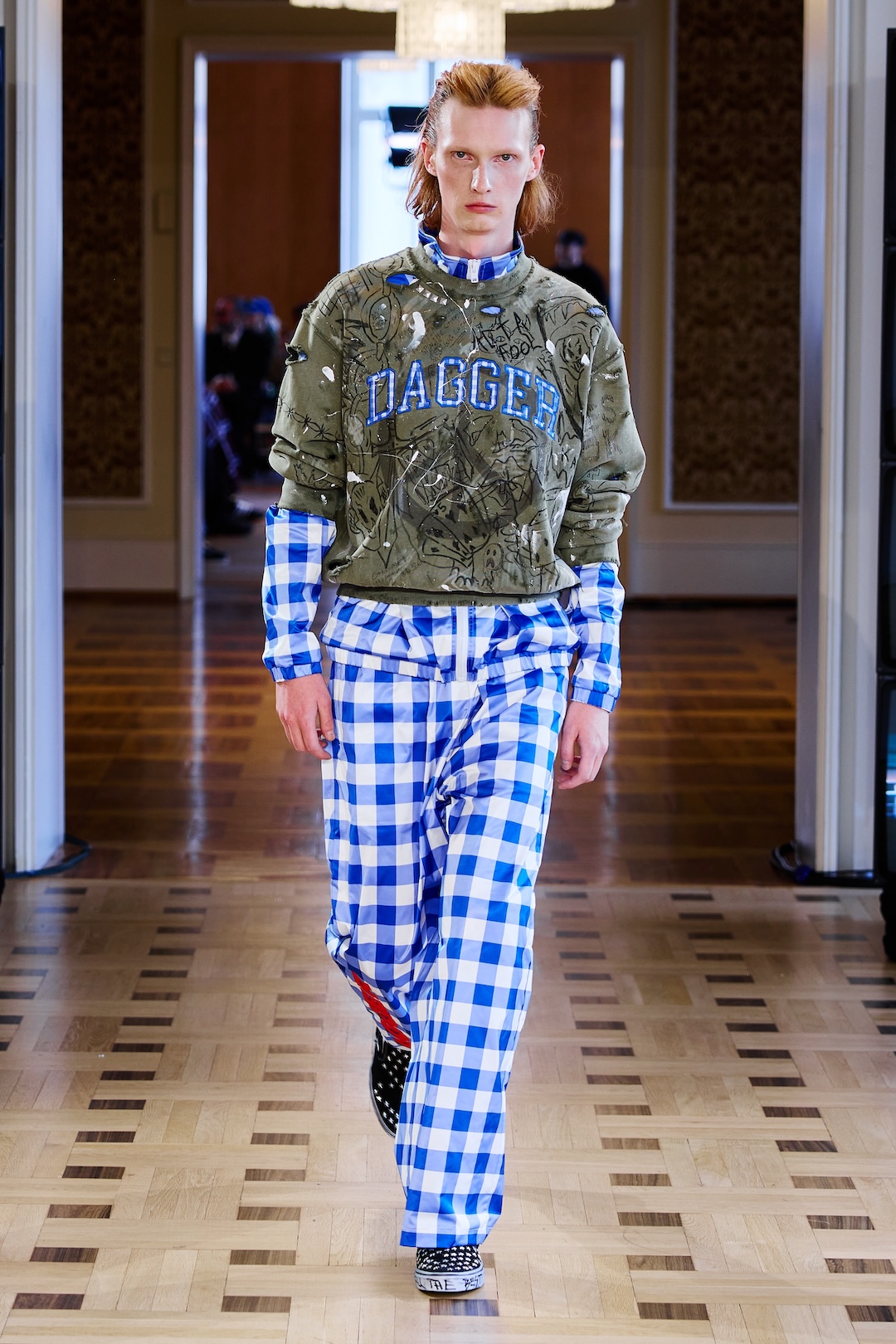
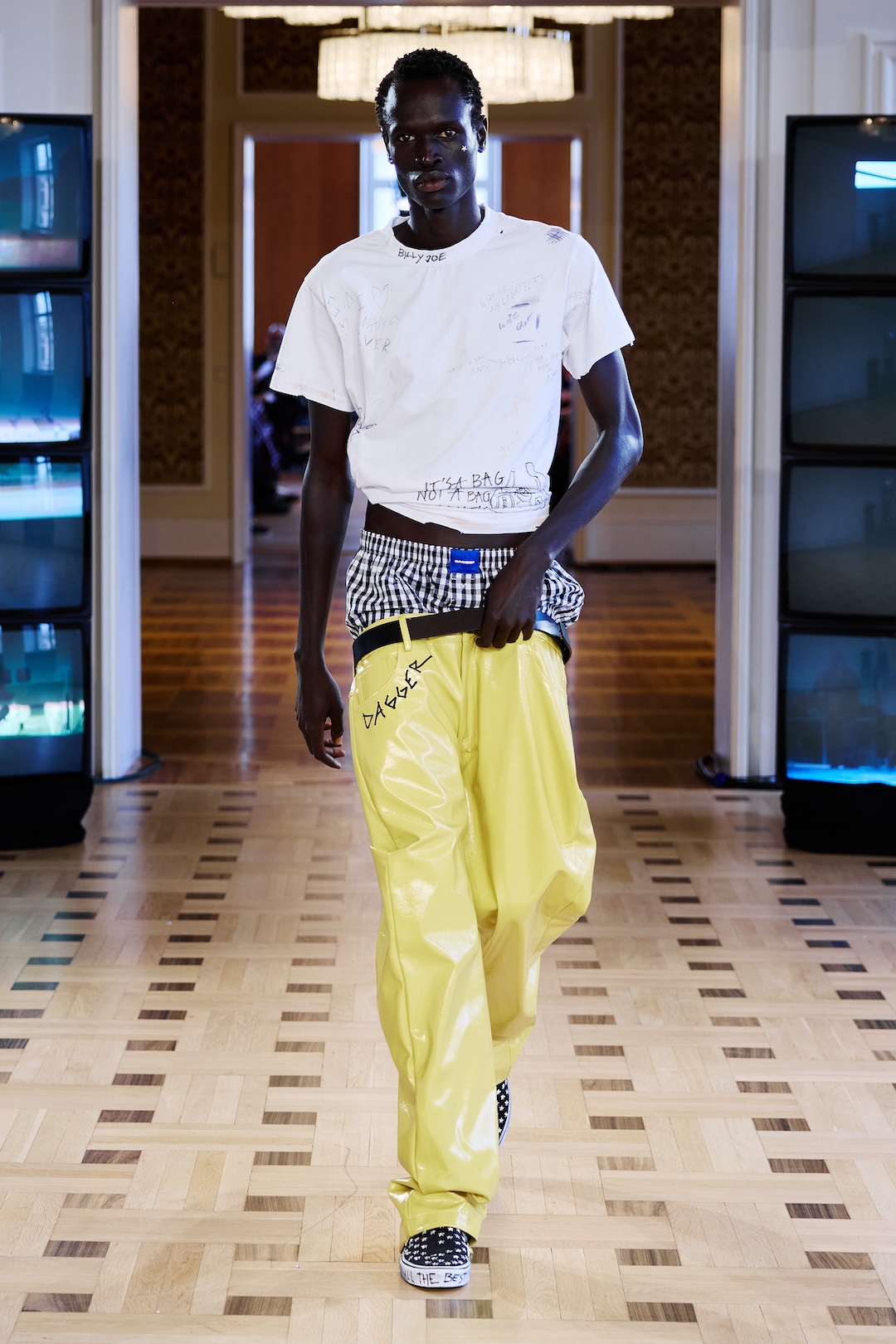
Dagger’s origin story is, by now, part of its brand mythology: founder Luke Rainey started the label in 2020 with just €300 to his name, having just lost his job. The final line of his dismissal letter: "We wish you all the best for your professional future and personal wellbeing", became the foundation for the brand’s now-iconic Core T-shirt, a piece of corporate language repurposed as armour. Taking its name from the ceremonial blade used in pagan rituals, a symbol of endings, beginnings, and transformation, Dagger channels Rainey’s rebellious youth in early-2000s Northern Ireland, weaving DIY spirit and skate culture into a tribute to lives lived hard and worn proud. It’s one of the more viscerally personal stories on this season’s calendar, and it showed.
Opening the Kronprinzenpalais’s Intervention series this season, Dagger built its SS27 collection around a catalogue of "firsts": the first job, first drink, first cigarette, first kiss, first heartbreak. The story traced a night of beach parties into the following morning’s "walk of shame", reframed here as freedom rather than embarrassment, with sashes reading "Miss Understood 2027" and "Miss Spent Youth 2027" capturing the show’s coming-of-age spirit.


Few names on the Berlin schedule blur the line between fashion and performance as deliberately as Martin Quad. Founded in 2023 by Danish designer and creative director Martin Juncker, the label has built its identity through performance-led presentations that sit somewhere between fashion, theatre, and installation, from the self-written opera Voici Venir Les Oiseaux! to the pantomime theatre piece Sixfold Fate Pt. 2, staged at Copenhagen Fashion Week, to the recent Woodman pt. 2 runway show at Fondazione Sozzani’s Bovisasca space during Milan Men’s Fashion Week. That trajectory has brought international media coverage, and in Berlin, Martin Quad’s presence reinforced the sense that this is a young label already fluent in a much bigger creative language than fashion alone.
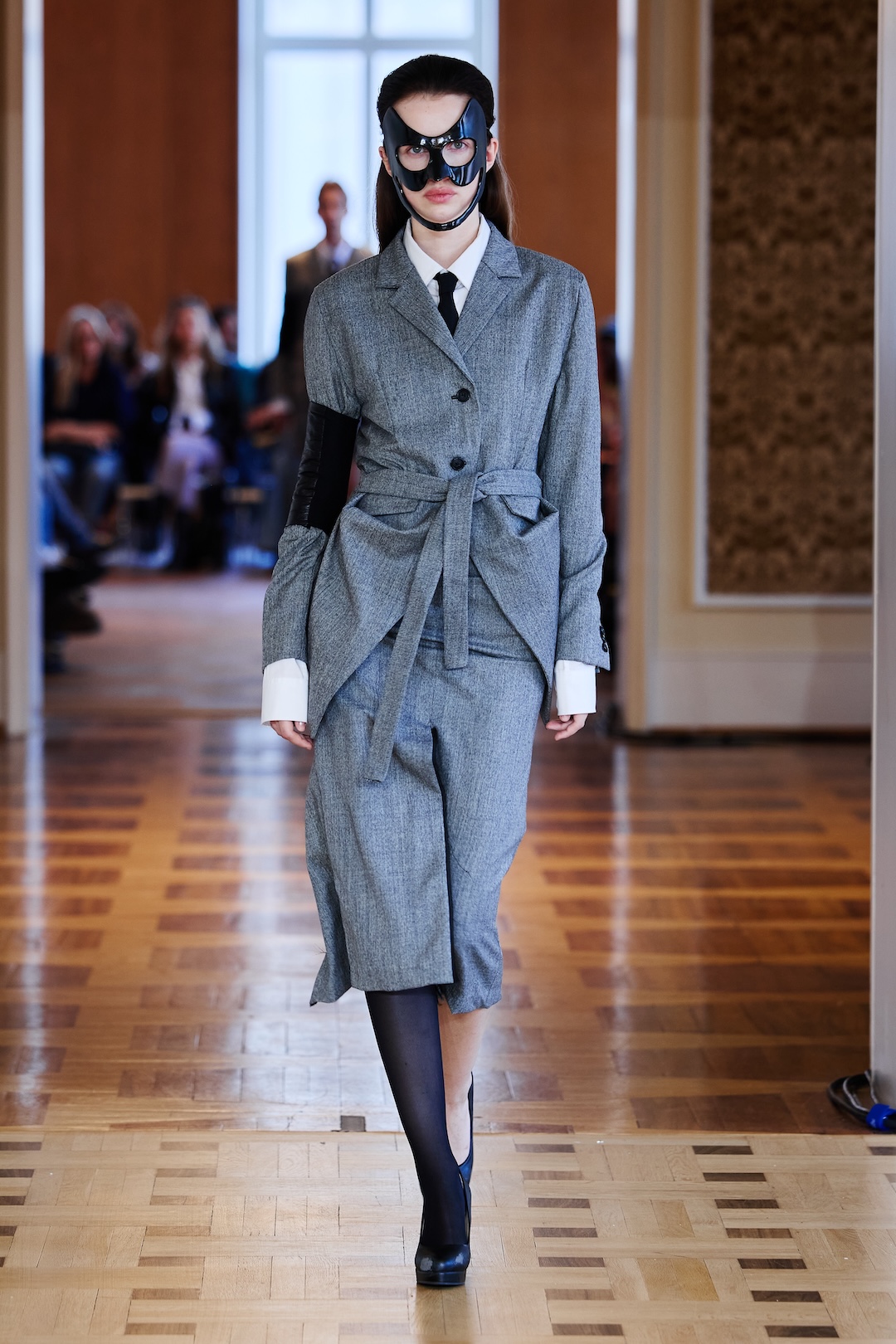
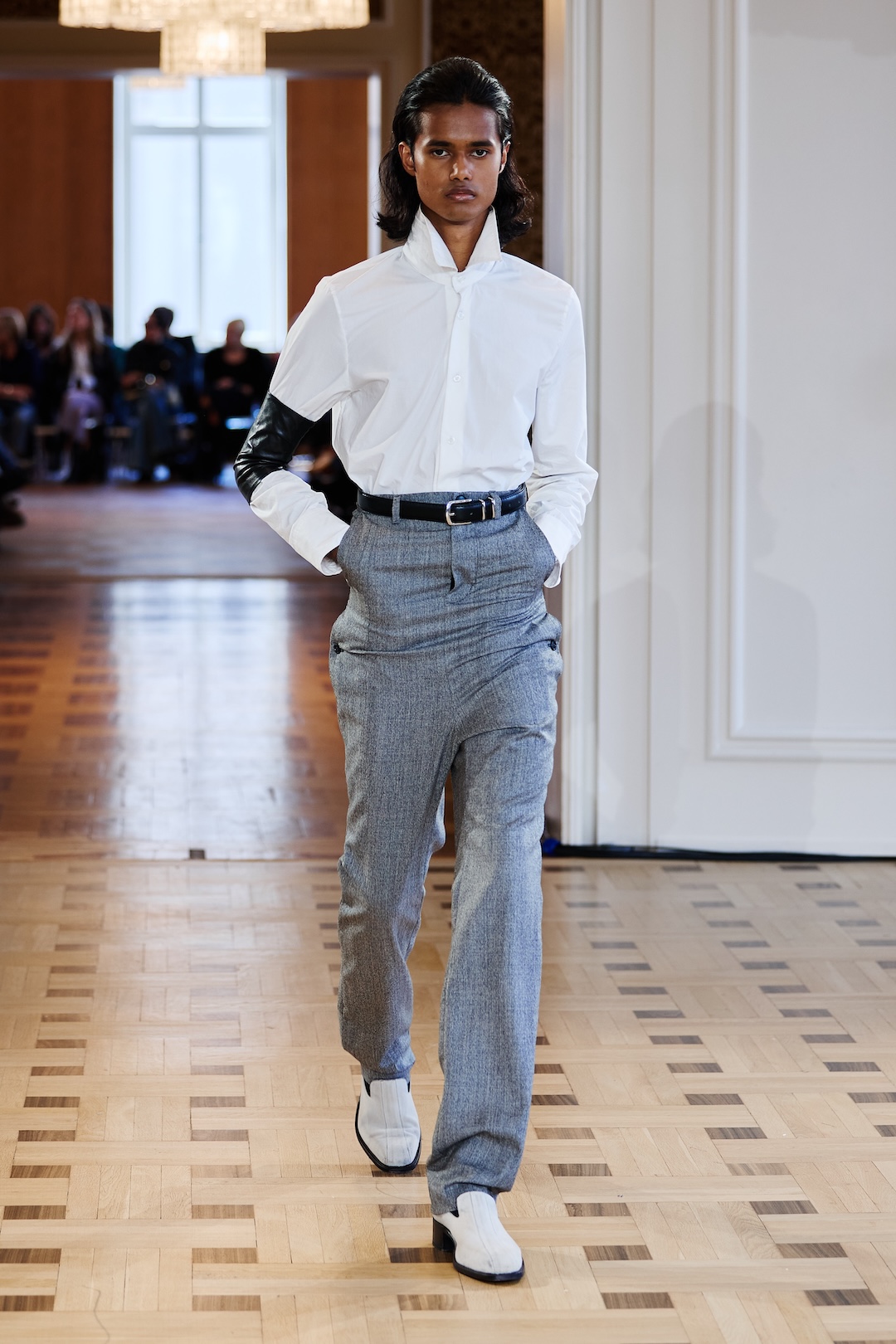
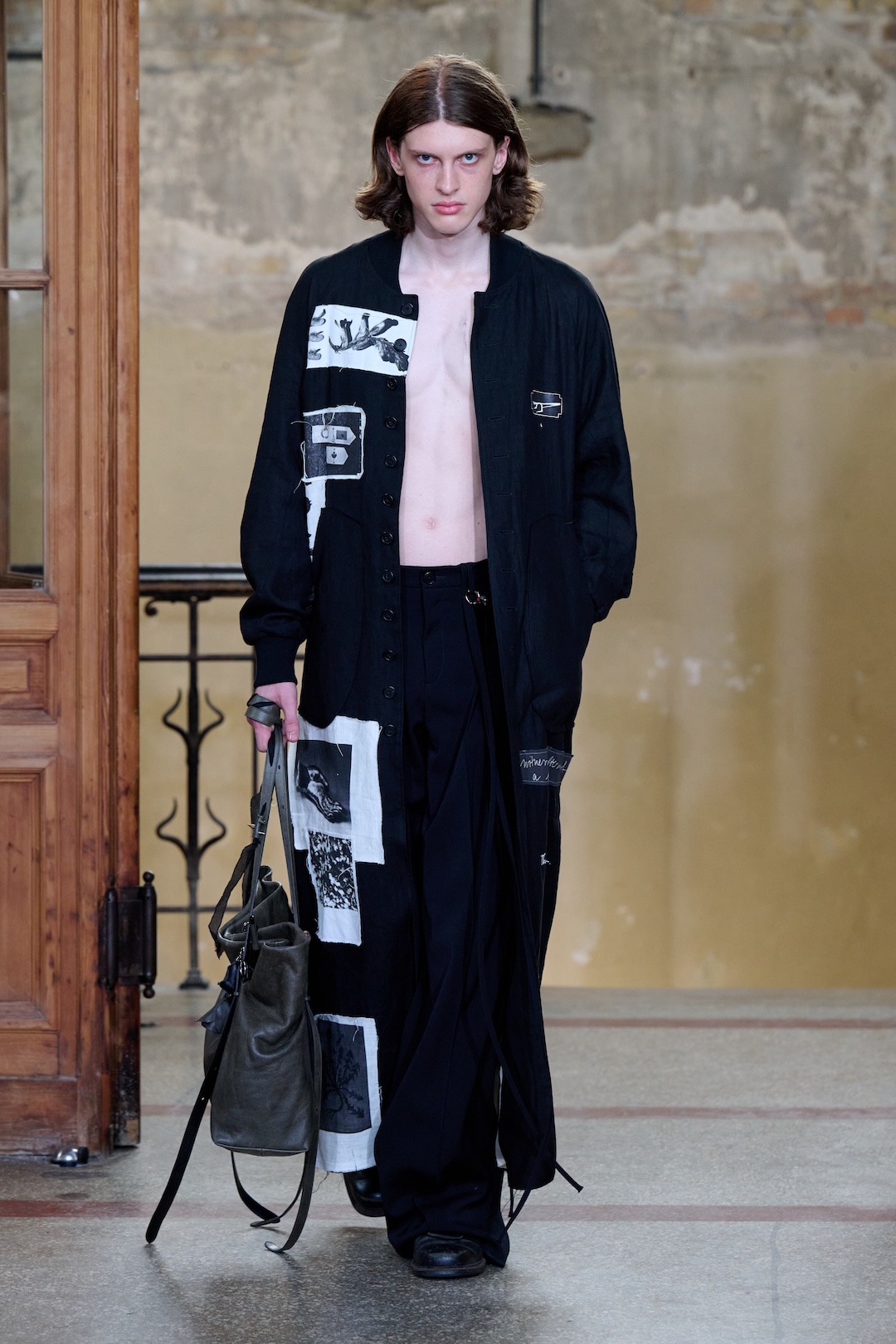
The Berlin staging of Woodman Pt. 2 carried Juncker’s fascination with Francesca Woodman’s black-and-white photography through to the construction itself, deconstructing classic tailoring and reassembling it into an almost entirely monochrome collection of trouser-built skirts, exaggerated waistlines, and hybrid dress-trouser and blazer-short pieces.


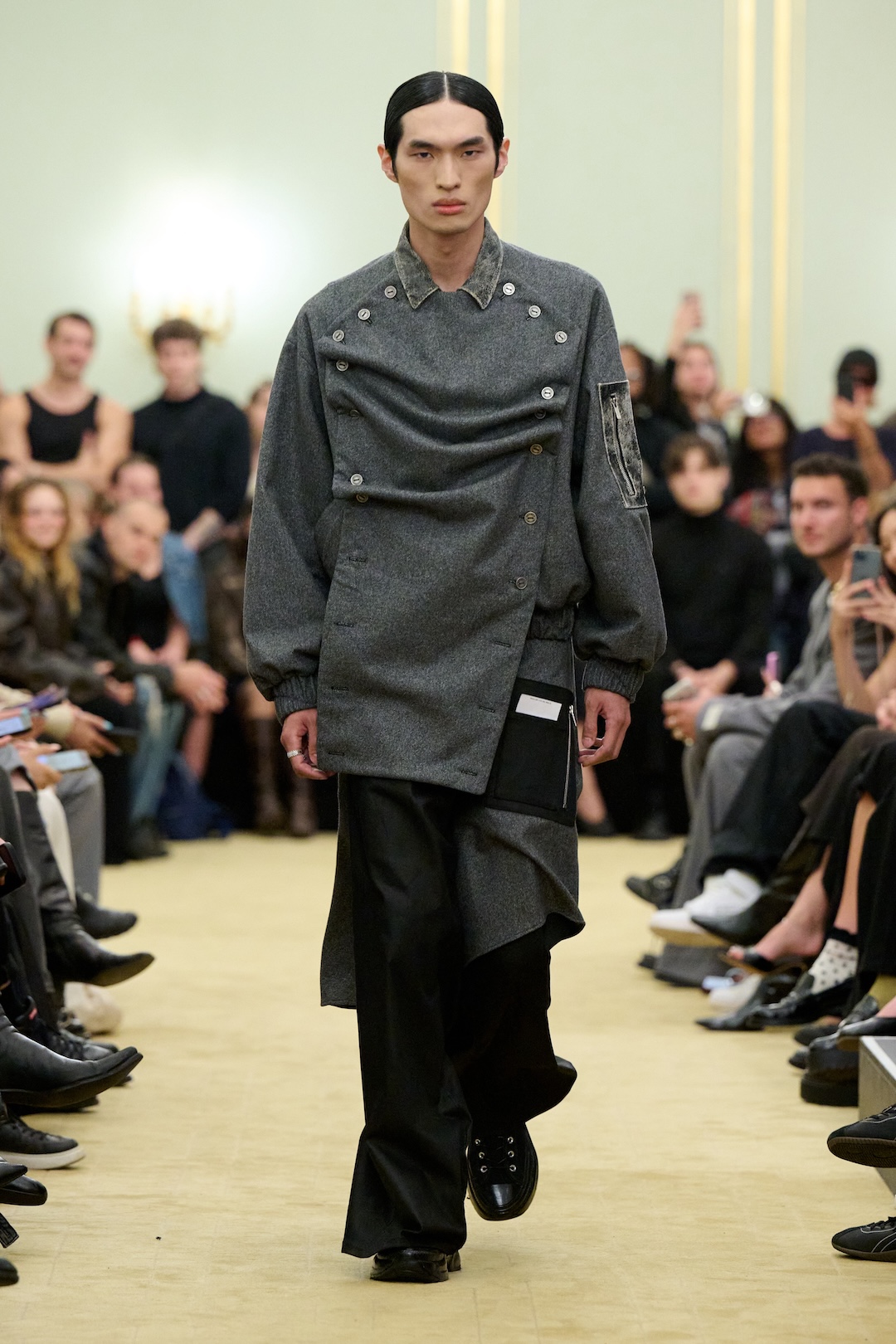
Tokyo may be its home base, but John Lawrence Sullivan’s presence on the Berlin calendar made perfect sense. Founded in 2003 by former professional boxer Arashi Yanagawa, the brand began as menswear and has since expanded into womenswear, always retaining a fighter’s precision in its sharp tailoring and bold silhouettes. Drawing on art, music, and politics, the label continues to interrogate gender, identity, and strength with an uncompromising attitude that has already carried it through Paris, London, and Tokyo. Each collection pairs technical construction with genuine conviction, a combination that reads clearly on the Berlin runway.
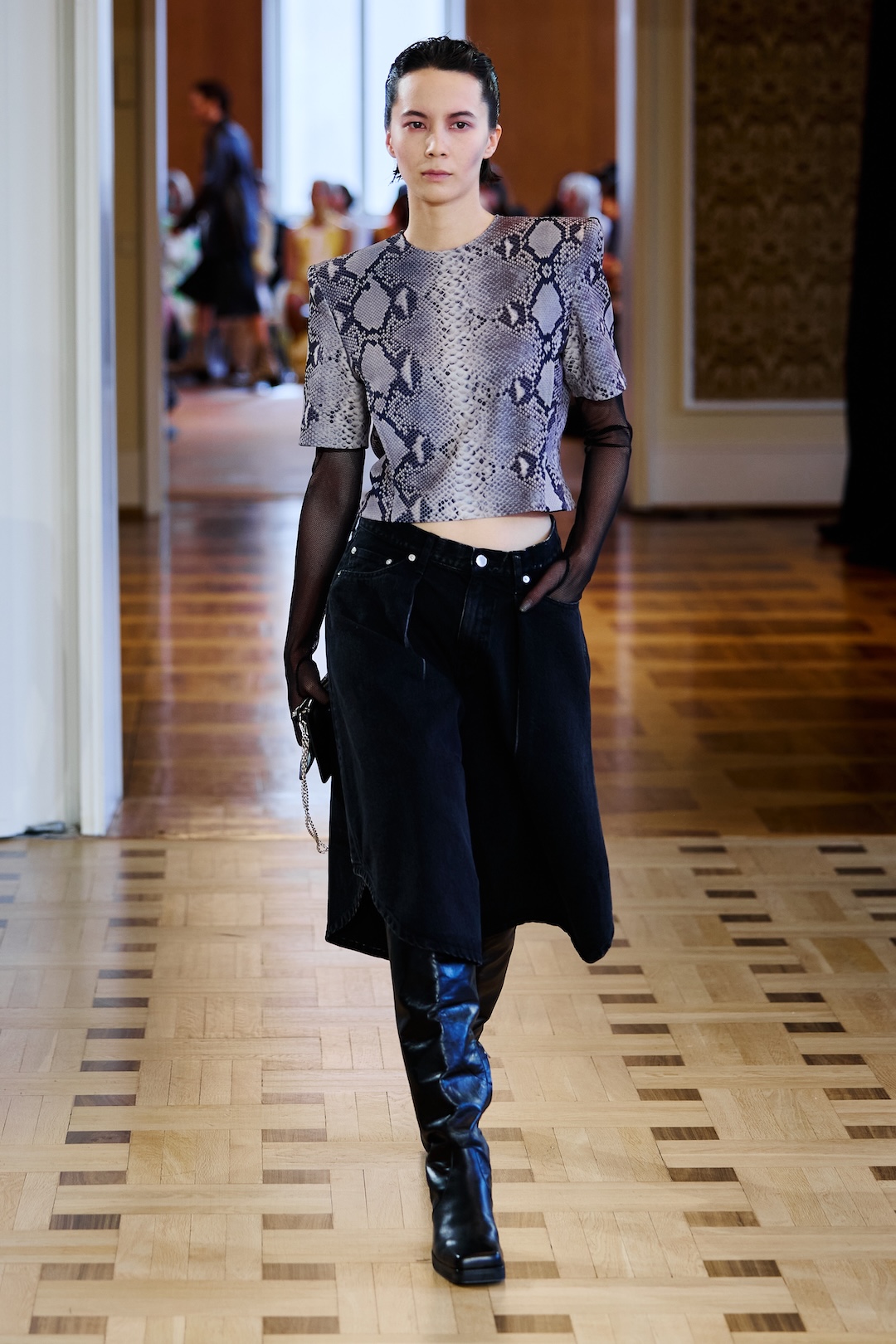
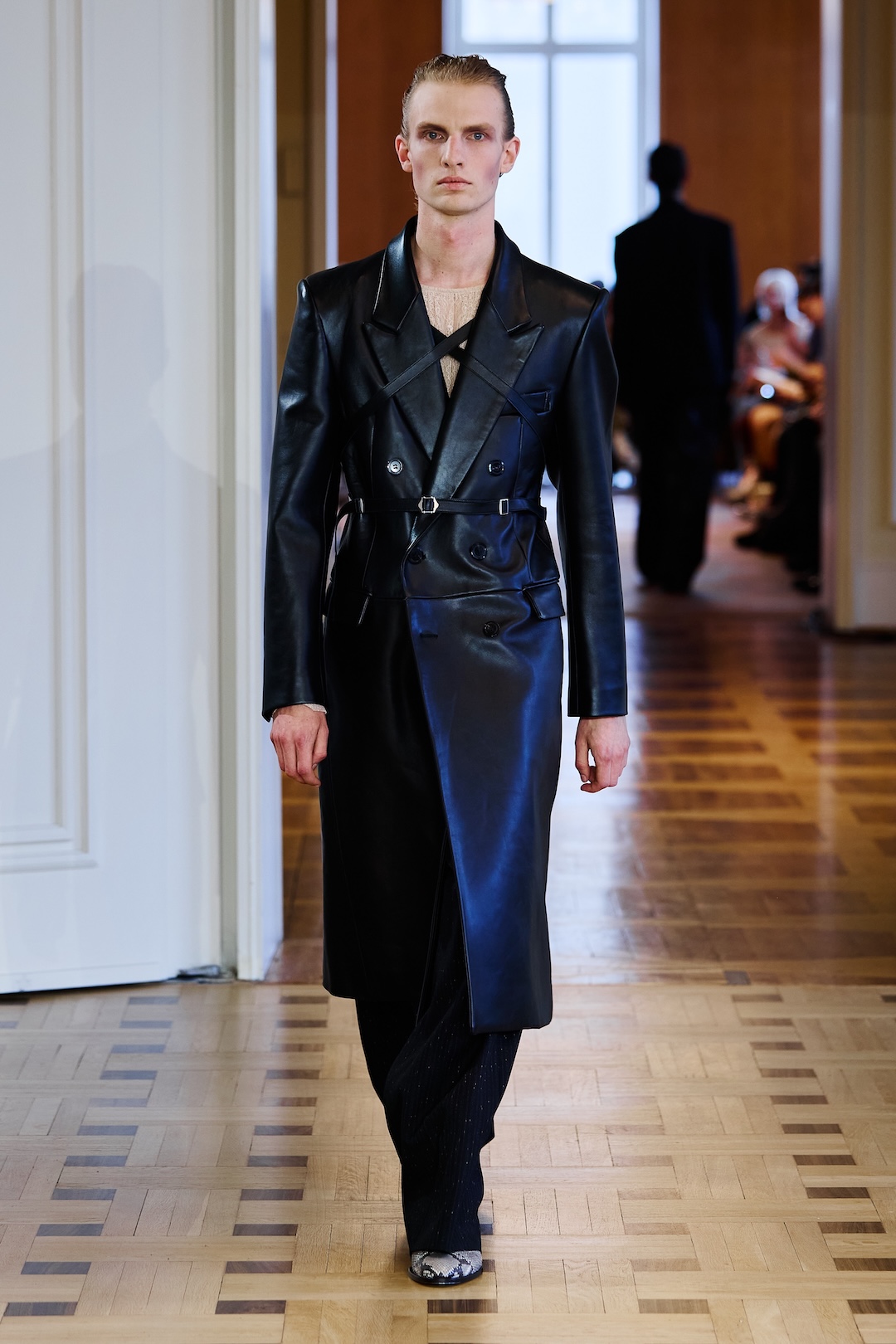
For SS27, Yanagawa presented Androgyny, exploring the body as a space of ambiguity through deconstructed menswear and womenswear codes and references to the Japanese art of Shibari, its themes of discipline and restraint surfacing in bondage-style blazers and coats, while reptilian-look pieces stood in for transformation, all anchored by the blurred-identity spirit of Bettina Rheims’ 1990 Modern Lovers portrait series.


→ GMBH
GmbH closed out the season as one of its most institutionally significant names. Founded in Berlin in 2016 by Serhat Isik and Benjamin A. Huseby, whose name is borrowed from the German legal term for a limited company, the label was conceived as a way of using fashion to respond directly to current events. Drawing on their own experiences as children of immigrants in Europe, Isik and Huseby have built GmbH around storytelling through garment-making, engaging authentically with migration, ecology, couture, and club culture. That authenticity has translated into serious industry recognition: a BOF500 listing, finalist positions for the LVMH Prize, ANDAM Award, and International Woolmark Prize, and a current finalist spot in the Vogue Fashion Fund. Environmentally and socially responsible since its founding, GmbH remains one of the clearest examples of what Berlin Fashion Week’s guiding theme actually looks like in practice.
Fittingly, GmbH delivered the season’s grand finale with Desire Paths, a collection marking the label’s tenth anniversary by resurrecting 1920s Berlin’s nearly forgotten couture history, incorporating pieces from Julia Schwarz’s private archive, said to hold Europe’s largest fashion collection, alongside formal eveningwear, precise tailoring, and the sportswear and club-culture elements the label has long been known for. Musician and record producer Arca walked the show, lending the anniversary presentation an extra layer of cultural cachet.
Taken together, this roster is the clearest evidence yet of what Berlin Fashion Week has become: a calendar broad enough to hold minimalist tailoring and radical upcycling, theatrical performance and boxing-inspired precision, all under one civic umbrella. With participation nearly doubling season over season and international press and buyers increasingly circling back, Berlin isn’t just hosting a fashion week, it’s building a case for what a genuinely public-facing one can look like.
The next edition arrives 29 January to 1 February 2027, and on this evidence, it will have plenty to live up to.
Berlin Fashion Week SS27: The City's Most Confident Season Yet
JULY 8, 2026
WORDS ADRIÁN GOMIS EXPÓSITO
Berlin has never been a city that asks for permission, and its fashion week continues to prove the point. The SS27 edition of Berlin Fashion Week delivered its most expansive programme to date: 53 runway shows and 62 side events, stretching across the capital from Weißensee to Westend, Tiergarten to Tempelhof, Friedrichshain to Friedrichsfelde. The numbers alone tell a story of momentum, with 42 runway shows and 52 side events at the AW26 edition just months earlier, but the real headline is what that growth represents: a fashion week that is professionalising rapidly, courting major international media coverage while exploding in public reach with 153 events, from pop-ups to retail activations, exhibitions, and performances, marking nearly 90 per cent growth over the previous season.
This is Berlin’s pitch to the world: fashion for all, built on the city’s own guiding theme of "the responsible movement of freedom, inclusion, and creativity". Beneath that framework, the designer lineup told a rich story, one that moved from architectural minimalism to upcycled activism, from theatrical performance to boxing-ring precision. Here’s our review of the season’s most notable presentations.


Few labels articulate Berlin’s cultural duality as fluently as William Fan. Established in 2015 by its eponymous designer, who grew up in Germany with Chinese roots, the brand continues its project of quietly dismantling the binaries fashion so often relies on: European and Asian, masculine and feminine, young and old. This season reaffirmed Fan’s timeless, progressive sensibility, one that resists trend-chasing in favour of a slower kind of hybridity. What distinguishes Fan’s shows from a straightforward runway presentation is his instinct for storytelling: rather than simply dressing bodies, he narrates a vision in which the classical fashion "label", with all its rigid categorisations, dissolves into something more personal and porous.
That instinct crystallised in Exchange, a collection inspired by wandering through international markets, from the souks of Marrakesh to Tokyo’s flea markets and the antique streets of Shanghai. Staged at The Foundry among more than 800 objects pulled from the label’s own "Fan Plaza" souvenir shop, the show moved between tailoring and easy leisurewear, with sculptural pleats and deliberately aged finishes turning garments like the opening "Currency Exchange" jumper into artefacts of a life spent collecting.


→ MARKE
Founded by designer Mario Keine in 2022, MARKE approaches fashion as a conceptual practice as much as a craft, treating the human spirit as a fluid, layered construct shaped by memory and loss in equal measure with desire and imagination. The label’s melancholic reflections on the queer past and on the moments history never allowed to fully unfold result in garments that occupy a liminal space between what could have been and what could still be. Each collection draws on a wide field of references spanning art, literature, historical aesthetics, and cultural remnants, all refracted through a distinctly contemporary lens. Crucially, MARKE resists nostalgia: the work is inquisitive rather than wistful, asking how the past might be re-seen, re-felt, and re-worn in service of more inclusive, reflective futures.
This season’s Relics & Remnants continued that narrative around a solitary wanderer, not unlike Virginia Woolf’s Orlando, drifting through centuries with no fixed chronology: Renaissance references met Baroque-inspired underskirts, voluminous culottes nodded to the Counts of the Rhine, and coin- and heraldic-cross-adorned jewellery sat alongside the label’s now-signature sportswear staples, from joggers to bomber jackets.


→ UNVAIN
Founded in Berlin in 2020 by Robert Friedrichs, Unvain arrived at this edition on the verge of its runway debut. The label has built its identity on the raw, brutalist energy of Berlin’s subcultures’ architectural silhouettes, sharp tailoring, and industrial detailing, all filtered through a minimalist, almost puristic lens. What began as a solo studio practice has, in a remarkably short span, become one of Germany’s fastest-emerging names, propelled as much by a devoted online following as by the clothes themselves. Unvain’s proposition is a new kind of uniform: design stripped to its essential lines, but never cold, always carrying the pulse of the city that shaped it.
Titled Skins, the collection picked up directly where the label’s February BFW debut left off, leaning further into leather, faux fur, and transparency as a study of clothing as a second skin. Friedrichs gave each look its own character, distilled into a single line in a booklet handed to guests on arrival, from "rich parents, poor morals" to "self-doubt? unfamiliar", pulling the audience deeper into the label’s world.


Buzigahill’s mission is stated with the bluntness of a manifesto: to be the best upcyclers in the world. The label takes second-hand clothing discarded across Europe, North America, and Asia and returns it to its origins in the Global South, a practice it calls Return to Sender. At Berlin Fashion Week, that mission read less like a marketing angle and more like an urgent, necessary intervention in a fashion system still reckoning with its waste problem. Buzigahill’s presence on the calendar underscored something Berlin has increasingly made room for: designers whose creative process is inseparable from a broader ethical and geopolitical argument about where clothes actually come from, and where they should go next.
This season’s thirteenth Return to Sender collection turned to East Africa’s post-independence decade, drawing on figures like Zambia’s founding president Kenneth Kaunda, whose name lent itself to the tieless, climate-suited Kaunda suit, and Ugandan diplomat and model Princess Elizabeth Bagaaya of Toro. As designer Bobby Kolade explained at the show’s opening, both figures embody an era of optimism and a culture of freedom the collection sought to honour.


→ BARRAGÁN
Victor Barragán’s ©Barragán has never been interested in fashion as mere clothing, and this outing reinforced that stance. Founded by the Mexican-born, Mexico City and New York-based designer in the mid-2010s, the label continues to blur the line between garment and performance through deconstructive cuts, provocative graphics, and combinations that shouldn’t work on paper but do. ©Barragán’s ongoing exploration of gender, identity, and cultural consumption, fusing Mexican heritage with New York counterculture and queer aesthetics, has earned it CFDA/Vogue Fashion Fund recognition and a fiercely loyal following. In Berlin, that irreverent, concept-driven approach found a natural home among a city that rewards designers willing to provoke.
Barragán staged its BFW debut at the Mexican Embassy with SS30, a title gesturing toward a future beyond Donald Trump, and a collection confronting migration and identity head-on: models moved at a rapid pace, marked by visible scars, low-slung trousers, bound hands, and dirt-streaked skin and clothing, while pointed prints on T-shirts and hoodies skewered anti-migrant rhetoric even as the show dismantled any single, homogeneous idea of Mexican identity.


Milk of Lime works in contrasts: rural and metropolitan, unique and mundane, harsh and romantic, and lets those tensions define its mood. The label’s process-driven approach starts with the making itself: textures sourced from its surroundings are collaged into garments, resulting in pieces that read like fragments of an ongoing poem about life and what comes after it. It’s a quieter, more contemplative presence on the Berlin calendar, but one that rewards close looking, with finely manufactured goods that carry as much narrative weight as visual impact.
The German-Belgian duo’s fourth collection, Ashes, leaned fully into that tension, pairing destruction with the promise of renewal in the spirit of the phoenix. Draped menswear, knitwear reworked from torn silk, crinkled textures, and graphic prints across cotton tops, coats, wool trousers, and sheer silk deepened the label’s signature blend of the romantic and the sombre.


Founded in Berlin in 2021, Kasia Kucharska continues to push against the basic mechanics of garment-making itself. The label’s central provocation, printing garments rather than sewing them, reframes what confidence and sensuality can look like in a technology-driven present. Kasia Kucharska isn’t especially interested in silhouette for its own sake; the philosophy here is process-first, rooted in reinventing traditional craft through new manufacturing techniques and conscious, sustainable production. The result is a suggestion, repeated collection after collection, that clothing remains a medium far from exhausted.
For her ninth collection, Kucharska returned to her signature latex-casting technique after seasons spent working with ruched cotton, recasting denim, trench coats, and knitwear entirely in latex, alongside earrings crafted from synthetic hair. An immersive installation developed with AAS:set:project by Gonzalez Haase AAS & Stéphane Moun framed the presentation as a new chapter for the brand.


→ SF1OG
SF1OG trades in the friction between nostalgia and zeitgeist, pulling references from the past and reworking them into pieces built for the future. The label respects traditional technique without being precious about it, breaking classic rules whenever the material or the cut demands it. Each tailor-made piece is meant to tell its own story, a philosophy that has already earned SF1OG international media coverage. That attention was visible in the room this season, with a collection that felt both detail-obsessed and instantly wearable.
Staged in a sports hall inside a residential building designed by Berlin architect Hinrich Baller, the show drew on Luca Guadagnino’s Suspiria to explore good and evil hidden within institutions and inherited power structures, expressed through a material interplay of velvet, satin, sheer fabric, and leather, and underscored by a live musical performance inspired by Seville’s traditional Easter processions.


Haderlump’s contemporary urban aesthetic sits at the intersection of confidence and resilience, offering fashion that evolves rather than settles. Every garment is handcrafted in the brand’s Berlin atelier, a commitment to craftsmanship that grounds the label’s forward-thinking silhouettes in genuinely historical technique. The result is a collection that challenges convention while still holding onto elegance, proof that Berlin’s fashion identity doesn’t have to choose between edge and refinement.
Around 400 guests gathered in the Grand Ballroom of Hotel Adlon Kempinski for Atrium, a 28-look collection built around 28 distinct characters and a nod to Creative Director Johann Ehrhardt’s early years working as a hotel waiter. Signature tailoring met denim across trousers, shorts, dresses, and boots, while a recurring key motif, drawn from the crossed keys of hotel concierges, reappeared as accessories, belt details, and hand-painted graphics, alongside two new footwear styles developed with Matthias Winkler.


→ DAGGER
Dagger’s origin story is, by now, part of its brand mythology: founder Luke Rainey started the label in 2020 with just €300 to his name, having just lost his job. The final line of his dismissal letter: "We wish you all the best for your professional future and personal wellbeing", became the foundation for the brand’s now-iconic Core T-shirt, a piece of corporate language repurposed as armour. Taking its name from the ceremonial blade used in pagan rituals, a symbol of endings, beginnings, and transformation, Dagger channels Rainey’s rebellious youth in early-2000s Northern Ireland, weaving DIY spirit and skate culture into a tribute to lives lived hard and worn proud. It’s one of the more viscerally personal stories on this season’s calendar, and it showed.
Opening the Kronprinzenpalais’s Intervention series this season, Dagger built its SS27 collection around a catalogue of "firsts": the first job, first drink, first cigarette, first kiss, first heartbreak. The story traced a night of beach parties into the following morning’s "walk of shame", reframed here as freedom rather than embarrassment, with sashes reading "Miss Understood 2027" and "Miss Spent Youth 2027" capturing the show’s coming-of-age spirit.


Few names on the Berlin schedule blur the line between fashion and performance as deliberately as Martin Quad. Founded in 2023 by Danish designer and creative director Martin Juncker, the label has built its identity through performance-led presentations that sit somewhere between fashion, theatre, and installation, from the self-written opera Voici Venir Les Oiseaux! to the pantomime theatre piece Sixfold Fate Pt. 2, staged at Copenhagen Fashion Week, to the recent Woodman pt. 2 runway show at Fondazione Sozzani’s Bovisasca space during Milan Men’s Fashion Week. That trajectory has brought international media coverage, and in Berlin, Martin Quad’s presence reinforced the sense that this is a young label already fluent in a much bigger creative language than fashion alone.
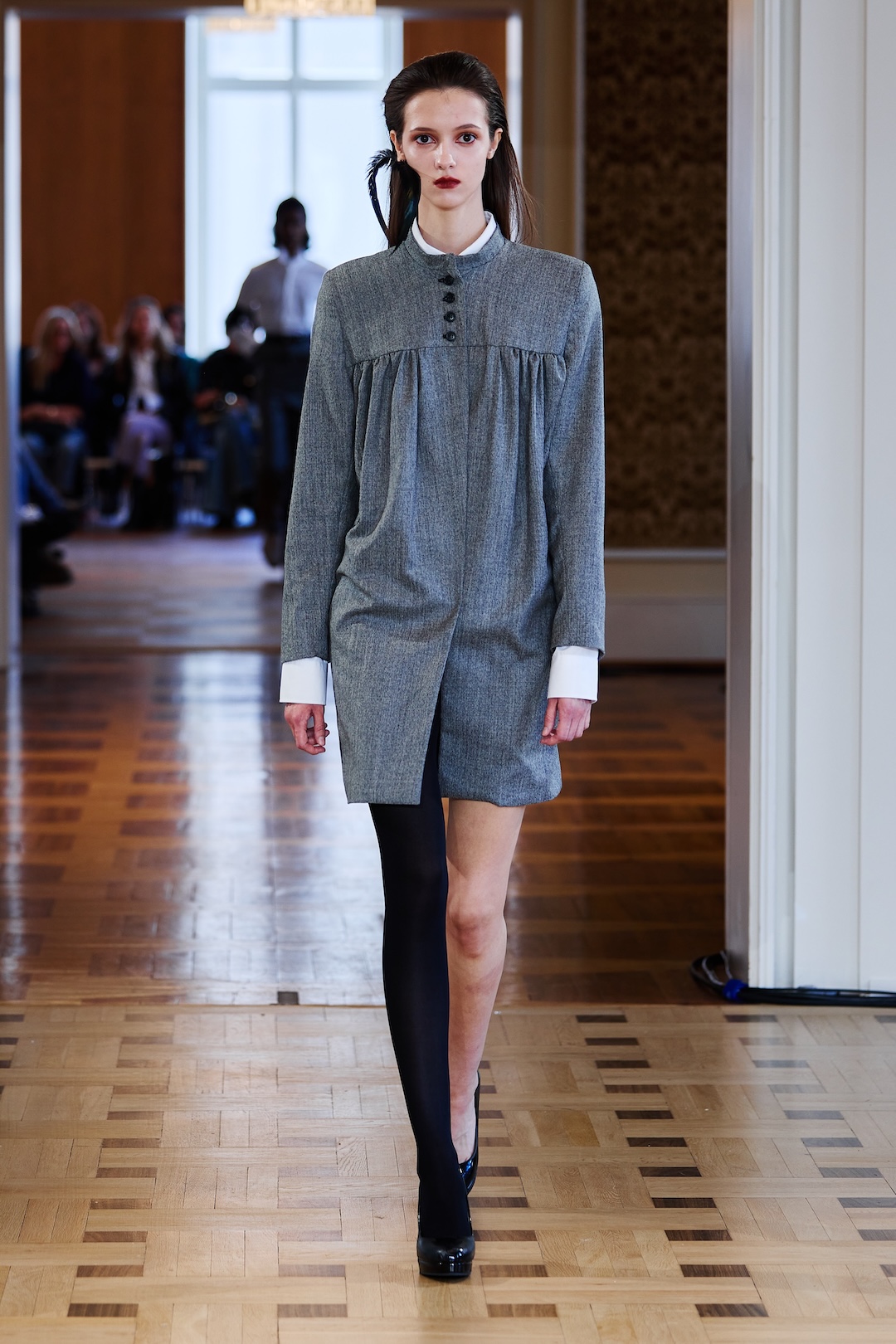
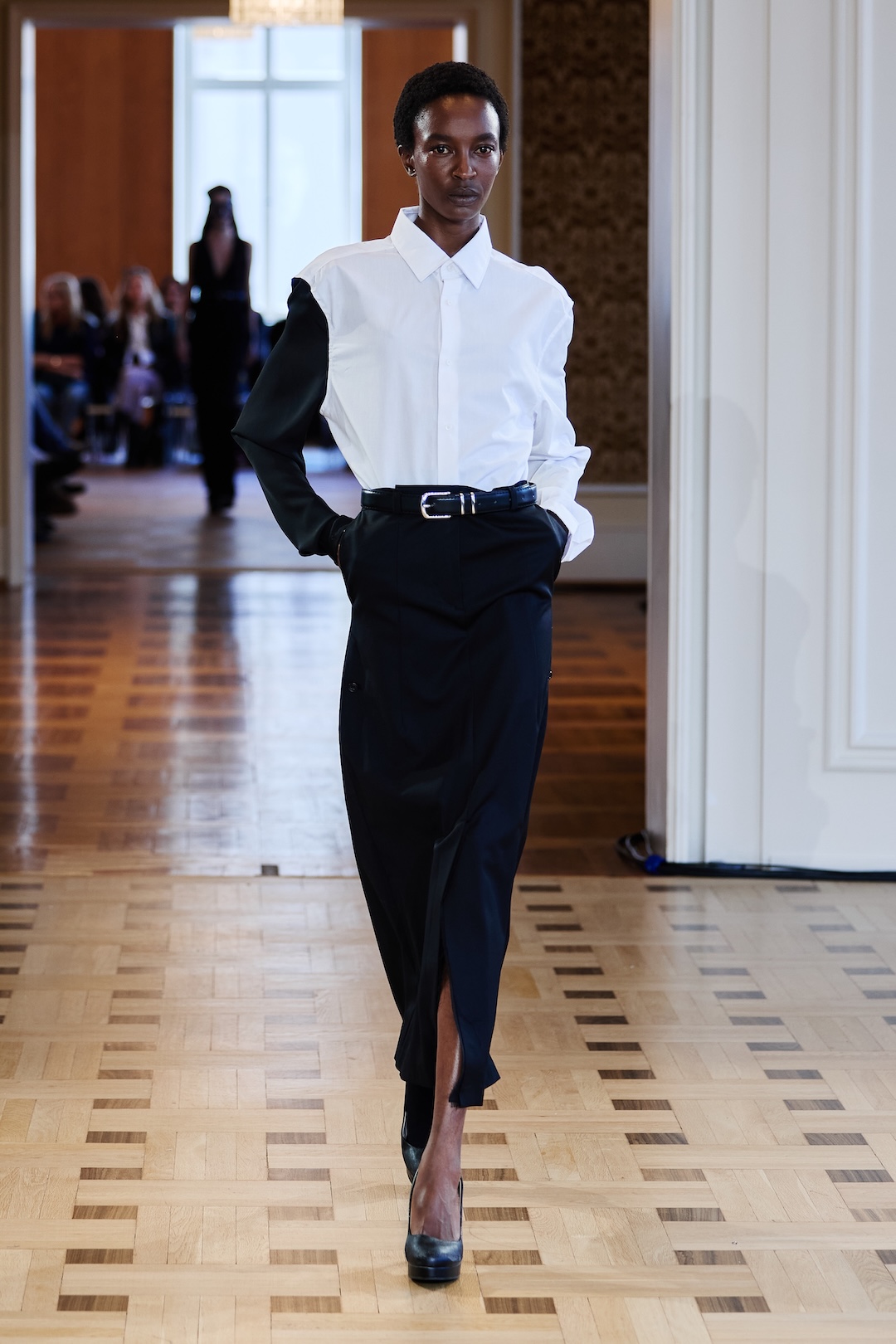
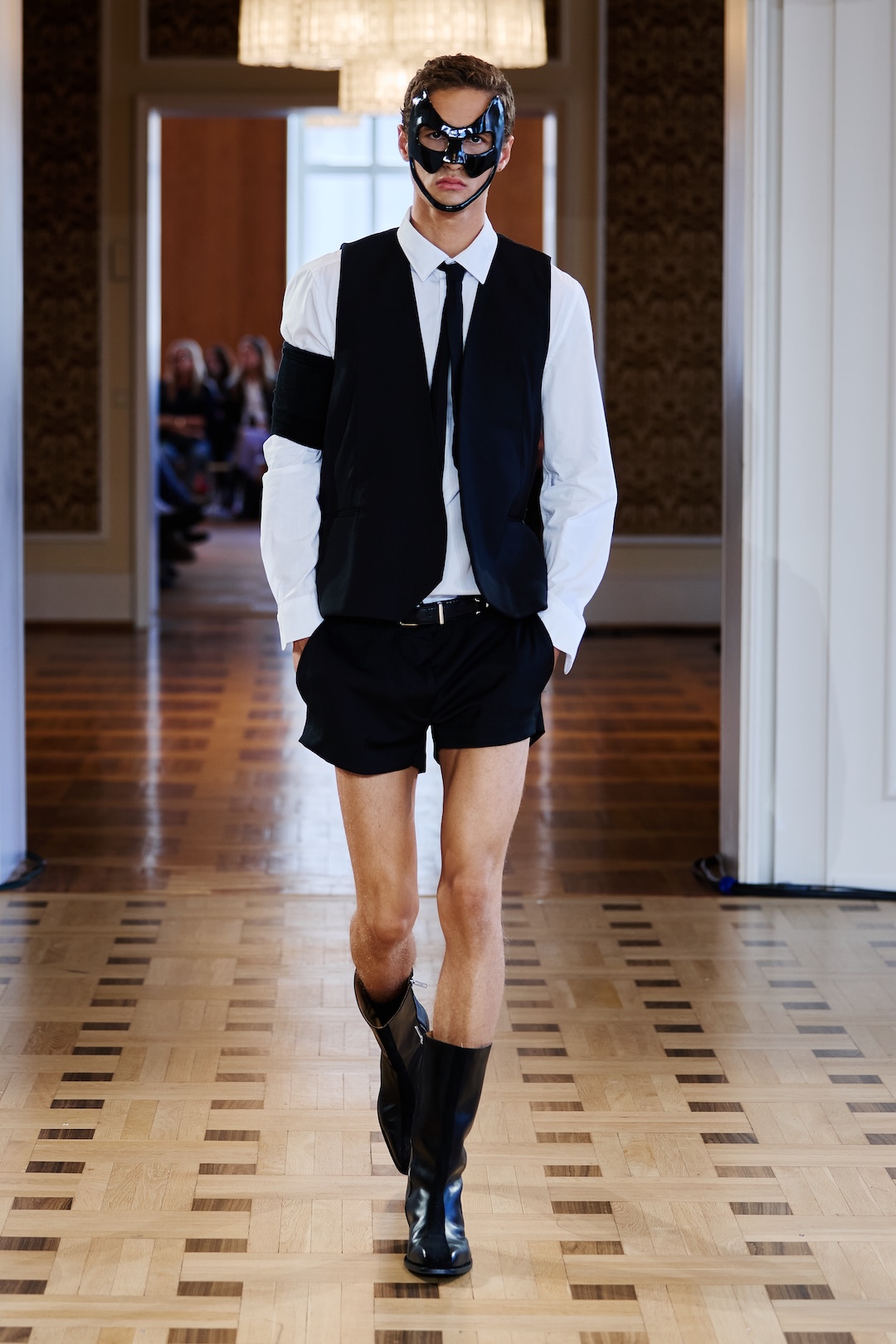
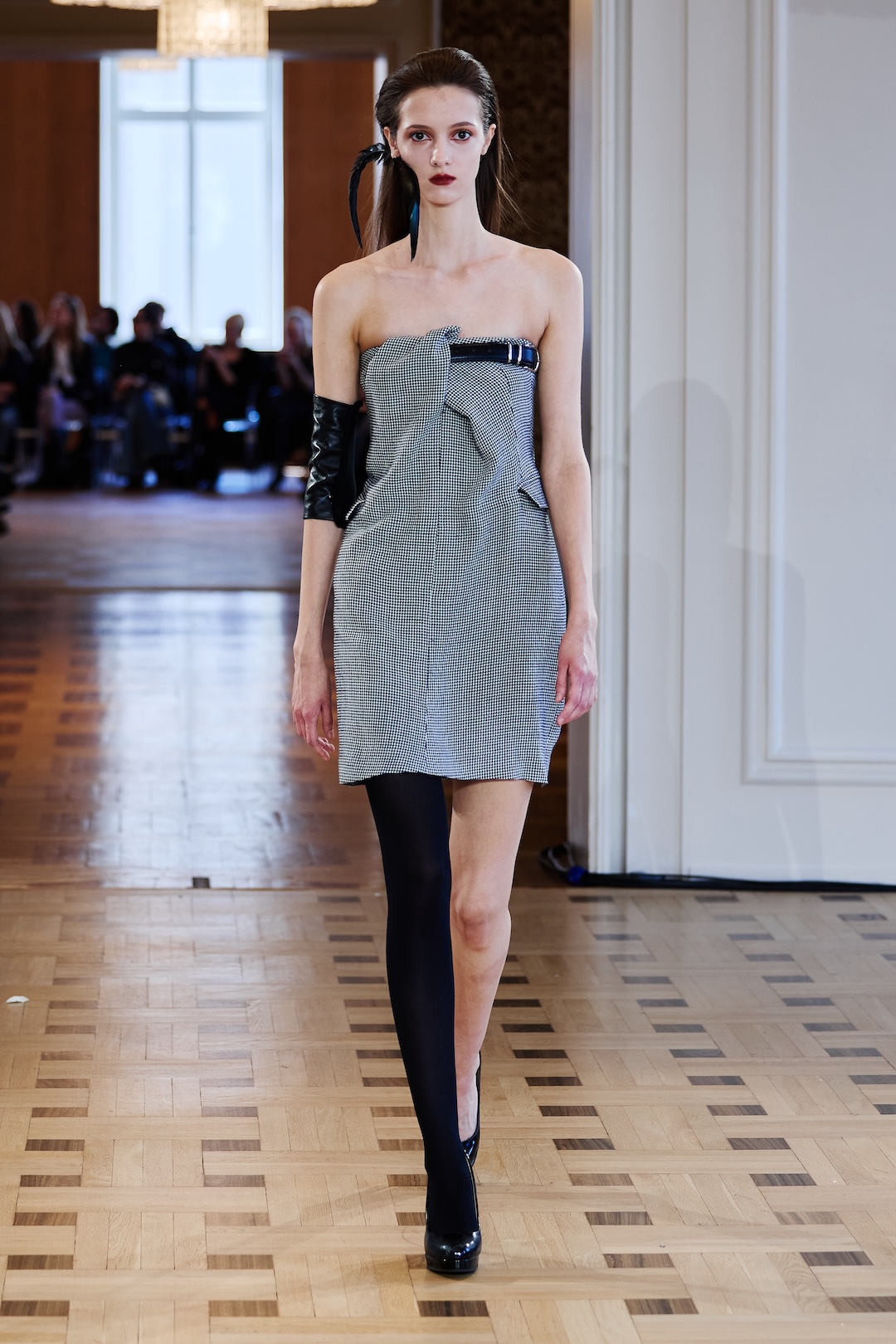
The Berlin staging of Woodman Pt. 2 carried Juncker’s fascination with Francesca Woodman’s black-and-white photography through to the construction itself, deconstructing classic tailoring and reassembling it into an almost entirely monochrome collection of trouser-built skirts, exaggerated waistlines, and hybrid dress-trouser and blazer-short pieces.


Tokyo may be its home base, but John Lawrence Sullivan’s presence on the Berlin calendar made perfect sense. Founded in 2003 by former professional boxer Arashi Yanagawa, the brand began as menswear and has since expanded into womenswear, always retaining a fighter’s precision in its sharp tailoring and bold silhouettes. Drawing on art, music, and politics, the label continues to interrogate gender, identity, and strength with an uncompromising attitude that has already carried it through Paris, London, and Tokyo. Each collection pairs technical construction with genuine conviction, a combination that reads clearly on the Berlin runway.
For SS27, Yanagawa presented Androgyny, exploring the body as a space of ambiguity through deconstructed menswear and womenswear codes and references to the Japanese art of Shibari, its themes of discipline and restraint surfacing in bondage-style blazers and coats, while reptilian-look pieces stood in for transformation, all anchored by the blurred-identity spirit of Bettina Rheims’ 1990 Modern Lovers portrait series.


→ GMBH
GmbH closed out the season as one of its most institutionally significant names. Founded in Berlin in 2016 by Serhat Isik and Benjamin A. Huseby, whose name is borrowed from the German legal term for a limited company, the label was conceived as a way of using fashion to respond directly to current events. Drawing on their own experiences as children of immigrants in Europe, Isik and Huseby have built GmbH around storytelling through garment-making, engaging authentically with migration, ecology, couture, and club culture. That authenticity has translated into serious industry recognition: a BOF500 listing, finalist positions for the LVMH Prize, ANDAM Award, and International Woolmark Prize, and a current finalist spot in the Vogue Fashion Fund. Environmentally and socially responsible since its founding, GmbH remains one of the clearest examples of what Berlin Fashion Week’s guiding theme actually looks like in practice.
Fittingly, GmbH delivered the season’s grand finale with Desire Paths, a collection marking the label’s tenth anniversary by resurrecting 1920s Berlin’s nearly forgotten couture history, incorporating pieces from Julia Schwarz’s private archive, said to hold Europe’s largest fashion collection, alongside formal eveningwear, precise tailoring, and the sportswear and club-culture elements the label has long been known for. Musician and record producer Arca walked the show, lending the anniversary presentation an extra layer of cultural cachet.
Taken together, this roster is the clearest evidence yet of what Berlin Fashion Week has become: a calendar broad enough to hold minimalist tailoring and radical upcycling, theatrical performance and boxing-inspired precision, all under one civic umbrella. With participation nearly doubling season over season and international press and buyers increasingly circling back, Berlin isn’t just hosting a fashion week, it’s building a case for what a genuinely public-facing one can look like.
The next edition arrives 29 January to 1 February 2027, and on this evidence, it will have plenty to live up to.