In conversation w/ CHLOÉ
NOVEMBER 6, 2026
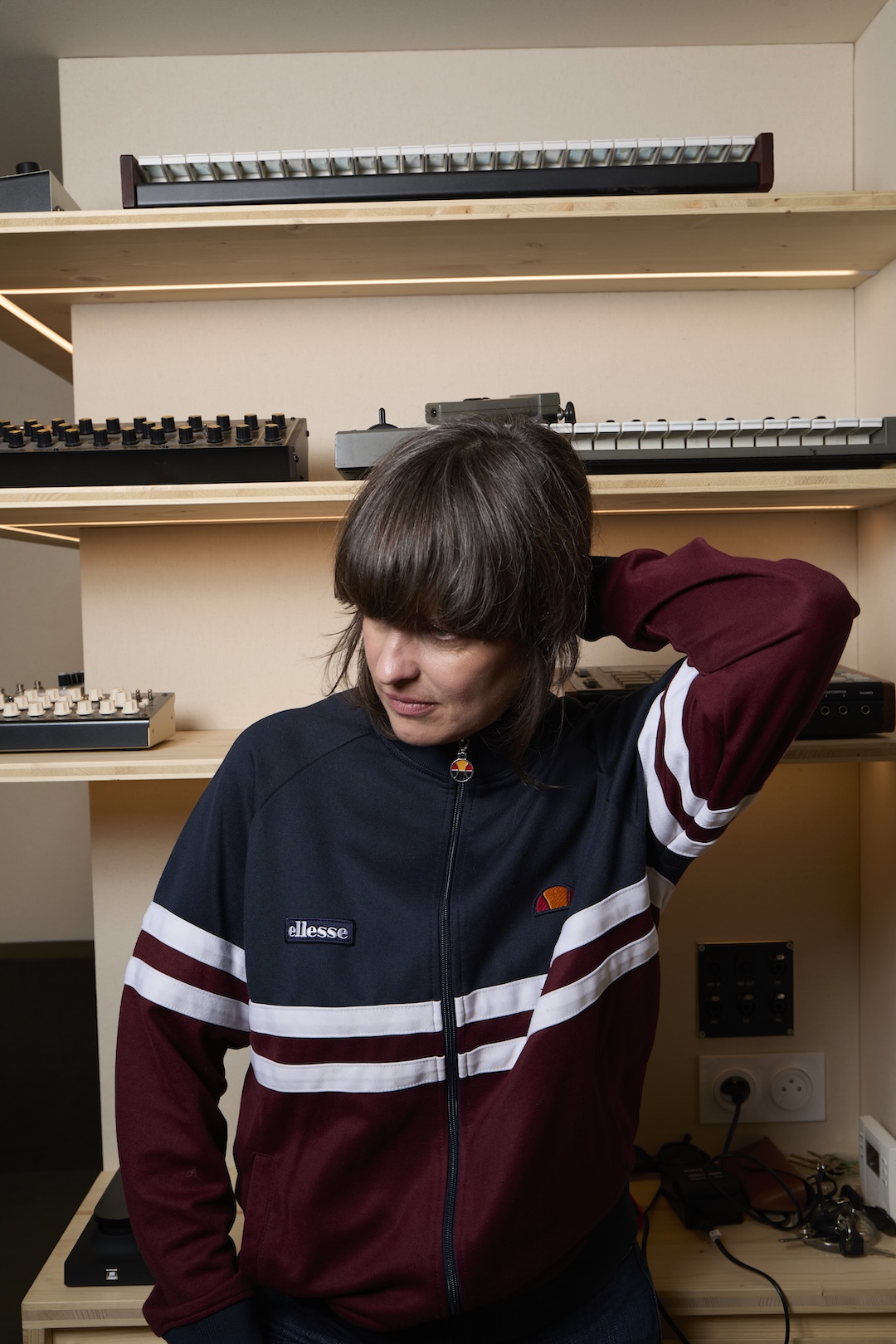
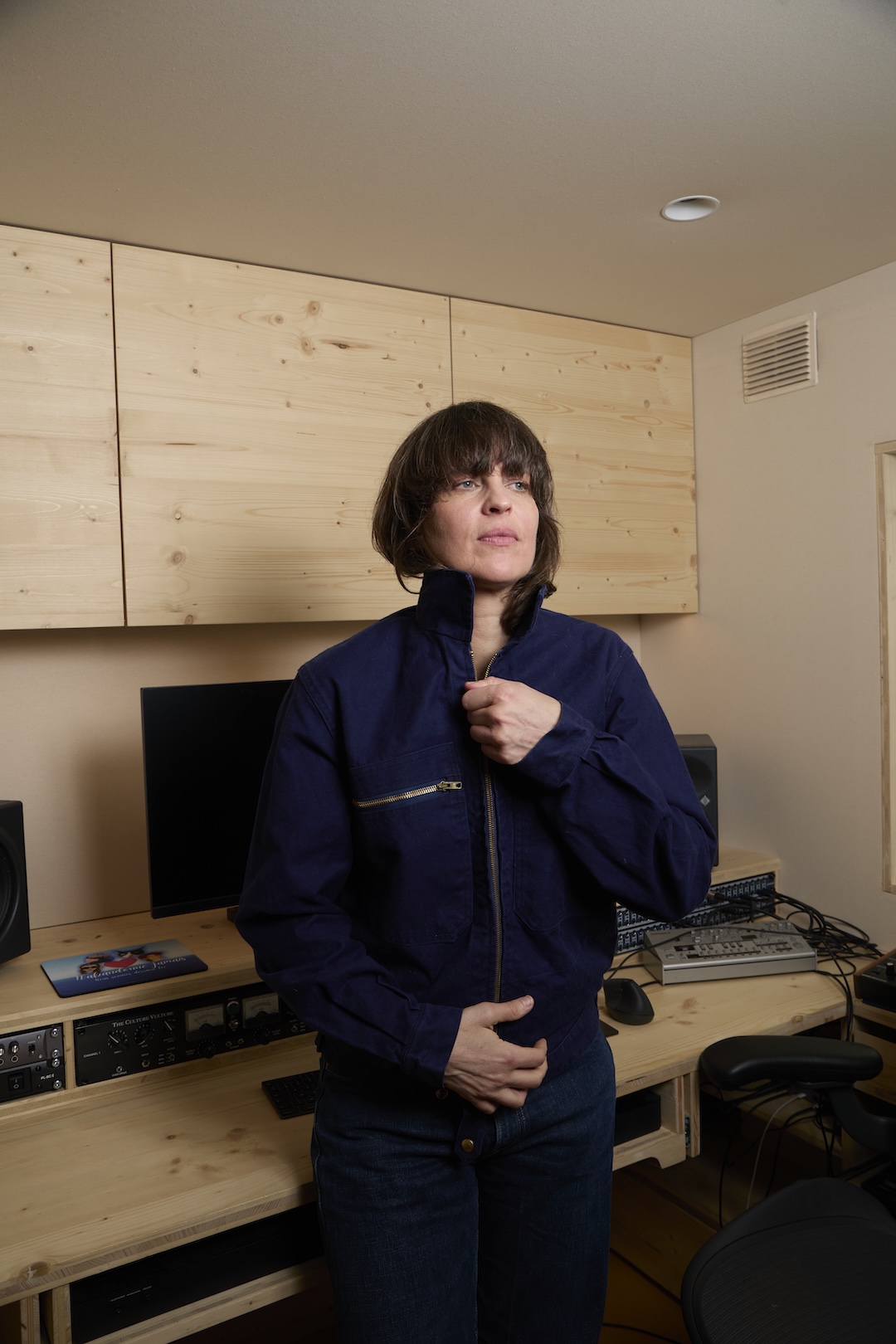
“Shape Of The Unknown” arrives on 30th October, nine years after “Endless Revisions”. What did you feel ready to express through a new CHLOÉ album at this point in your life? What did the ‘unknown’ mean to you when you began making it, and did that meaning change during the process?
Over those nine years, I was busy with DJing, remixes, collaborations and composing for other projects. But at some point, I felt the need to focus on something more personal again, without any particular direction in mind. The album came together quite naturally, through different ideas and experiments that gradually started to connect.
For me, “Shape Of The Unknown” is about movement, transformation and following a direction without knowing exactly where it will take you. I think that meaning became clearer as the album took shape. I like leaving room for the unexpected, and that’s also how I approached making this record.
Your work moves between the physical intensity of the club, film composition and the more contemplative experiences of SloMo A/V. What have these different settings taught you about how people experience time, tension and emotion through music? Can you identify something in your current productions that you only discovered by working outside the dancefloor?
All these experiences influence each other. DJing is like a game playing with tension, dynamics and how music can evolve over time. You really learn to feel when something needs to happen, or when it’s better to let things develop.
Working on film music or more experimental projects has allowed me to approach time differently. Sometimes you don’t need a beat or a strong rhythm to create tension or emotion. It can come from a texture, a sound that slowly changes, or even from leaving some space.
I think that’s something I bring back into my own productions. I’m interested in how a track can gradually take you somewhere, without necessarily knowing where it’s going from the beginning.
The album’s creative process involved performing each piece in the studio. What do you hear in an early performance that tells you an idea deserves to become a finished track? How do you decide which imperfections or unexpected details to preserve when you begin editing, especially when the technology gives you so much control?
I think it’s mostly instinctive. When I’m jamming in the studio, sometimes an unexpected combination catches my attention and makes me want to explore it further. I also stay open to accidents along the way. Sometimes they can throw you off course but end up taking you somewhere you would never have gone otherwise. Of course, technology gives us so much control, and it’s tempting to keep editing everything. But I think you can also lose something by trying to make everything perfect. For me, it’s more about keeping what makes a track interesting, even if it’s a little strange or imperfect, rather than polishing every detail.
Ben Shemie, Olivia Merilahti and trumpeter David Enhco all contribute to the album, bringing different musical backgrounds into your compositions. How much of a piece have you already imagined when you invite someone into it, and how willing are you to reconsider that direction? Could you talk us through an exchange that took the music somewhere you hadn’t anticipated?
I love the idea that everyone brings a little bit of their own world into the music. Sometimes I already have a direction in mind when I invite someone to collaborate, but I’m always open to seeing where it goes. For me, the interesting part is finding that place where our different worlds meet. We each take a step towards the other and hopefully end up somewhere neither of us would have reached alone. That’s kind of my ideal situation when collaborating.
With Ben, we’ve known each other and worked together since my previous album, including on our High Season project. There’s a lot of improvisation when we play live together, and I really enjoy the fact that we don’t plan everything in advance. So, working together again felt very natural.
With Olivia Merilahti, I’ve always loved her approach to melodies, and I was curious to see where our two worlds could meet. At first, I imagined something closer to a song, with a slightly futuristic pop feel. But as the track developed, I realised I wanted to take it somewhere else. The more I listened to it, the more I wanted to push it in a stranger, more hypnotic, almost trance-like direction. I still have several versions of the track, and it’s interesting to listen back and hear how much it changed along the way. I think you have to be ready to let go of your original idea a little, because that’s often when something interesting happens.
David Enhco is a trumpeter and improviser, and I really like the way he approaches this instrument. His trumpet almost becomes a strange voice, transformed through effects. I love that ambiguity, when you can’t immediately tell what instrument you’re hearing anymore.
You and Kittin share a long history, but “Same Kind” marks the first time her voice has appeared on your music. What made this the right piece and moment for that collaboration? When someone already knows you so well personally and musically, what can the act of making a track together still reveal about each other?
Kittin and I have known each other for a long time, and we’ve played together many times over the years. I’ve always had a lot of respect for Caroline, both as a talented artist and a wonderful human being. I’d wanted to make music with her for quite a while. I was just waiting for the right moment, so I’m really happy it finally happened on this album.
Our track, “Same Kind”, reflects something about our connection. We have our own musical worlds, of course, but there’s also this feeling that we come from the same place, that we share something beyond music. That’s also what the lyrics are about, in a way. And what I love about Kittin isn’t just her voice, but also her lyrics and her very particular way of delivering them. She has this unique style, somewhere between singing and speaking, that I’ve always loved. It brings something very personal to the track. Even when you know someone really well, making music together is a different kind of exchange. You discover another side of each other through the creative process, and I think that’s what makes it interesting.
On 23rd October, you and Vassilena Serafimova will reinterpret Sibelius’s Fifth Symphony at Radio France. How has working with her marimba changed the way you hear rhythm, space and repetition? When you approach a score like this together, how do you arrive at an interpretation that reflects both of your musical instincts?
In a way, we’re working with the same approach we developed on our Sequenza live performance, bringing together the acoustic sound of Vassilena’s marimba and experimentations, with my electronic textures. We both have very different musical backgrounds, but we’ve found a way of working together where our two worlds naturally interact.
For this project, it’s about finding our own way into Sibelius’s music, taking inspiration from it while leaving room for our own instincts and experimentation.
It’s actually a new creation for us, and quite different from what we usually do together. We’re not really trying to reinterpret Sibelius’s Fifth Symphony in a traditional way, but rather to evoke his music through our own sounds, textures and musical approach.
You’re also bringing ‘Sequenza’ to Tours on 13th November for its immersive sound premiere. How does thinking about the placement and movement of sound change the way you and Vassilena arrange the performance? What would you like the audience to feel or notice that they might miss when hearing the same music through a conventional sound system?
We’ll be presenting our live Sequenza in an immersive sound format for the first time, as part of the second edition of the Ultrason Festival in Le Temps Machine, Tours.
In our project, beyond the rhythmic elements, there are lots of small details, textures and sounds that create a sense of depth and space. They’re an important part of the music, even if they’re not always immediately noticeable.
Performing in an immersive format will allow us to explore these aspects even further with our sound engineer Clement Labre. Sounds will move around the audience and interact with the space. I think it can bring another dimension to the music and hopefully allow people to discover details they might not have noticed in a conventional setup.
Lumière Noire describes itself as something between a record label and a club night. What makes an artist or a record belong within that space when a shared genre isn’t necessarily the connection? How do you carry that identity through the music, artwork and parties while giving each artist room to develop ideas that might challenge your own taste?
Lumière Noire is a place where we can release tracks from artists whose music really catches our attention, an EP or without necessarily committing to a full EP when it comes to our Flash series.
Flash Vol. 3 just got released and it brings together AWIR, Don Turi, Neurotypique and Clément ASWF, four artists from quite different musical worlds. I love the different sides of each artist’s music, and I like the idea of bringing these different approaches together on the same record. I love every track for its own particular character. For me, the identity of Lumière Noire comes from these choices rather than from a particular genre or aesthetic.
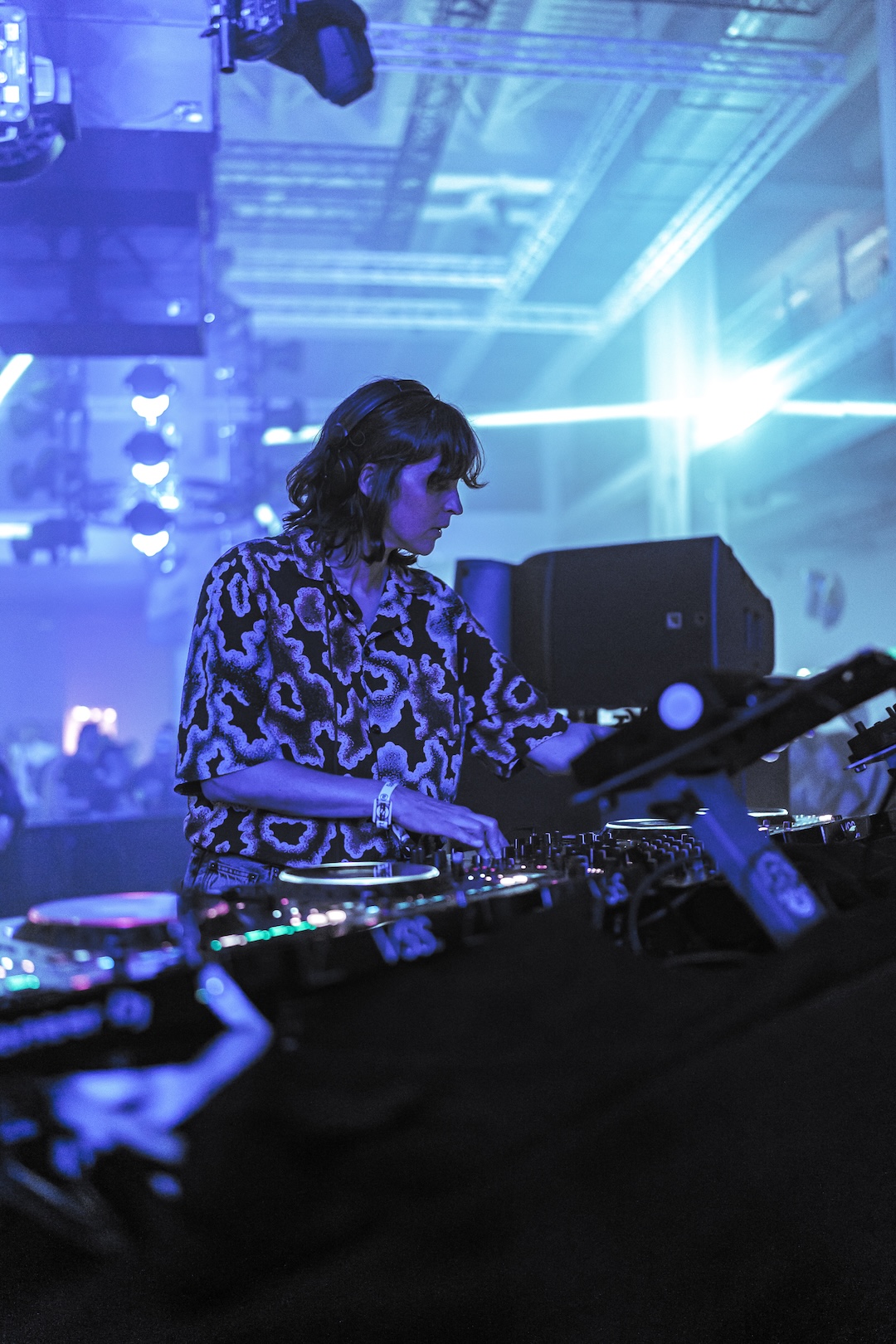
Your DJ sets draw on years of experience, but they also depend on responding to what happens in a particular room that night. How do you keep that sense of discovery when audiences already have expectations of a CHLOÉ set? Can you remember a recent night when the relationship with the crowd changed what you wanted to play, or made you hear a familiar record differently?
When people come to a night where I play, they already expect something a little unexpected! They’re used to that and they’re open to it. They know they’ll hear different tracks every time, because I never play the same set twice.
Sometimes a track I’ve played many times can sound completely different in a particular club or on a particular night. The identity of the party, the atmosphere and the crowd all come together to create something unique. And I can be just as surprised as the audience.
It happens to me quite often at Rex Club in Paris. I’ve been playing there for a long time, and yet I’m still surprised by what happens there, and I still enjoy it just as much.
In conversation w/ CHLOÉ
NOVEMBER 6, 2026
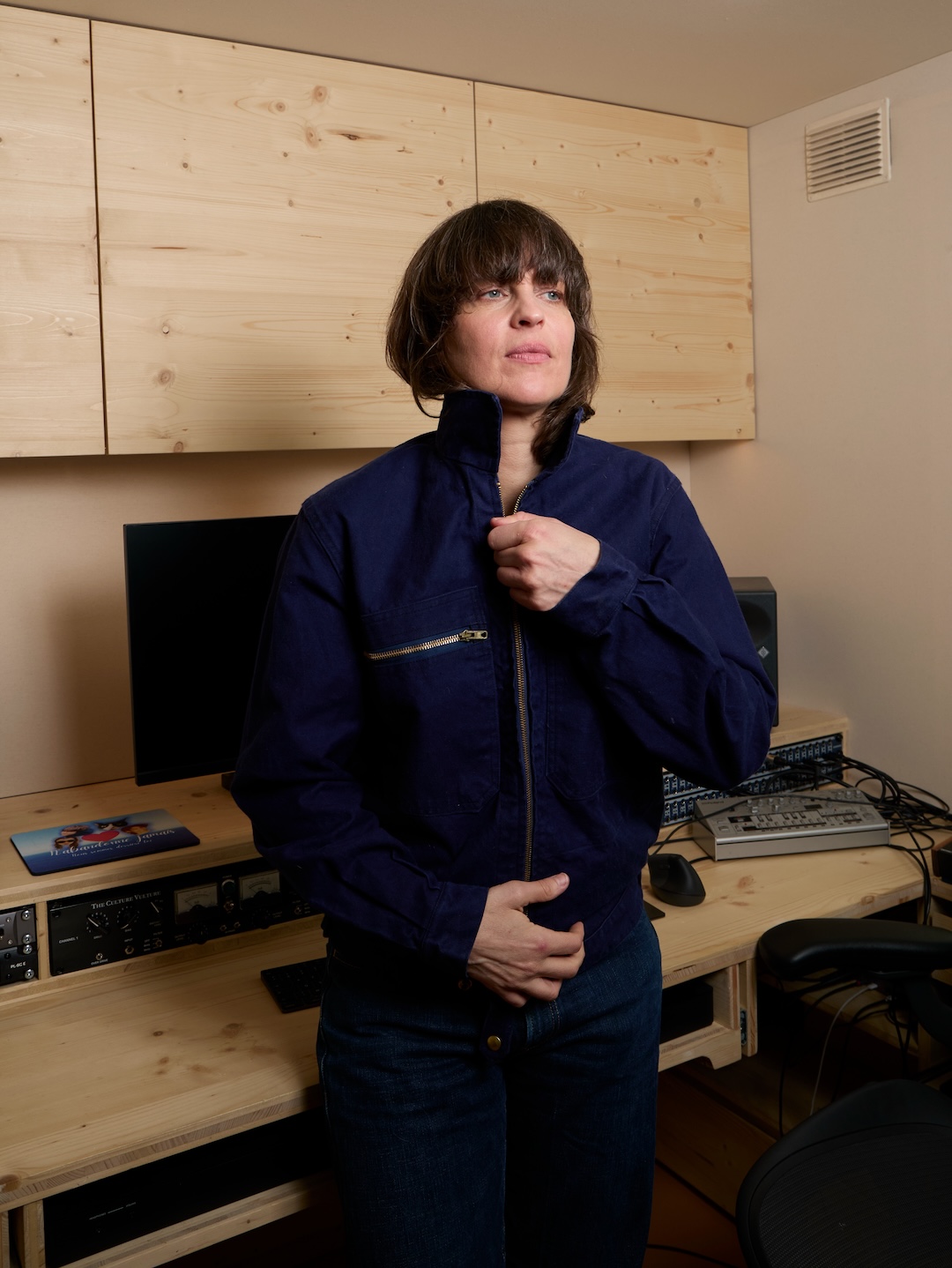
“Shape Of The Unknown” arrives on 30th October, nine years after “Endless Revisions”. What did you feel ready to express through a new CHLOÉ album at this point in your life? What did the ‘unknown’ mean to you when you began making it, and did that meaning change during the process?
Over those nine years, I was busy with DJing, remixes, collaborations and composing for other projects. But at some point, I felt the need to focus on something more personal again, without any particular direction in mind. The album came together quite naturally, through different ideas and experiments that gradually started to connect.
For me, “Shape Of The Unknown” is about movement, transformation and following a direction without knowing exactly where it will take you. I think that meaning became clearer as the album took shape. I like leaving room for the unexpected, and that’s also how I approached making this record.
Your work moves between the physical intensity of the club, film composition and the more contemplative experiences of SloMo A/V. What have these different settings taught you about how people experience time, tension and emotion through music? Can you identify something in your current productions that you only discovered by working outside the dancefloor?
All these experiences influence each other. DJing is like a game playing with tension, dynamics and how music can evolve over time. You really learn to feel when something needs to happen, or when it’s better to let things develop.
Working on film music or more experimental projects has allowed me to approach time differently. Sometimes you don’t need a beat or a strong rhythm to create tension or emotion. It can come from a texture, a sound that slowly changes, or even from leaving some space.
I think that’s something I bring back into my own productions. I’m interested in how a track can gradually take you somewhere, without necessarily knowing where it’s going from the beginning.
The album’s creative process involved performing each piece in the studio. What do you hear in an early performance that tells you an idea deserves to become a finished track? How do you decide which imperfections or unexpected details to preserve when you begin editing, especially when the technology gives you so much control?
I think it’s mostly instinctive. When I’m jamming in the studio, sometimes an unexpected combination catches my attention and makes me want to explore it further. I also stay open to accidents along the way. Sometimes they can throw you off course but end up taking you somewhere you would never have gone otherwise. Of course, technology gives us so much control, and it’s tempting to keep editing everything. But I think you can also lose something by trying to make everything perfect. For me, it’s more about keeping what makes a track interesting, even if it’s a little strange or imperfect, rather than polishing every detail.
Ben Shemie, Olivia Merilahti and trumpeter David Enhco all contribute to the album, bringing different musical backgrounds into your compositions. How much of a piece have you already imagined when you invite someone into it, and how willing are you to reconsider that direction? Could you talk us through an exchange that took the music somewhere you hadn’t anticipated?
I love the idea that everyone brings a little bit of their own world into the music. Sometimes I already have a direction in mind when I invite someone to collaborate, but I’m always open to seeing where it goes. For me, the interesting part is finding that place where our different worlds meet. We each take a step towards the other and hopefully end up somewhere neither of us would have reached alone. That’s kind of my ideal situation when collaborating.
With Ben, we’ve known each other and worked together since my previous album, including on our High Season project. There’s a lot of improvisation when we play live together, and I really enjoy the fact that we don’t plan everything in advance. So, working together again felt very natural.
With Olivia Merilahti, I’ve always loved her approach to melodies, and I was curious to see where our two worlds could meet. At first, I imagined something closer to a song, with a slightly futuristic pop feel. But as the track developed, I realised I wanted to take it somewhere else. The more I listened to it, the more I wanted to push it in a stranger, more hypnotic, almost trance-like direction. I still have several versions of the track, and it’s interesting to listen back and hear how much it changed along the way. I think you have to be ready to let go of your original idea a little, because that’s often when something interesting happens.
David Enhco is a trumpeter and improviser, and I really like the way he approaches this instrument. His trumpet almost becomes a strange voice, transformed through effects. I love that ambiguity, when you can’t immediately tell what instrument you’re hearing anymore.
You and Kittin share a long history, but “Same Kind” marks the first time her voice has appeared on your music. What made this the right piece and moment for that collaboration? When someone already knows you so well personally and musically, what can the act of making a track together still reveal about each other?
Kittin and I have known each other for a long time, and we’ve played together many times over the years. I’ve always had a lot of respect for Caroline, both as a talented artist and a wonderful human being. I’d wanted to make music with her for quite a while. I was just waiting for the right moment, so I’m really happy it finally happened on this album.
Our track, “Same Kind”, reflects something about our connection. We have our own musical worlds, of course, but there’s also this feeling that we come from the same place, that we share something beyond music. That’s also what the lyrics are about, in a way. And what I love about Kittin isn’t just her voice, but also her lyrics and her very particular way of delivering them. She has this unique style, somewhere between singing and speaking, that I’ve always loved. It brings something very personal to the track. Even when you know someone really well, making music together is a different kind of exchange. You discover another side of each other through the creative process, and I think that’s what makes it interesting.
On 23rd October, you and Vassilena Serafimova will reinterpret Sibelius’s Fifth Symphony at Radio France. How has working with her marimba changed the way you hear rhythm, space and repetition? When you approach a score like this together, how do you arrive at an interpretation that reflects both of your musical instincts?
In a way, we’re working with the same approach we developed on our Sequenza live performance, bringing together the acoustic sound of Vassilena’s marimba and experimentations, with my electronic textures. We both have very different musical backgrounds, but we’ve found a way of working together where our two worlds naturally interact.
For this project, it’s about finding our own way into Sibelius’s music, taking inspiration from it while leaving room for our own instincts and experimentation.
It’s actually a new creation for us, and quite different from what we usually do together. We’re not really trying to reinterpret Sibelius’s Fifth Symphony in a traditional way, but rather to evoke his music through our own sounds, textures and musical approach.
You’re also bringing ‘Sequenza’ to Tours on 13th November for its immersive sound premiere. How does thinking about the placement and movement of sound change the way you and Vassilena arrange the performance? What would you like the audience to feel or notice that they might miss when hearing the same music through a conventional sound system?
We’ll be presenting our live Sequenza in an immersive sound format for the first time, as part of the second edition of the Ultrason Festival in Le Temps Machine, Tours.
In our project, beyond the rhythmic elements, there are lots of small details, textures and sounds that create a sense of depth and space. They’re an important part of the music, even if they’re not always immediately noticeable.
Performing in an immersive format will allow us to explore these aspects even further with our sound engineer Clement Labre. Sounds will move around the audience and interact with the space. I think it can bring another dimension to the music and hopefully allow people to discover details they might not have noticed in a conventional setup.
Lumière Noire describes itself as something between a record label and a club night. What makes an artist or a record belong within that space when a shared genre isn’t necessarily the connection? How do you carry that identity through the music, artwork and parties while giving each artist room to develop ideas that might challenge your own taste?
Lumière Noire is a place where we can release tracks from artists whose music really catches our attention, an EP or without necessarily committing to a full EP when it comes to our Flash series.
Flash Vol. 3 just got released and it brings together AWIR, Don Turi, Neurotypique and Clément ASWF, four artists from quite different musical worlds. I love the different sides of each artist’s music, and I like the idea of bringing these different approaches together on the same record. I love every track for its own particular character. For me, the identity of Lumière Noire comes from these choices rather than from a particular genre or aesthetic.
Your DJ sets draw on years of experience, but they also depend on responding to what happens in a particular room that night. How do you keep that sense of discovery when audiences already have expectations of a CHLOÉ set? Can you remember a recent night when the relationship with the crowd changed what you wanted to play, or made you hear a familiar record differently?
When people come to a night where I play, they already expect something a little unexpected! They’re used to that and they’re open to it. They know they’ll hear different tracks every time, because I never play the same set twice.
Sometimes a track I’ve played many times can sound completely different in a particular club or on a particular night. The identity of the party, the atmosphere and the crowd all come together to create something unique. And I can be just as surprised as the audience.
It happens to me quite often at Rex Club in Paris. I’ve been playing there for a long time, and yet I’m still surprised by what happens there, and I still enjoy it just as much.