In conversation w/ FJAAK
OCTOBER 1, 2026 → WORDS SARA NAVARRO PHOTOGRAPHY RONJA ELINA KAPPL
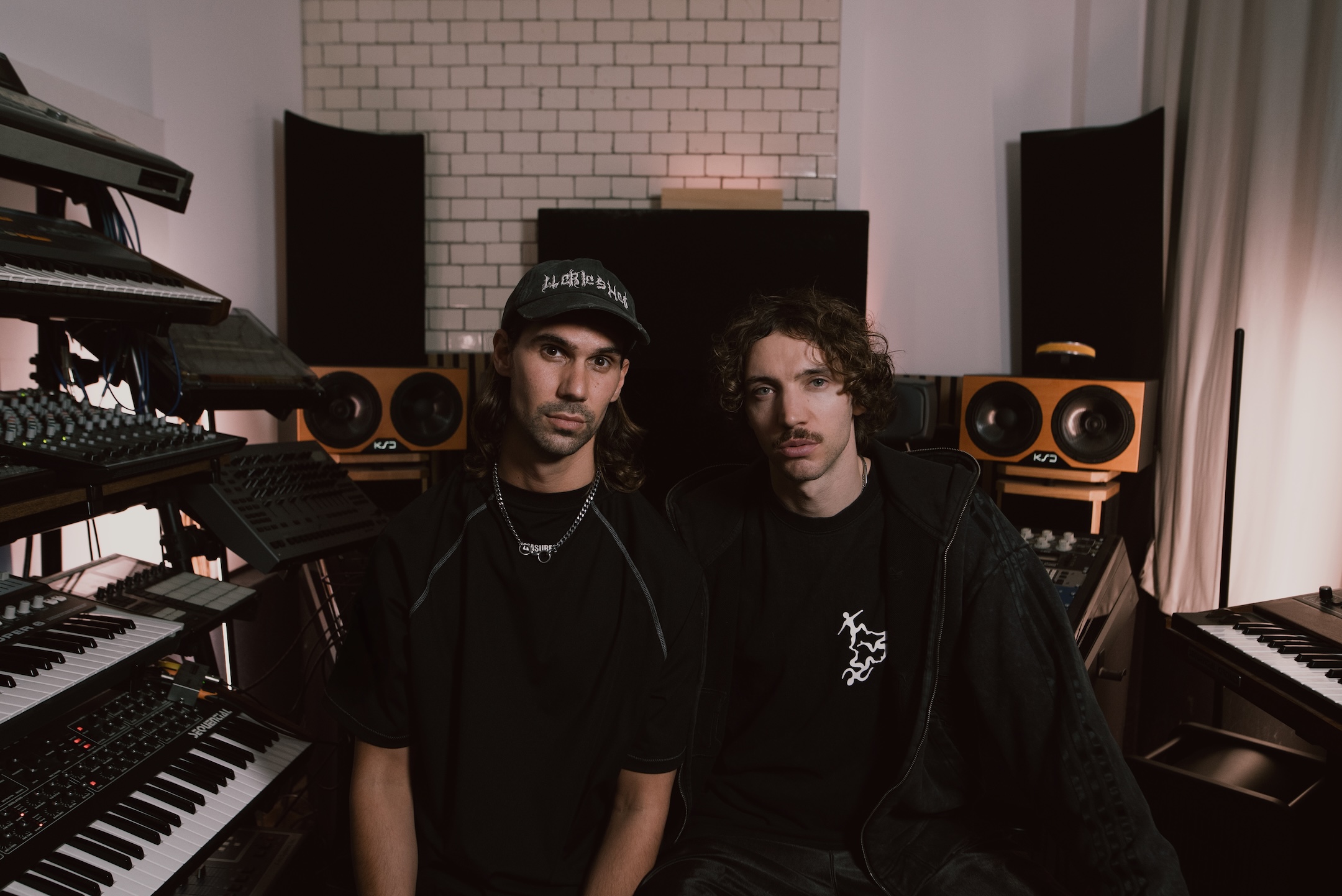
Long before FJAAK became synonymous with raw analogue machines, sweaty warehouses and the heavier edges of Berlin club culture, Felix Wagner and Aaron Röbig were two kids from Spandau making music, skateboarding, playing games and generally getting into whatever they could find. There was no masterplan, and certainly no expectation that years later they’d be taking that same curiosity to clubs and festivals around the world.
That sense of discovery still sits at the heart of FJAAK. Growing up alongside a Berlin nightlife scene that felt wilder, less documented and far less concerned with fitting neatly into categories, the pair absorbed everything around them; techno, house, jungle, breakbeat, dub and whatever else caught their attention. The lesson that stuck wasn’t necessarily how electronic music should sound, but that it didn’t have to follow one set of rules at all.
Their latest four track EP, FJAAK 015, feels like another product of that mentality. But after making music together since childhood, they still seem far more interested in what they haven’t figured out yet than repeating what they already know works.
We sat down with FJAAK to talk growing up together in Berlin, the city and club culture that shaped them, their latest chapter FJAAK 015 and the stories behind its four tracks. Along the way, we find out which track they’d save if only one could survive, who refuses to admit when a record is finished, why Blade Runner deserves a FJAAK soundtrack, and where Felix and Aaron hope all of this takes them next.
You’ve known each other and been making music together since childhood. What were Felix and Aaron like before FJAAK existed, and what did you originally bond over?
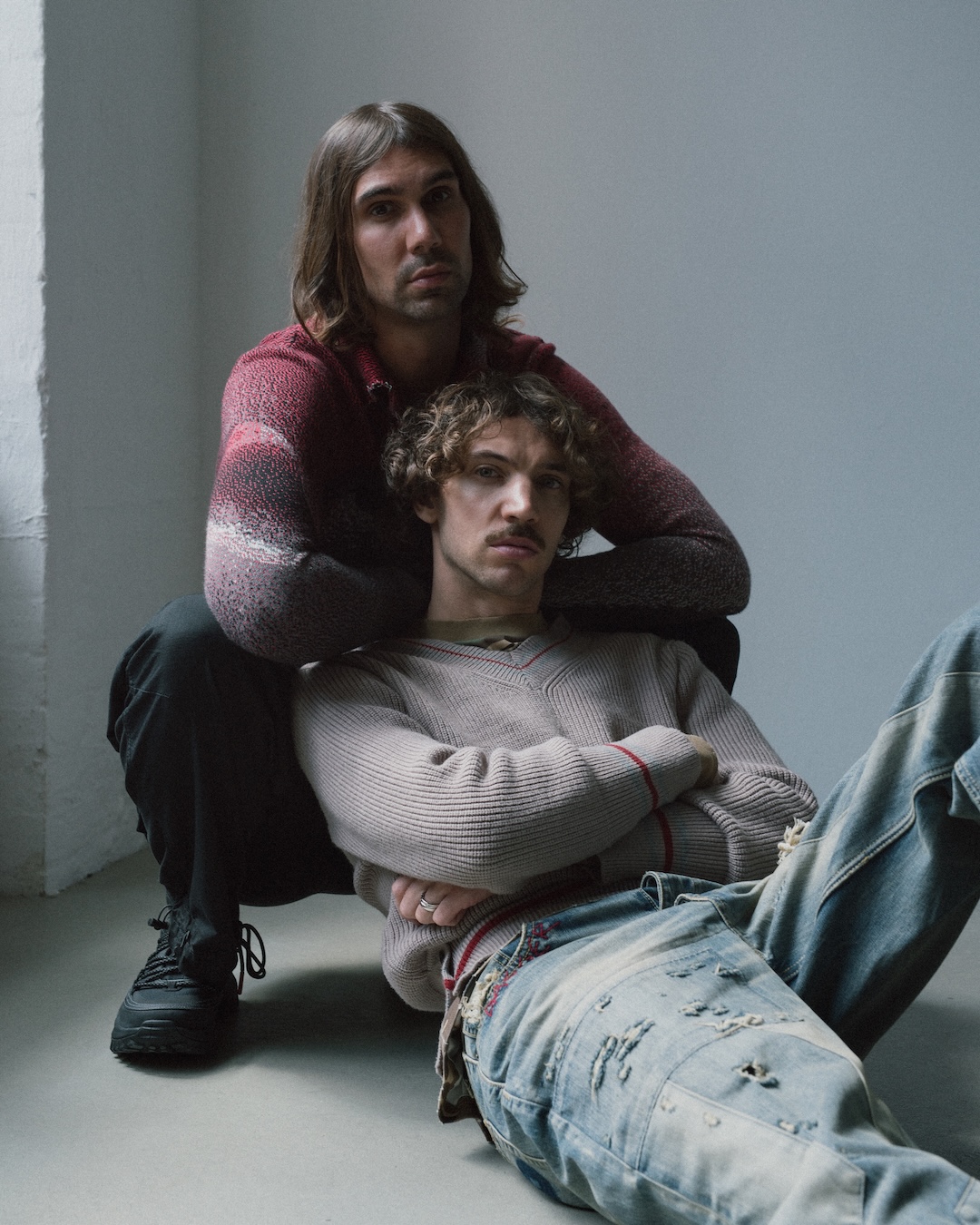
We were just kids from a Berlin outskirts - aka Spandau - hanging out, making music and getting into whatever we could find. We bonded over music very early on, but also over skateboarding, computers, games and just being outside all the time. We didn’t really have a plan to become FJAAK or anything like that. We were just curious friends and wanted to make everything together.
You’ve essentially grown up alongside Berlin’s electronic music scene. What version of Berlin do you remember discovering as teenagers, and how different does the city feel to you now?
When we were teenagers, Berlin still felt very open and a bit wilder. You could discover things without everything being documented online or turned into a trend immediately. There were lots of different scenes existing next to each other, and you could move between them quite naturally and somehow everything felt more as one.
The city has changed a lot. It has become much more international and much more expensive and obviously the club scene has changed a bit with it. But Berlin is still Berlin. There are still people making strange music in basements and finding their own way of doing things. That’s probably the part that never changes and we love that because that’s where we are coming from!
When you think back to those early years, was there a particular club, party, record or experience that completely changed your understanding of what electronic music could be?
There wasn’t just one moment. It was more like a lot of little explosions happening at the same time. Going to clubs, listening to records at shops like Hardwax we had never heard before, also simply finding music in record shops felt like discovering fire 10.000 BC, and we were annoyed a lot seeing people play completely different styles in the same night back then.
For us, the big realisation was that electronic music didn’t have to follow one set of rules. You could take styles from techno, something from house, jungle, breakbeat or whatever you found interesting and make your own thing out of it. That idea probably stayed with us more than any particular record.
You get one night to experience any era of Berlin nightlife; including one you were too young to actually experience. Where and when are you going?
Probably late 90s/early 00s Berlin again. We’d love to revisit that period when everything was still being discovered and there weren’t really any rules about what a club was supposed to be. We’d just want to walk around, find some random place, bump into random people and see where the night takes us!

Let’s get into your new EP ‘FJAAK 015’. After all these years of making music together, what does this EP tell us about where FJAAK is creatively in 2026?
We think it shows that we’re still moving. After all these years, we’re not really interested in repeating ourselves or trying to recreate something that worked before. We just want to keep experimenting and see where the music takes us.
FJAAK 015 feels quite focused in some ways, but there’s still a lot of different energy inside it. For us, that’s important. We don’t want to make music that fits into one specific box just because people already know us for something.
Do you remember the first track or idea that unlocked the EP and made you realise you were building a body of work rather than a collection of individual tracks?
It wasn’t really planned like that. We had different tracks and ideas and at some point we realised they belonged together. We usually don’t start by saying, “Let’s make an EP with this concept.” We make music first and understand what it is afterwards.
That’s also why the title FJAAK 015 works for us. It’s another chapter rather than us trying to give the whole thing a big explanation.
There’s something deliberately imperfect and human about analogue music. How much room do you leave for accidents when you're working, and is there an imperfection somewhere on FJAAK 015 that you deliberately decided to keep?
A lot. We actually like when something happens that we didn’t plan. If everything is perfectly controlled, it can easily lose some of the magic.
We don’t really go through every track trying to clean everything up. Sometimes a strange sound, a timing issue or a machine doing something unexpected can be exactly what makes a track interesting. If it feels good, it feels good. We keep it.
There are definitely things on FJAAK 015 that wouldn’t be there if we had tried to make everything perfect.
The track titles; Serotonin, Threshold, Bio Data and Wax Pack all feel quite distinct. Can you talk us through where each name came from and what each one says about the track it belongs to?
The names usually come from something around the track rather than being a literal description of what you’re hearing. Sometimes it’s a word, a feeling, an object or just something that makes sense to us while we’re making it.
“Serotonin” has kind of a direct connection to the feeling of the track. “Threshold” is about a setting of our compressor, at the same time it’s that moment before you cross over something. “Bio Data” has a more futuristic cyberpunky technological feeling to it: something human and digital at the same time. And “Wax Pack” is a very physical to us. Also we been cutting some Dubplates for a 4h vinyl only set at Essaim in Paris the same night we bounced the track - so came the name.
Sometimes a name should just give you another way into the track without telling you exactly what to think - sometimes the title just helps you with the memory.
No diplomacy allowed, you can only save one track from FJAAK 015. Which one survives?
That’s a dangerous question. Serotonin survives.
Who is more likely to keep adding things to a track when the other one is saying, “Hey, it’s finished”?
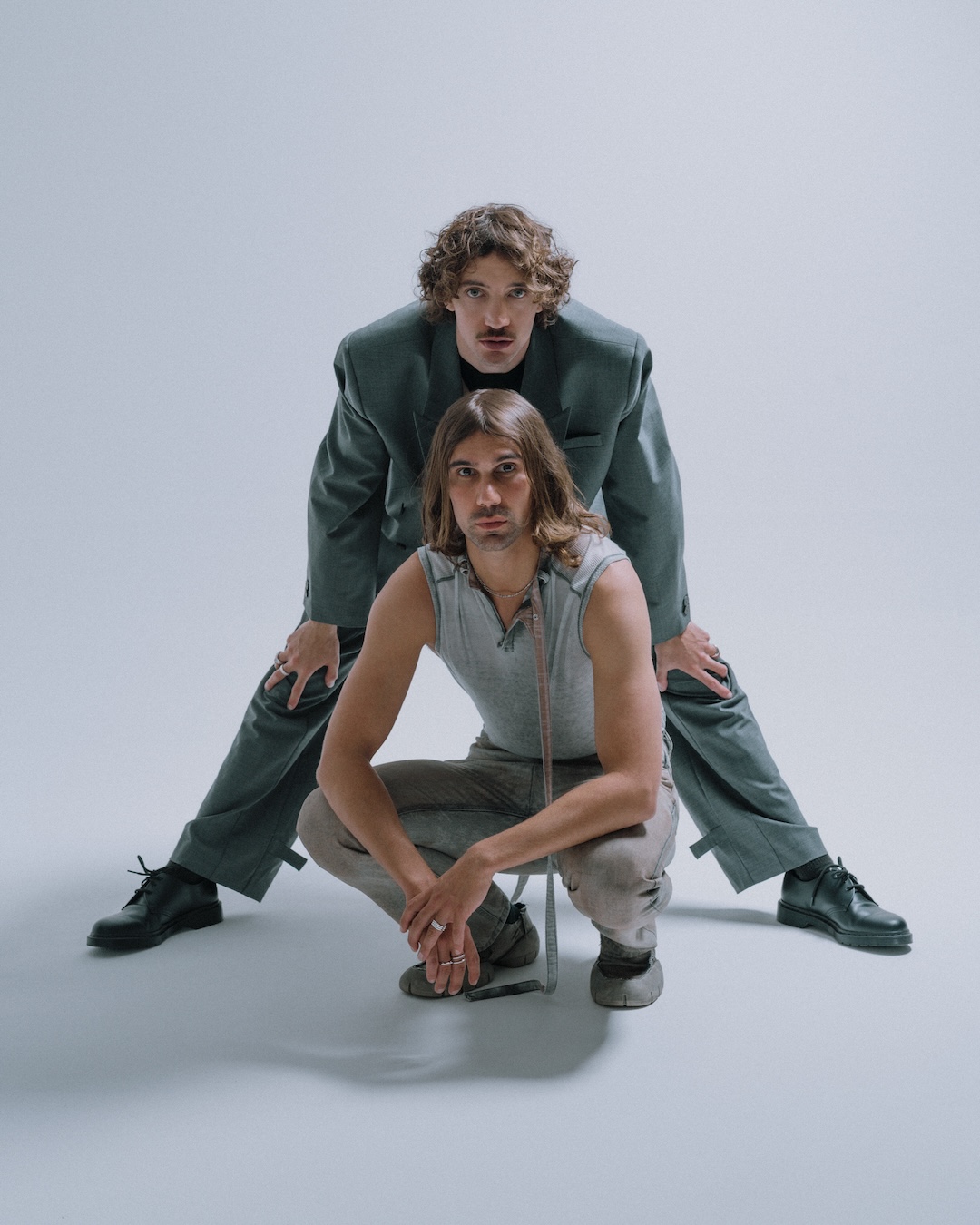
Probably both or none of us at the same time haha. But it depends on the track of course. Sometimes one of us is trying to finish a thing and the other one just comes in five minutes later and completely restructures the idea by adding something new/different and we actually love that!
And who usually wins?
Nobody really wins/loses as it’s never been a competition. Eventually we both get happy on the track and that’s the only way to say when it’s finished!
If you could soundtrack one film scene with a FJAAK track, which scene are you stealing?
Probably the final scene of Blade Runner. The atmosphere, the city, the machines and the whole feeling of being human in a futuristic world would work really well with some of our more breakbeat/IDM kind of music.
Fast forward ten years; where are Felix and Aaron, and what does FJAAK look like?
Hopefully still making music together and still surprising ourselves. We don’t want to predict what FJAAK will sound like in ten years. If we knew that now, we’d probably be doing something wrong rn ;)
But we definitely like to still be curious, still playing live around the world, still buying weird machines and still making music that doesn’t fit neatly into one box. And hopefully we’ll still be having fun doing it haha!
In conversation w/ FJAAK
OCTOBER 1, 2026
WORDS SARA NAVARRO
PHOTOGRAPHY RONJA ELINA KAPPL
Long before FJAAK became synonymous with raw analogue machines, sweaty warehouses and the heavier edges of Berlin club culture, Felix Wagner and Aaron Röbig were two kids from Spandau making music, skateboarding, playing games and generally getting into whatever they could find. There was no masterplan, and certainly no expectation that years later they’d be taking that same curiosity to clubs and festivals around the world.
That sense of discovery still sits at the heart of FJAAK. Growing up alongside a Berlin nightlife scene that felt wilder, less documented and far less concerned with fitting neatly into categories, the pair absorbed everything around them; techno, house, jungle, breakbeat, dub and whatever else caught their attention. The lesson that stuck wasn’t necessarily how electronic music should sound, but that it didn’t have to follow one set of rules at all.
Their latest four track EP, FJAAK 015, feels like another product of that mentality. But after making music together since childhood, they still seem far more interested in what they haven’t figured out yet than repeating what they already know works.
We sat down with FJAAK to talk growing up together in Berlin, the city and club culture that shaped them, their latest chapter FJAAK 015 and the stories behind its four tracks. Along the way, we find out which track they’d save if only one could survive, who refuses to admit when a record is finished, why Blade Runner deserves a FJAAK soundtrack, and where Felix and Aaron hope all of this takes them next.
You’ve known each other and been making music together since childhood. What were Felix and Aaron like before FJAAK existed, and what did you originally bond over?
We were just kids from a Berlin outskirts - aka Spandau - hanging out, making music and getting into whatever we could find. We bonded over music very early on, but also over skateboarding, computers, games and just being outside all the time. We didn’t really have a plan to become FJAAK or anything like that. We were just curious friends and wanted to make everything together.
You’ve essentially grown up alongside Berlin’s electronic music scene. What version of Berlin do you remember discovering as teenagers, and how different does the city feel to you now?
When we were teenagers, Berlin still felt very open and a bit wilder. You could discover things without everything being documented online or turned into a trend immediately. There were lots of different scenes existing next to each other, and you could move between them quite naturally and somehow everything felt more as one.
The city has changed a lot. It has become much more international and much more expensive and obviously the club scene has changed a bit with it. But Berlin is still Berlin. There are still people making strange music in basements and finding their own way of doing things. That’s probably the part that never changes and we love that because that’s where we are coming from!
When you think back to those early years, was there a particular club, party, record or experience that completely changed your understanding of what electronic music could be?
There wasn’t just one moment. It was more like a lot of little explosions happening at the same time. Going to clubs, listening to records at shops like Hardwax we had never heard before, also simply finding music in record shops felt like discovering fire 10.000 BC, and we were annoyed a lot seeing people play completely different styles in the same night back then.
For us, the big realisation was that electronic music didn’t have to follow one set of rules. You could take styles from techno, something from house, jungle, breakbeat or whatever you found interesting and make your own thing out of it. That idea probably stayed with us more than any particular record.
You get one night to experience any era of Berlin nightlife; including one you were too young to actually experience. Where and when are you going?
Probably late 90s/early 00s Berlin again. We’d love to revisit that period when everything was still being discovered and there weren’t really any rules about what a club was supposed to be. We’d just want to walk around, find some random place, bump into random people and see where the night takes us!
Let’s get into your new EP ‘FJAAK 015’. After all these years of making music together, what does this EP tell us about where FJAAK is creatively in 2026?
We think it shows that we’re still moving. After all these years, we’re not really interested in repeating ourselves or trying to recreate something that worked before. We just want to keep experimenting and see where the music takes us.
FJAAK 015 feels quite focused in some ways, but there’s still a lot of different energy inside it. For us, that’s important. We don’t want to make music that fits into one specific box just because people already know us for something.
Do you remember the first track or idea that unlocked the EP and made you realise you were building a body of work rather than a collection of individual tracks?
It wasn’t really planned like that. We had different tracks and ideas and at some point we realised they belonged together. We usually don’t start by saying, “Let’s make an EP with this concept.” We make music first and understand what it is afterwards.
That’s also why the title FJAAK 015 works for us. It’s another chapter rather than us trying to give the whole thing a big explanation.
There’s something deliberately imperfect and human about analogue music. How much room do you leave for accidents when you're working, and is there an imperfection somewhere on FJAAK 015 that you deliberately decided to keep?
A lot. We actually like when something happens that we didn’t plan. If everything is perfectly controlled, it can easily lose some of the magic.
We don’t really go through every track trying to clean everything up. Sometimes a strange sound, a timing issue or a machine doing something unexpected can be exactly what makes a track interesting. If it feels good, it feels good. We keep it.
There are definitely things on FJAAK 015 that wouldn’t be there if we had tried to make everything perfect.
The track titles; Serotonin, Threshold, Bio Data and Wax Pack all feel quite distinct. Can you talk us through where each name came from and what each one says about the track it belongs to?
The names usually come from something around the track rather than being a literal description of what you’re hearing. Sometimes it’s a word, a feeling, an object or just something that makes sense to us while we’re making it.
“Serotonin” has kind of a direct connection to the feeling of the track. “Threshold” is about a setting of our compressor, at the same time it’s that moment before you cross over something. “Bio Data” has a more futuristic cyberpunky technological feeling to it: something human and digital at the same time. And “Wax Pack” is a very physical to us. Also we been cutting some Dubplates for a 4h vinyl only set at Essaim in Paris the same night we bounced the track - so came the name.
Sometimes a name should just give you another way into the track without telling you exactly what to think - sometimes the title just helps you with the memory.
No diplomacy allowed, you can only save one track from FJAAK 015. Which one survives?
That’s a dangerous question. Serotonin survives.
Who is more likely to keep adding things to a track when the other one is saying, “Hey, it’s finished”?
Probably both or none of us at the same time haha. But it depends on the track of course. Sometimes one of us is trying to finish a thing and the other one just comes in five minutes later and completely restructures the idea by adding something new/different and we actually love that!
And who usually wins?
Nobody really wins/loses as it’s never been a competition. Eventually we both get happy on the track and that’s the only way to say when it’s finished!
If you could soundtrack one film scene with a FJAAK track, which scene are you stealing?
Probably the final scene of Blade Runner. The atmosphere, the city, the machines and the whole feeling of being human in a futuristic world would work really well with some of our more breakbeat/IDM kind of music.
Fast forward ten years; where are Felix and Aaron, and what does FJAAK look like?
Hopefully still making music together and still surprising ourselves. We don’t want to predict what FJAAK will sound like in ten years. If we knew that now, we’d probably be doing something wrong rn ;)
But we definitely like to still be curious, still playing live around the world, still buying weird machines and still making music that doesn’t fit neatly into one box. And hopefully we’ll still be having fun doing it haha!