In Conversation w/ Alexander Wessely: Inside The Weeknd’s After Hours Till Dawn
AUGUST 22, 2026 → WORDS ADRIÁN GOMIS EXPÓSITO
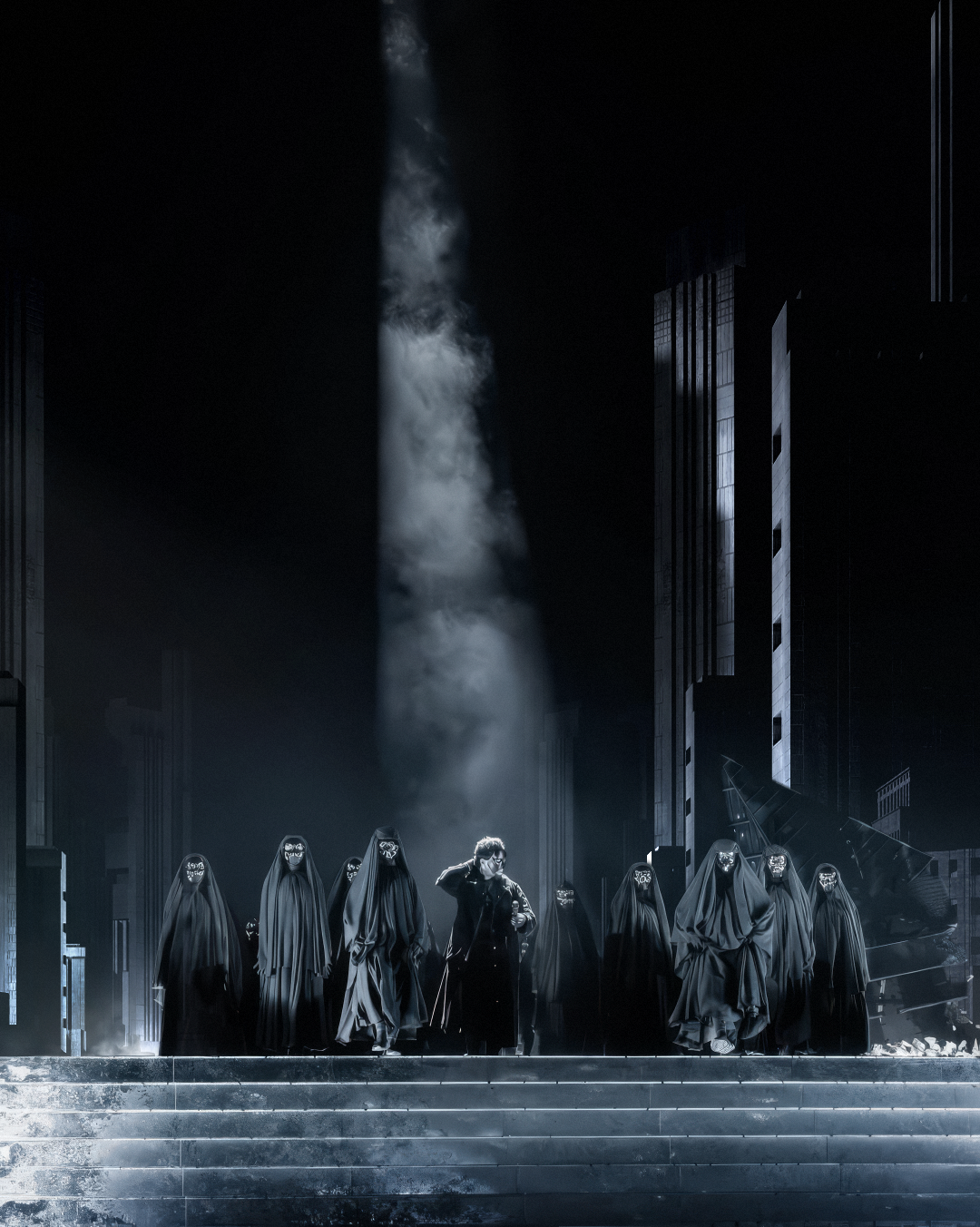
Alexander Wessely works somewhere between image, space, light, and movement. The Swedish designer and visual artist has built a multidisciplinary practice spanning photography, motion graphics, installation, and live performance, collaborating with artists including The Weeknd, Rihanna, Drake, and Avicii along the way. His latest work brings all of those disciplines together on one of the biggest stages imaginable: The Weeknd’s After Hours Till Dawn tour.
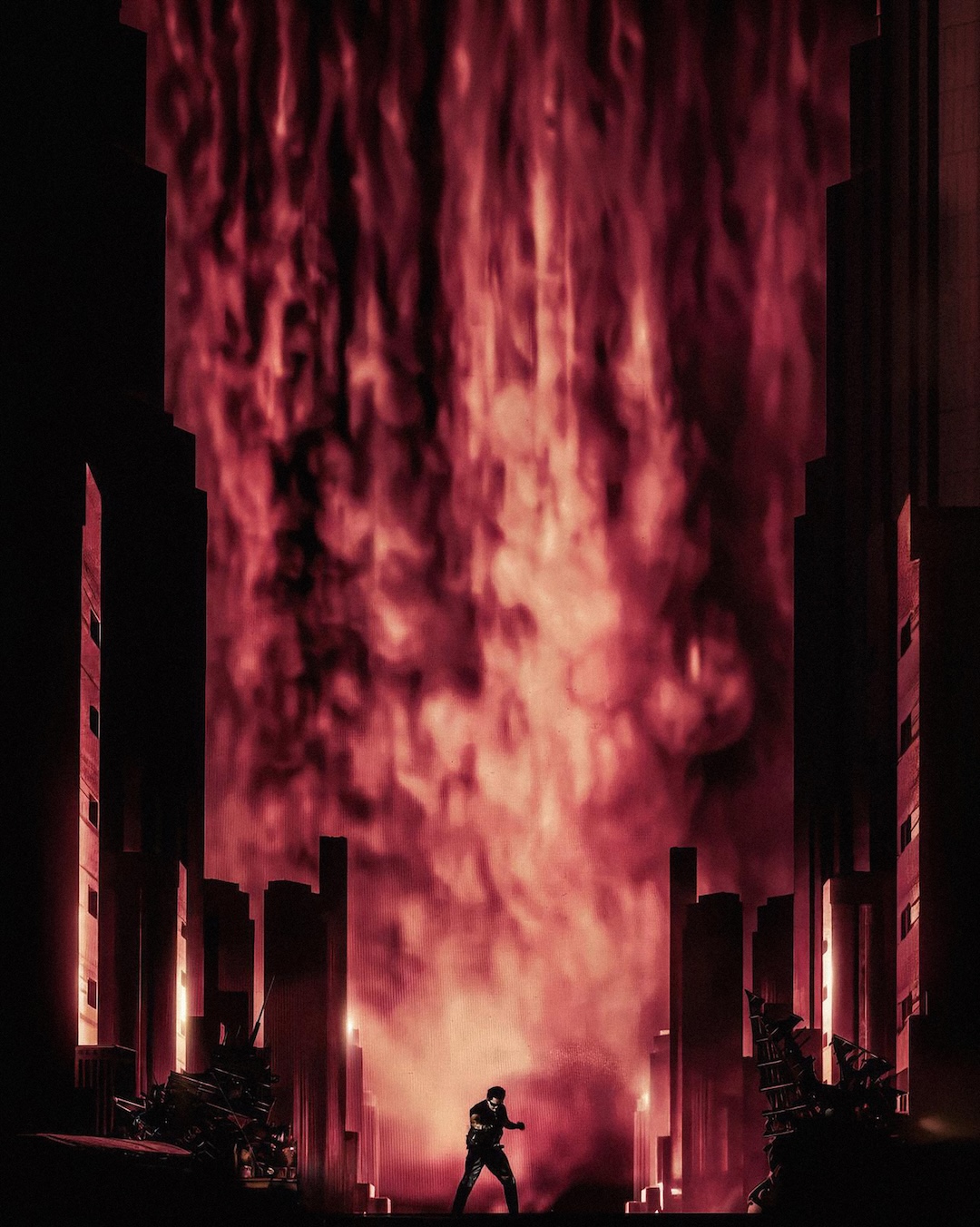
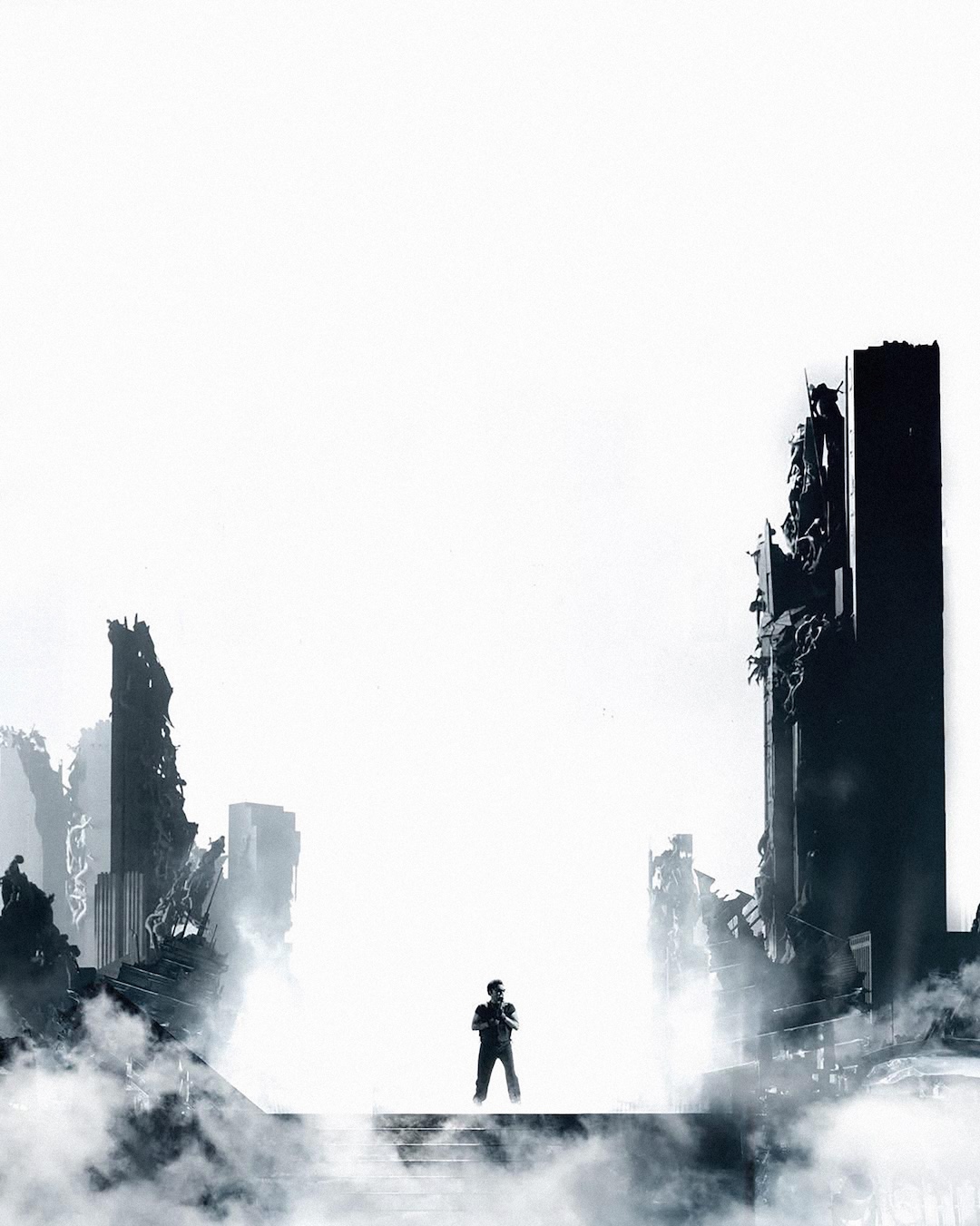
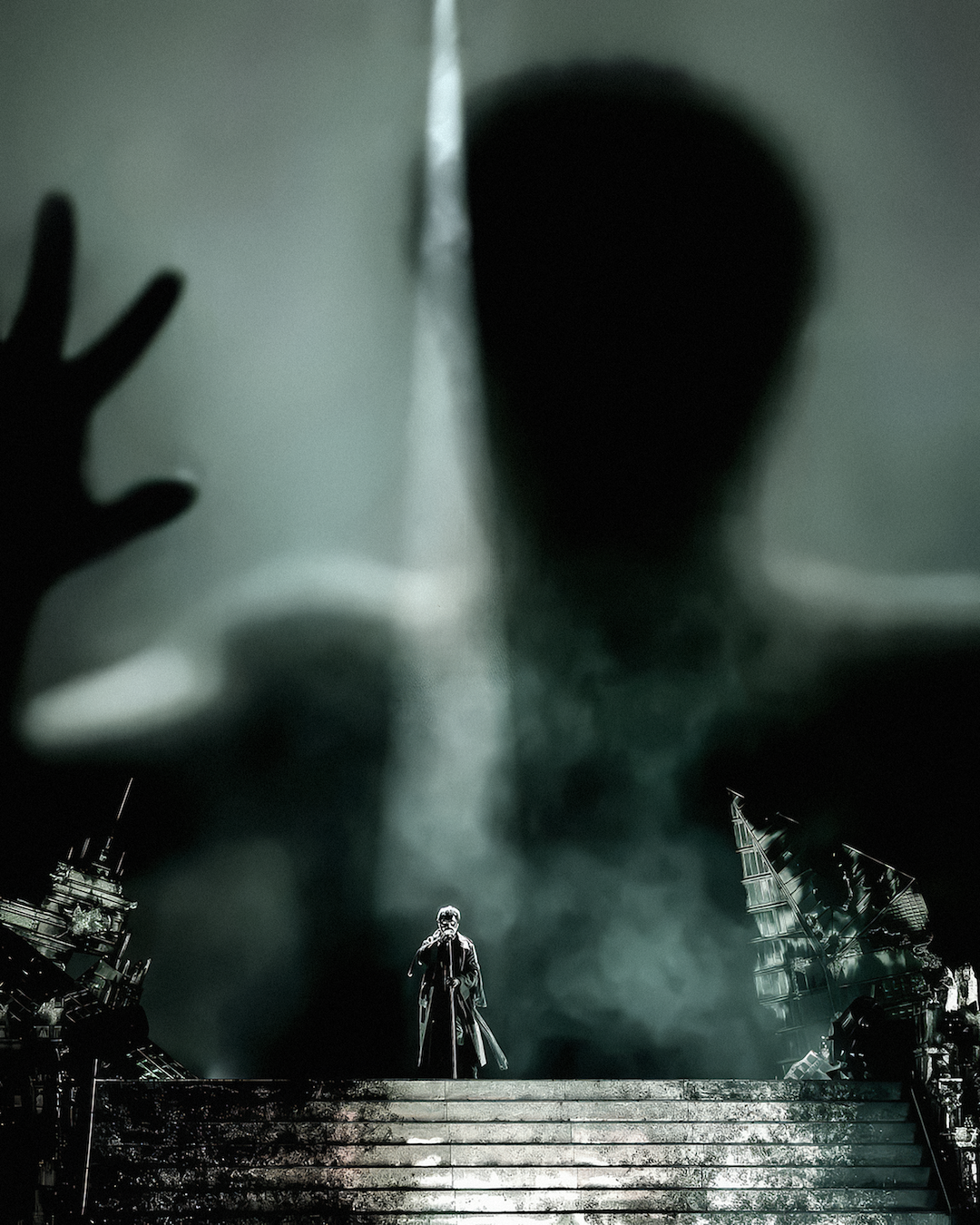
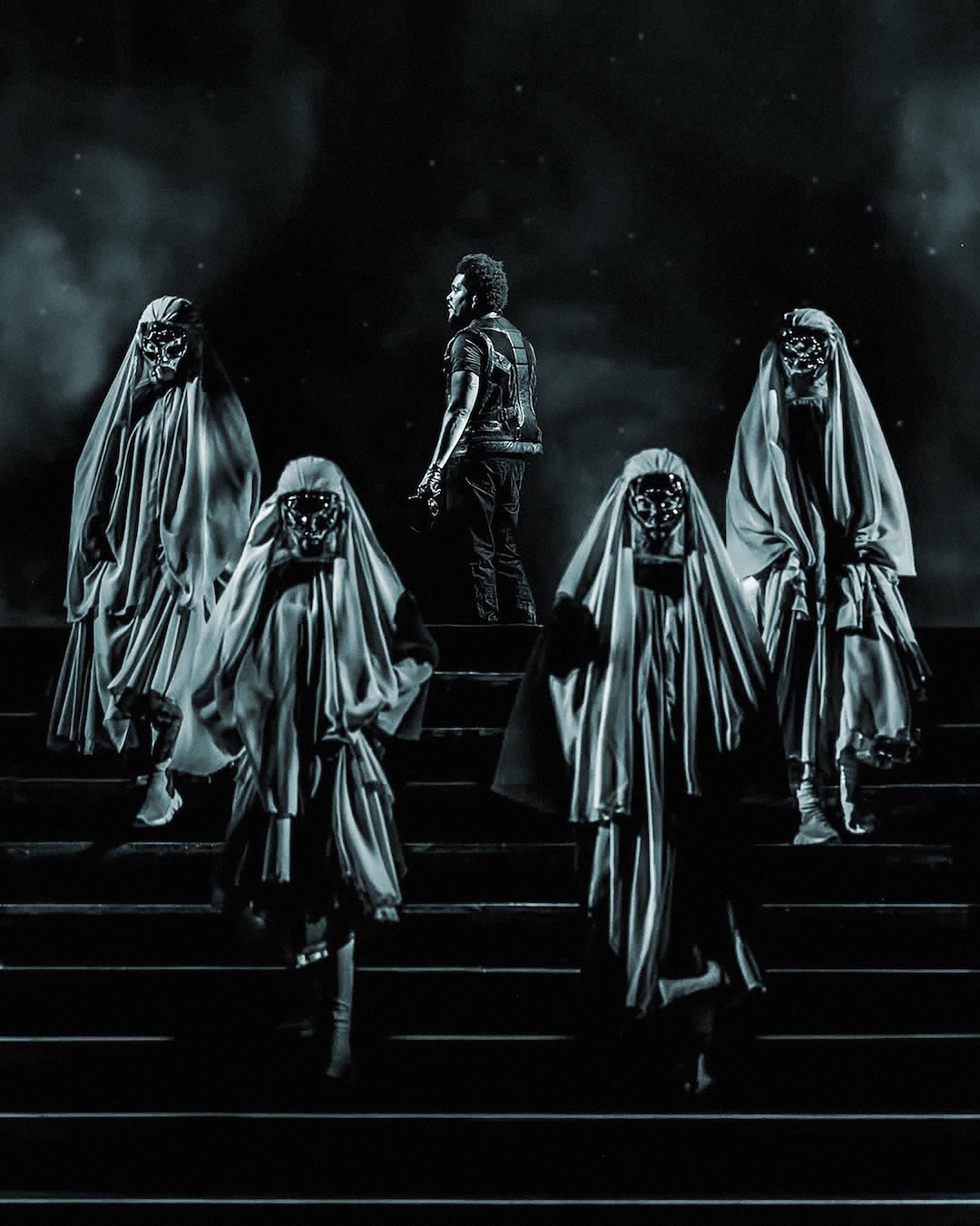
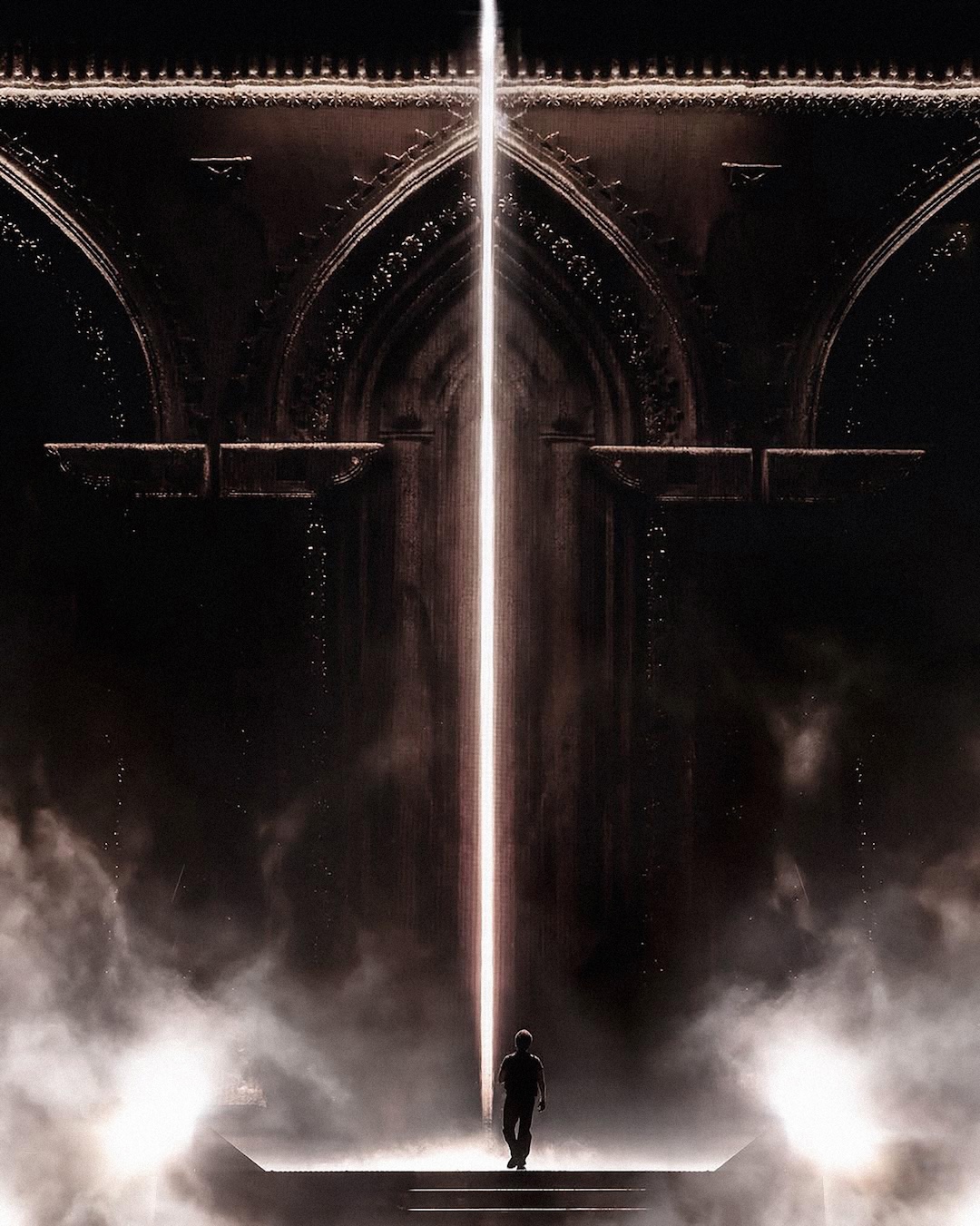
Working closely with Abel and La Mar Taylor, Wessely has helped shape the visual language of the show, transforming its stage into a vast, crumbling city that moves through four acts: homage, decay, ruin, and rebirth. Physical structures merge with monumental LED screens, sculptures become relics, and digital environments stretch the limits of the stage itself. Following his work on Anyma’s groundbreaking residency at the Sphere in Las Vegas, the project marks another exploration of scale, immersion, and the relationship between the human body and an overwhelming visual world.
Ahead of After Hours Till Dawn arriving in Madrid, we sat down with Wessely to talk about building a world around The Weeknd’s music, working alongside Abel and La Mar Taylor, the presence of Hajime Sorayama’s sculpture, the challenges of creating at stadium scale, and the recurring fascination with beauty, decay, and rebirth that runs through his work.
First of all, congratulations on this incredible project; the scale and ambition of it really come through even before seeing it live. I’d love to start with the story itself. The show moves through four acts: homage, decay, ruin, and rebirth. Where did that narrative arc originate? Was it built around The Weeknd’s music first, or did the story come before the songs were slotted in?
The music came first, always. Abel’s catalogue already tells his life, so we weren’t inventing a story and forcing songs into it; we were reading the arc that was already inside the music and building a world that made it visible. The acts came out of that. It’s really just the shape of what he’s been living through the past few years, told through a city instead of through him directly. So the story and the songs were never separate. One was already inside the other; we just gave it architecture.
And on that opening moment, starting the show with a direct nod to Michael Jackson is a bold choice. What conversations did you and Abel have about paying tribute to that legacy while still making the show feel distinctly “After Hours”?
The line we kept coming back to was that it’s a nod, not a costume. You honour something by letting it echo, not by copying it. So it lives in the opening as a kind of ghost, a presence you feel more than you see, and then the show moves into its own world. If it read as a tribute band, we’d failed. It had to feel like lineage, like Abel standing in a line that runs through that legacy, not dressing up as it.
You worked closely with La Mar Taylor and Abel on building this urban landscape. How do you divide creative ownership on a project like this? Where does your vision end and theirs begin?
Honestly, it doesn’t divide cleanly, and that’s the point. La Mar co-founded XO with Abel and has been his creative director from the beginning, so he and Abel share a world I’m stepping into. Abel sets the emotional truth of it, the real things he’s been through. La Mar directs the show as a whole. My part is the physical and visual world, the city, the sculptures, the scale, turning the feeling into a space you can stand inside. The best moments are the ones none of us could have reached alone. When it works, you stop being able to say whose idea a thing was, and that's usually the sign it’s good.
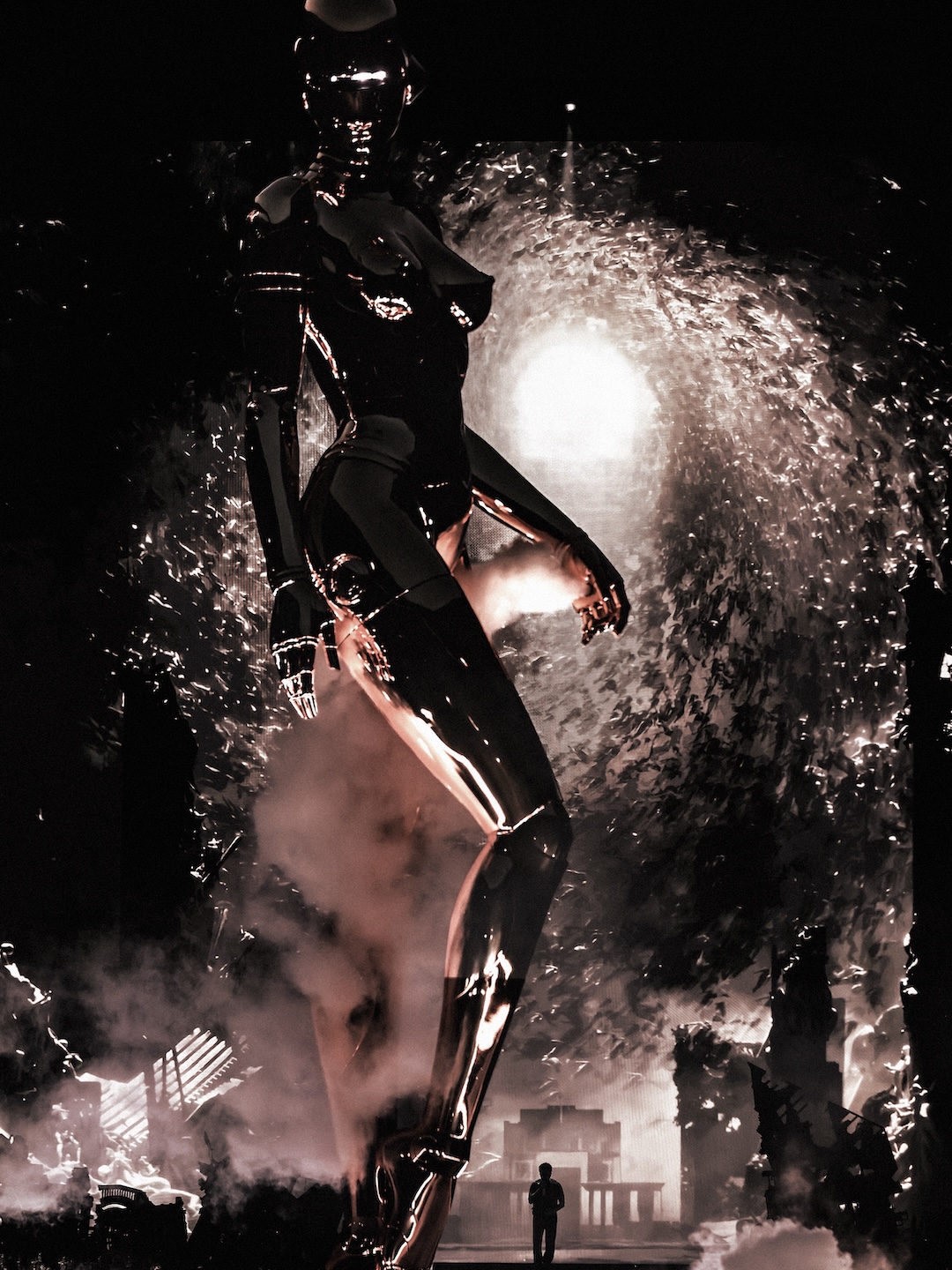
Sticking with an iconic collaboration for a moment, Hajime Sorayama’s sculpture feels so central to the stage’s identity. How did that collaboration come about, and what did his aesthetic, that blend of eroticism, machinery, and decay, bring to the show’s world that you couldn’t create digitally?
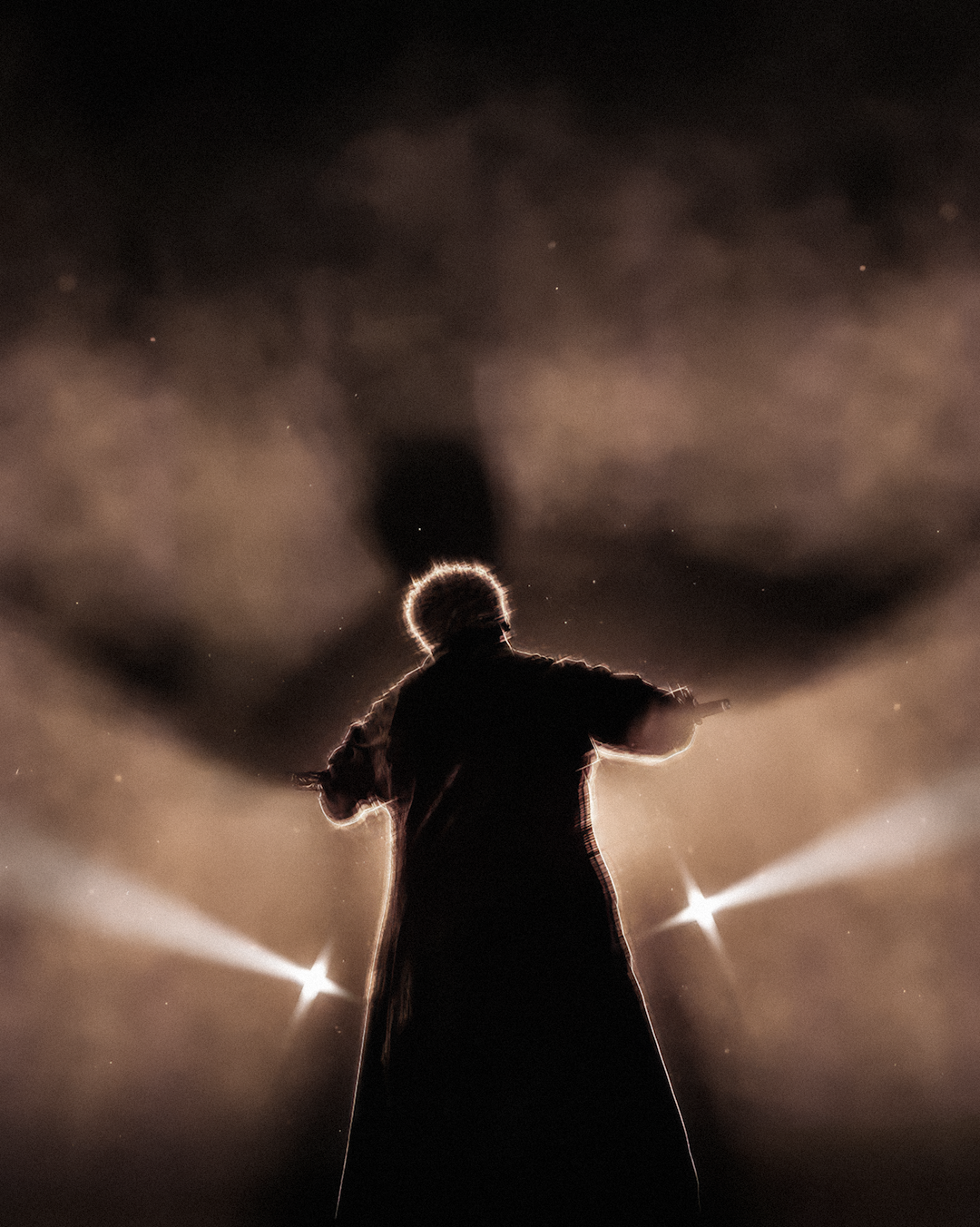
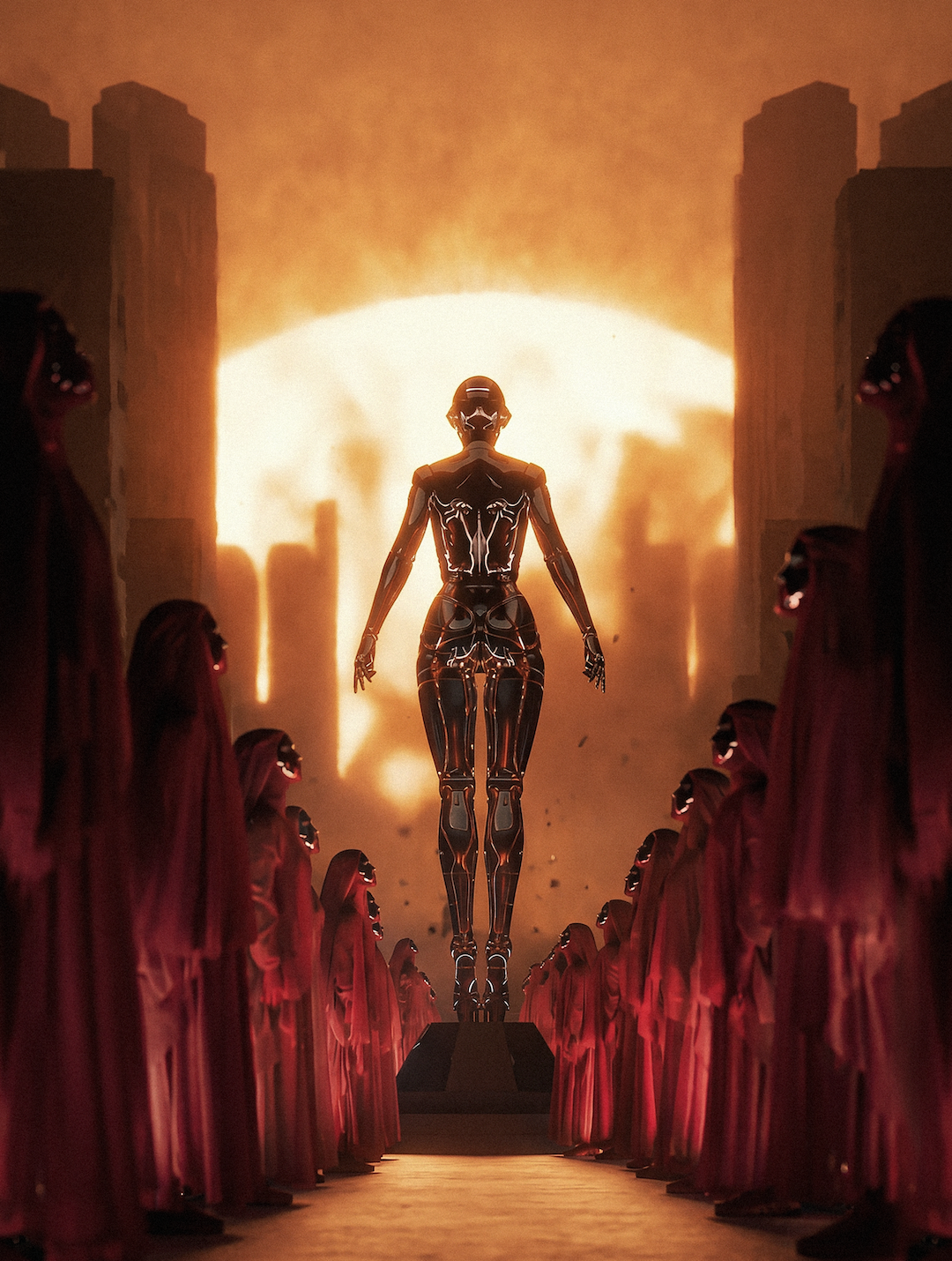
The Sorayama relationship was already there before I came in; it’s part of Abel’s world. What I got to do was meet him in Tokyo and spend real time with him, and those conversations went deep fast. We talked about life and death, and it was profound and completely absurd at the same time; that mix you only get with certain people. His work sits exactly where mine does, between the machine and the body, the future and the ruin. What his sculpture brings that a render can’t is that it’s real. It has actual weight; it reads as something worshipped and something dug up at the same time, a relic from a civilisation that mistook the machine for a god. You can feel it exists in the room. That tension between machine, relic, and body lands harder because it’s physical, not projected.
Speaking of the world you’ve built, the LED wall is described as an extension of the city rather than a backdrop. How did you approach the technical and creative challenge of making digital space feel continuous with the physical stage?
The whole point is you shouldn’t be able to tell where one ends and the other begins. That blur between real and digital is what excites me; it’s the same thing I chased at the Sphere. The physical set is built to bleed into the screen so the seam disappears and you lose the horizon. What the screen does that steel can’t is change scale in a second, turn Abel into a giant and then into dust before you've caught up. The physical stuff gives you weight and truth; the screen gives you transformation. You need both, or none of it feels real.
I want to talk about the scale of it all, too. You’ve described this project as operating “on the scale of an opera”. What does that actually demand from you in practice: how far ahead do you have to plan, how big is the team, and how much still changes once the show is in front of a live audience?
It demands everything, honestly. You’re planning a year out, working with a huge team across scenography, screen content, lighting, the sculptures, and all of it has to move as one thing. Opera is the right word because it’s not one discipline; it’s every discipline at once, sound and body and architecture and light all carrying the same story. And then the live audience changes things you couldn’t predict. Something you were sure of falls flat in a stadium, something small becomes the moment everyone remembers. You build it as tightly as you can, and then you stay open, because the room always has an opinion.
One sequence in particular stands out: the “atomic-scale decay” moment, where thousands of figures dissolve into a collapsing skyline. It sounds technically enormous. Can you walk me through how a moment like that actually gets built, from first sketch to final render?
It starts as almost nothing, a rough idea of bodies becoming a city and a city becoming dust. Then it’s a long process of building the figures, choreographing how they dissolve, and getting the scale right so it reads as thousands without turning into noise. The hard part is emotion, not technology. It’s easy to make something big and impressive that means nothing. The whole sequence only works if the collapse feels like loss, so a lot of the work is pulling it back, making sure you feel the human in it right up until the moment it turns to dust. That connects to my sculpture too, the idea of the body as something fragile inside something monumental.
Zooming out a bit, after directing Anyma’s residency at the Sphere, which was monumental in its own right, how did that experience with immersive scale change your approach going into this tour?
The Sphere opened my eyes to how far you can push the blur between real and digital, and how much a space can work on you as much as you work on it. It was a beast to tame. What I took from it into this was less fear of scale, and a stronger instinct for where the human has to sit inside something enormous so it doesn’t get lost. At the Sphere, I learned that the bigger the canvas, the more you need one real, human presence to hold it together. That carried straight into how I thought about Abel against the city.
And more broadly, your work spans photography, motion graphics, installation, and now stadium-scale live production, as well as commercial collaborations. Is there a consistent way you think about storytelling, something that carries across formats no matter the scale?
It always comes back to worship, to what the human elevates and what that does to us. That’s the thread through the sculptures, the shows, all of it. And underneath that, it comes back to the body, and to light. I’ve built everything on light since I was a teenager assisting photographers, learning you sculpt with a single source and watch it respond. Whether it’s one marble sculpture or a stadium, I’m doing the same thing, shaping something so a person feels it in their body before they can explain it. The scale changes. The instinct doesn’t.
I want to close on something that feels like the emotional heart of the show. “Beauty found in decay”, a rebirth after collapse, is clearly the core of this piece. Is that a theme you find yourself returning to across your work, or is it specific to this story? And more generally, what other ideas or obsessions keep pulling you forward, project after project?
It’s not specific to this; it’s everywhere in what I do. My sculptures are broken on purpose, fragments, because a broken thing holds more presence than a whole one. I keep coming back to that, the idea that something has to come apart before it means anything. What keeps pulling me forward is that tension between the permanent and the temporary, the sculpture that lasts forever and the show that exists for one night and is gone. I need both, the calm and the chaos. When one starts to feel settled, the other starts to burn, and that's usually when I know it’s time to move.
In Conversation w/ Alexander Wessely: Inside The Weeknd’s After Hours Till Dawn
AUGUST 22, 2026
WORDS ADRIÁN GOMIS EXPÓSITO
Alexander Wessely works somewhere between image, space, light, and movement. The Swedish designer and visual artist has built a multidisciplinary practice spanning photography, motion graphics, installation, and live performance, collaborating with artists including The Weeknd, Rihanna, Drake, and Avicii along the way. His latest work brings all of those disciplines together on one of the biggest stages imaginable: The Weeknd’s After Hours Till Dawn tour.
Working closely with Abel and La Mar Taylor, Wessely has helped shape the visual language of the show, transforming its stage into a vast, crumbling city that moves through four acts: homage, decay, ruin, and rebirth. Physical structures merge with monumental LED screens, sculptures become relics, and digital environments stretch the limits of the stage itself. Following his work on Anyma’s groundbreaking residency at the Sphere in Las Vegas, the project marks another exploration of scale, immersion, and the relationship between the human body and an overwhelming visual world.
Ahead of After Hours Till Dawn arriving in Madrid, we sat down with Wessely to talk about building a world around The Weeknd’s music, working alongside Abel and La Mar Taylor, the presence of Hajime Sorayama’s sculpture, the challenges of creating at stadium scale, and the recurring fascination with beauty, decay, and rebirth that runs through his work.
First of all, congratulations on this incredible project; the scale and ambition of it really come through even before seeing it live. I’d love to start with the story itself. The show moves through four acts: homage, decay, ruin, and rebirth. Where did that narrative arc originate? Was it built around The Weeknd’s music first, or did the story come before the songs were slotted in?
The music came first, always. Abel’s catalogue already tells his life, so we weren’t inventing a story and forcing songs into it; we were reading the arc that was already inside the music and building a world that made it visible. The acts came out of that. It’s really just the shape of what he’s been living through the past few years, told through a city instead of through him directly. So the story and the songs were never separate. One was already inside the other; we just gave it architecture.
And on that opening moment, starting the show with a direct nod to Michael Jackson is a bold choice. What conversations did you and Abel have about paying tribute to that legacy while still making the show feel distinctly “After Hours”?
The line we kept coming back to was that it’s a nod, not a costume. You honour something by letting it echo, not by copying it. So it lives in the opening as a kind of ghost, a presence you feel more than you see, and then the show moves into its own world. If it read as a tribute band, we’d failed. It had to feel like lineage, like Abel standing in a line that runs through that legacy, not dressing up as it.
You worked closely with La Mar Taylor and Abel on building this urban landscape. How do you divide creative ownership on a project like this? Where does your vision end and theirs begin?
Honestly, it doesn’t divide cleanly, and that’s the point. La Mar co-founded XO with Abel and has been his creative director from the beginning, so he and Abel share a world I’m stepping into. Abel sets the emotional truth of it, the real things he’s been through. La Mar directs the show as a whole. My part is the physical and visual world, the city, the sculptures, the scale, turning the feeling into a space you can stand inside. The best moments are the ones none of us could have reached alone. When it works, you stop being able to say whose idea a thing was, and that's usually the sign it’s good.
Sticking with an iconic collaboration for a moment, Hajime Sorayama’s sculpture feels so central to the stage’s identity. How did that collaboration come about, and what did his aesthetic, that blend of eroticism, machinery, and decay, bring to the show’s world that you couldn’t create digitally?
The Sorayama relationship was already there before I came in; it’s part of Abel’s world. What I got to do was meet him in Tokyo and spend real time with him, and those conversations went deep fast. We talked about life and death, and it was profound and completely absurd at the same time; that mix you only get with certain people. His work sits exactly where mine does, between the machine and the body, the future and the ruin. What his sculpture brings that a render can’t is that it’s real. It has actual weight; it reads as something worshipped and something dug up at the same time, a relic from a civilisation that mistook the machine for a god. You can feel it exists in the room. That tension between machine, relic, and body lands harder because it’s physical, not projected.
Speaking of the world you’ve built, the LED wall is described as an extension of the city rather than a backdrop. How did you approach the technical and creative challenge of making digital space feel continuous with the physical stage?
The whole point is you shouldn’t be able to tell where one ends and the other begins. That blur between real and digital is what excites me; it’s the same thing I chased at the Sphere. The physical set is built to bleed into the screen so the seam disappears and you lose the horizon. What the screen does that steel can’t is change scale in a second, turn Abel into a giant and then into dust before you've caught up. The physical stuff gives you weight and truth; the screen gives you transformation. You need both, or none of it feels real.
I want to talk about the scale of it all, too. You’ve described this project as operating “on the scale of an opera”. What does that actually demand from you in practice: how far ahead do you have to plan, how big is the team, and how much still changes once the show is in front of a live audience?
It demands everything, honestly. You’re planning a year out, working with a huge team across scenography, screen content, lighting, the sculptures, and all of it has to move as one thing. Opera is the right word because it’s not one discipline; it’s every discipline at once, sound and body and architecture and light all carrying the same story. And then the live audience changes things you couldn’t predict. Something you were sure of falls flat in a stadium, something small becomes the moment everyone remembers. You build it as tightly as you can, and then you stay open, because the room always has an opinion.
One sequence in particular stands out: the “atomic-scale decay” moment, where thousands of figures dissolve into a collapsing skyline. It sounds technically enormous. Can you walk me through how a moment like that actually gets built, from first sketch to final render?
It starts as almost nothing, a rough idea of bodies becoming a city and a city becoming dust. Then it’s a long process of building the figures, choreographing how they dissolve, and getting the scale right so it reads as thousands without turning into noise. The hard part is emotion, not technology. It’s easy to make something big and impressive that means nothing. The whole sequence only works if the collapse feels like loss, so a lot of the work is pulling it back, making sure you feel the human in it right up until the moment it turns to dust. That connects to my sculpture too, the idea of the body as something fragile inside something monumental.
Zooming out a bit, after directing Anyma’s residency at the Sphere, which was monumental in its own right, how did that experience with immersive scale change your approach going into this tour?
The Sphere opened my eyes to how far you can push the blur between real and digital, and how much a space can work on you as much as you work on it. It was a beast to tame. What I took from it into this was less fear of scale, and a stronger instinct for where the human has to sit inside something enormous so it doesn’t get lost. At the Sphere, I learned that the bigger the canvas, the more you need one real, human presence to hold it together. That carried straight into how I thought about Abel against the city.
And more broadly, your work spans photography, motion graphics, installation, and now stadium-scale live production, as well as commercial collaborations. Is there a consistent way you think about storytelling, something that carries across formats no matter the scale?
It always comes back to worship, to what the human elevates and what that does to us. That’s the thread through the sculptures, the shows, all of it. And underneath that, it comes back to the body, and to light. I’ve built everything on light since I was a teenager assisting photographers, learning you sculpt with a single source and watch it respond. Whether it’s one marble sculpture or a stadium, I’m doing the same thing, shaping something so a person feels it in their body before they can explain it. The scale changes. The instinct doesn’t.
I want to close on something that feels like the emotional heart of the show. “Beauty found in decay”, a rebirth after collapse, is clearly the core of this piece. Is that a theme you find yourself returning to across your work, or is it specific to this story? And more generally, what other ideas or obsessions keep pulling you forward, project after project?
It’s not specific to this; it’s everywhere in what I do. My sculptures are broken on purpose, fragments, because a broken thing holds more presence than a whole one. I keep coming back to that, the idea that something has to come apart before it means anything. What keeps pulling me forward is that tension between the permanent and the temporary, the sculpture that lasts forever and the show that exists for one night and is gone. I need both, the calm and the chaos. When one starts to feel settled, the other starts to burn, and that's usually when I know it’s time to move.